

Deep cleaning your home often means working with powerful products. Oven cleaners, bleach, mold removers, degreasers, and bathroom descalers are designed to break down stubborn dirt—but they can also be tough on your skin.
Many people still rely on reusable rubber gloves or inexpensive vinyl disposable gloves. While they may seem adequate for everyday chores, they don't always provide the level of protection needed when working with strong cleaning chemicals.
If you're looking for the best disposable gloves for cleaning, nitrile gloves offer the ideal balance of chemical resistance, durability, and comfort.
1. Excellent Protection Against Household Chemicals
One of the biggest hazards during cleaning isn't simply getting your hands wet—it's chemical exposure.
Many cleaning products contain ingredients such as:
- Sodium hypochlorite (bleach)
- Ammonia
- Degreasers
- Alkaline cleaners
- Acid-based bathroom cleaners
- Disinfectants
These chemicals can dry out your skin, cause irritation, or even lead to chemical burns after prolonged contact.
Because nitrile is a synthetic rubber, it provides excellent resistance to many commonly used household cleaning chemicals. Compared with vinyl gloves, nitrile offers a stronger barrier that helps reduce direct skin contact during routine cleaning tasks.
Tip: Always replace disposable gloves if they become torn or after extended exposure to strong chemicals.
2. Better Puncture and Tear Resistance
Deep cleaning often involves more than wiping surfaces.
You may be:
- Scrubbing tile grout
- Cleaning behind appliances
- Using steel wool or wire brushes
- Handling broken glass or sharp edges
A glove that tears easily can expose your skin at the worst possible moment.
Nitrile gloves are significantly more puncture-resistant than vinyl gloves and generally more durable than latex. Glove thickness also plays an important role in durability, so it's worth understanding how different mil ratings affect protection.
Learn more in our guide to Nitrile Glove Thickness Chart.
3. Easy to Spot Damage Before It Becomes a Problem
Even the best disposable glove should be replaced once damaged.
One advantage of nitrile is that punctures or tears are usually easy to notice, allowing you to change gloves immediately before chemicals reach your skin.
That's why professionals recommend inspecting gloves periodically during long cleaning sessions—especially when working with bleach, degreasers, or concentrated disinfectants.
4. Latex-Free and Comfortable for Sensitive Skin
Latex allergies affect millions of people, and even those without a true allergy may experience skin irritation after prolonged use.
Nitrile gloves are completely latex-free, making them an excellent option for users with sensitive skin or anyone who cleans frequently. If skin sensitivity is one of your concerns, read our guide on choosing the Best Disposable Gloves for Sensitive Skin.
Many premium nitrile gloves also feature:
- Soft, flexible material
- Comfortable fit
- Reduced hand fatigue
- Powder-free design
This makes them comfortable enough for extended cleaning projects around the home.
5. Better Grip on Wet and Slippery Surfaces
Cleaning often means working with wet hands, soap, and slippery bottles.
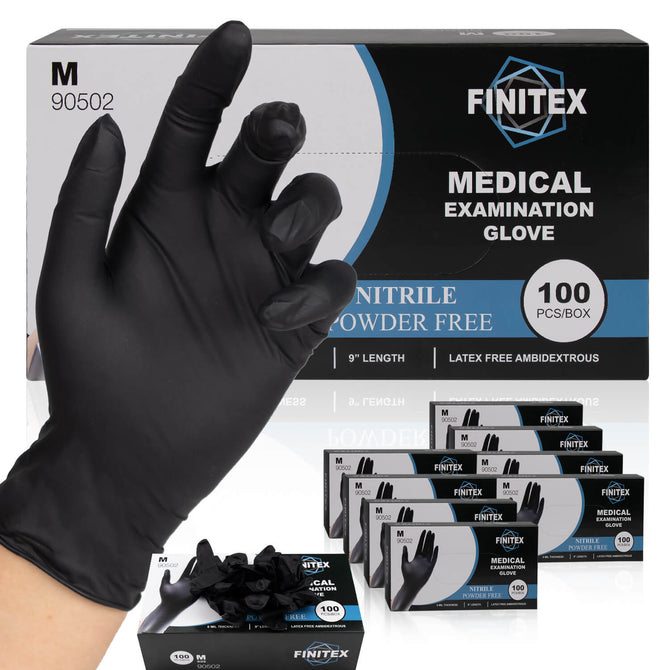
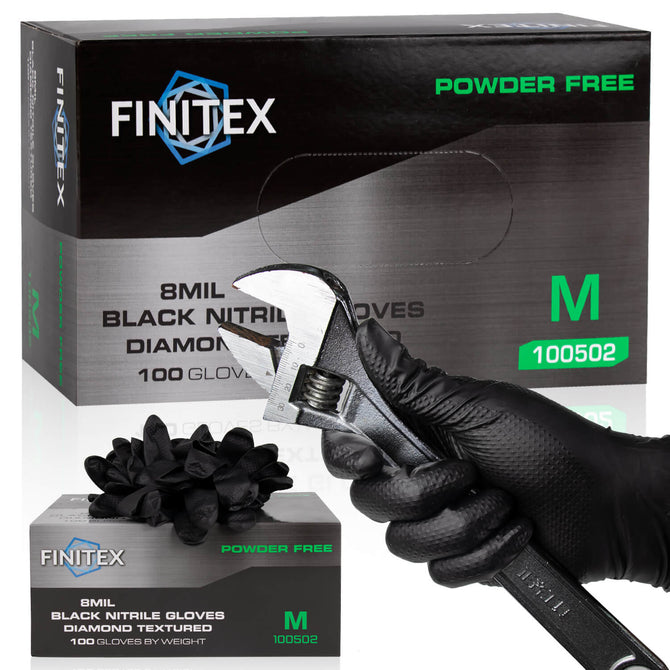
Many FINITEX Nitrile Gloves feature textured fingertips that provide extra grip when handling:
- Spray bottles
- Wet sponges
- Cleaning cloths
- Mops
- Scrub brushes
A more secure grip helps reduce accidental drops and makes detailed cleaning tasks easier.
Nitrile vs. Latex vs. Vinyl Gloves for Cleaning
| Feature | Nitrile | Latex | Vinyl |
|---|---|---|---|
| Chemical Resistance | ★★★★★ | ★★★☆☆ | ★★☆☆☆ |
| Puncture Resistance | ★★★★★ | ★★★☆☆ | ★★☆☆☆ |
| Tear Resistance | ★★★★★ | ★★★☆☆ | ★★☆☆☆ |
| Comfort | ★★★★★ | ★★★★★ | ★★★☆☆ |
| Latex-Free | ✅ Yes | ❌ No | ✅ Yes |
| Best For | Heavy-duty cleaning | Light cleaning | Short, low-risk tasks |
How to Remove Cleaning Gloves Safely
Removing contaminated gloves correctly helps prevent chemicals from contacting your skin.
- Pinch the outside of one glove near the wrist.
- Peel it off, turning it inside out.
- Hold the removed glove in your still-gloved hand.
- Slide an ungloved finger under the cuff of the remaining glove.
- Peel it off over the first glove so both gloves end up inside out.
- Dispose of the gloves immediately and wash your hands thoroughly with soap and water.
This simple technique helps keep chemical residue away from your skin.
Frequently Asked Questions
Can nitrile gloves protect against bleach?
Yes. Nitrile gloves generally provide good resistance to diluted household bleach for typical cleaning tasks. However, disposable gloves should be replaced if they become damaged or after prolonged exposure to concentrated chemicals.
Are nitrile gloves better than rubber gloves for cleaning?
For many household cleaning applications, disposable nitrile gloves offer better puncture resistance, excellent dexterity, and strong resistance to many common cleaning chemicals. Reusable rubber gloves may still be suitable for certain wet cleaning tasks, depending on the product and intended use.
Can I reuse disposable nitrile gloves?
Disposable nitrile gloves are intended for single use. Reusing them may reduce their protective performance, especially after contact with harsh chemicals.
What thickness is best for cleaning?
For everyday household cleaning, 4–6 mil nitrile gloves provide a good balance of comfort and durability. For heavy-duty cleaning involving stronger chemicals or rough scrubbing, 6–8 mil gloves offer additional protection.
Protect Your Hands Every Time You Clean
Whether you're tackling a seasonal deep clean, sanitizing bathrooms, or handling powerful degreasers, the right gloves make all the difference.
FINITEX Nitrile Gloves are designed to deliver dependable protection, comfortable wear, and reliable grip for demanding cleaning tasks. Choosing high-quality nitrile gloves helps reduce skin exposure to household chemicals while keeping your hands comfortable throughout the job.
Browse the FINITEX Nitrile Gloves collection at TitansMedicare.com and find the right disposable gloves for your next cleaning project.