

Disposable gloves are used every day in healthcare, food service, cleaning, automotive work, beauty, tattooing, and countless other jobs.
But if you go through several pairs a day, you may have wondered:
Can you reuse disposable gloves if they still look clean and intact?
It seems like a reasonable way to reduce waste and save money. After all, if there are no visible holes or tears, why not wear the same pair again?
The problem is that a disposable glove can look perfectly fine while no longer being the right choice for the next task.
In this guide, we'll explain why disposable gloves are generally intended for single use, what can happen when they're reused, when gloves should be changed, and how to reduce unnecessary glove waste without compromising proper hygiene.
Are Disposable Gloves Reusable?
Generally, no. Disposable gloves are designed for single use, not repeated wear.
This applies to common disposable glove materials such as:
- Nitrile
- Vinyl
- Latex
- TPE
Once a disposable glove has been removed, it should generally be discarded rather than washed, sanitized, or put back on.
Why?
Because the purpose of a disposable glove isn't simply to cover your hands. It provides a temporary barrier between your hands and whatever you're handling.
During use, the outside of the glove can become contaminated, while the material can also experience stretching, friction, abrasion, and chemical exposure.
Even when there is no obvious damage, the glove may no longer be appropriate for another task.
If you're specifically wondering about nitrile gloves, see our guide on Can You Reuse Nitrile Gloves? for a closer look at nitrile glove reuse.
Why Shouldn't You Reuse Disposable Gloves?
The biggest concern isn't whether the glove looks intact.
It's whether the glove can still provide the appropriate barrier and hygiene protection for the next task.
Here are some of the main reasons disposable gloves should be replaced rather than reused.
1. Used Gloves Can Carry Contamination
The outside of a glove can pick up bacteria, viruses, food residue, chemicals, dirt, oils, and other contaminants during use.
Imagine handling raw chicken while preparing dinner.
The gloves may still look clean after you're finished, but putting those same gloves back on later could transfer contaminants to:
- Clean countertops
- Kitchen equipment
- Utensils
- Ready-to-eat food
- Your phone
- Door handles
- Other surfaces
The same principle applies in healthcare, dental offices, tattoo studios, salons, and cleaning environments.
A glove doesn't have to look dirty to be contaminated.
This is why proper glove changes are an important part of preventing cross-contamination.
For more information, see our guide to best practices for glove use and preventing cross-contamination.
2. The Glove May Develop Damage You Can't Easily See
Disposable gloves are exposed to repeated stretching and friction while you work.
Pulling, gripping, rubbing against surfaces, handling tools, and repeated hand movements can put stress on the material.
A glove may develop:
- Small tears
- Thin spots
- Punctures
- Stretched areas
- Weak points around the fingers or cuff
Not all damage is immediately visible.
Once the glove's barrier is compromised, it may no longer provide the protection you originally expected.
This is particularly important when handling potentially contaminated materials, chemicals, sharp objects, or other workplace hazards.
3. Chemicals Can Affect Glove Performance
Nitrile gloves are known for their resistance to many oils and chemicals, but no disposable glove is resistant to every chemical.
The actual level of protection depends on factors such as:
- The specific chemical
- Concentration
- Temperature
- Contact time
- Glove thickness
- Glove formulation
Chemicals such as solvents, disinfectants, hair products, and cleaning agents can affect glove materials differently.
A glove that has already been exposed to a chemical shouldn't simply be assumed to be suitable for another round of use.
If you're using nitrile gloves for chemical-related work, always check the manufacturer's chemical-resistance information and select a glove designed for the application.
4. Fit and Dexterity Can Change
Disposable gloves are designed to fit closely around your hands.
During use, the material stretches and experiences repeated movement.
After removal, a glove may not provide the same fit when you try to put it back on.
A poor fit can affect:
- Finger dexterity
- Grip
- Tactile sensitivity
- Comfort
- Control of tools
For precision work—such as dentistry, tattooing, laboratory work, or detailed mechanical tasks—small changes in fit can make a noticeable difference.
What About Gloves That Still Look Clean?
This is one of the most common misconceptions about disposable gloves.
Clean-looking doesn't necessarily mean clean or suitable for reuse.
For example, you might wear gloves while:
- Opening boxes
- Cleaning a counter
- Handling equipment
- Preparing food
- Applying hair color
- Working on a vehicle
If the gloves don't have visible dirt or tears, they may look perfectly usable.
But you still need to consider what the gloves touched and whether they're appropriate for the next task.
The better question isn't:
"Does this glove still look okay?"
Instead, ask:
"Is this glove still appropriate for the task I'm about to perform?"
If the answer is uncertain, replacing the gloves is the safer choice.
When Should You Change Disposable Gloves?
There isn't one universal time limit that applies to every disposable glove and every workplace.
Instead, gloves should be changed based on the task, contamination risk, glove condition, and applicable workplace or industry requirements.
In general, replace disposable gloves when:
You finish a task
Once a task is complete, remove and dispose of the gloves rather than automatically saving them for later.
You switch from a dirty task to a clean task
For example, don't use the same gloves to clean a dirty surface and then handle food or clean equipment.
You change clients or patients
In healthcare, dental, tattoo, and beauty environments, gloves should be changed between appropriate client or patient contacts according to applicable infection-control procedures.
The gloves become contaminated
If the gloves come into contact with blood, bodily fluids, raw food, chemicals, waste, or other contaminants, replace them as appropriate for the task.
The glove is damaged
Replace gloves immediately if you notice:
- A tear
- A hole
- A puncture
- Significant stretching
- Chemical degradation
- Loss of integrity
The gloves no longer fit properly
A loose or excessively stretched glove can interfere with your work and may increase the chance of accidental damage.
Can You Wash or Sanitize Disposable Gloves?
Disposable gloves generally should not be washed and reused.
Washing, wiping, or applying sanitizer to a disposable glove does not turn it into a reusable glove.
In fact, depending on the material and the product involved, cleaning chemicals can affect the glove's physical properties.
Instead:
Remove → Dispose → Perform hand hygiene → Put on a fresh pair when needed.
Always follow the glove manufacturer's instructions and the requirements applicable to your workplace.
Does a Thicker Glove Mean You Can Reuse It?
No.
This is another common misunderstanding.
A thicker glove may provide greater resistance to certain forms of tearing, puncturing, or abrasion compared with a thinner glove, but thickness does not make a disposable glove reusable.
For example:
- 3 mil gloves may be suitable for lightweight tasks where flexibility and dexterity are priorities.
- 4–5 mil gloves can provide a balance between dexterity and durability.
- 6–8 mil gloves are often chosen for more demanding industrial or mechanical applications.
The best thickness depends on the job.
If you're trying to choose between different glove thicknesses, our nitrile glove thickness guide can help you compare different options.
How Can You Reduce Glove Waste Without Reusing Them?
If you're concerned about the cost or environmental impact of disposable gloves, reusing them isn't the only option.
There are several better ways to reduce unnecessary consumption.
1. Choose the Right Glove for the Job
Using a glove that is too thin for a demanding task can result in unnecessary tears and premature replacement.
On the other hand, using an unnecessarily heavy glove for a simple task may increase material use and cost.
Match the glove to the application.
For example:
Light-duty work:
Consider a thinner glove when dexterity and frequent changes are important.
General-purpose work:
A medium-thickness nitrile glove can provide a practical balance.
Heavy-duty work:
Consider a thicker glove when the task involves more demanding mechanical or industrial conditions.
2. Choose the Right Size
A glove that is too small can stretch excessively and become more prone to tearing.
A glove that is too large may slip, bunch up, or interfere with your grip.
Choosing the correct size can improve both comfort and performance.
3. Buy in Bulk
For businesses that use disposable gloves every day, buying larger quantities can reduce the cost per glove.
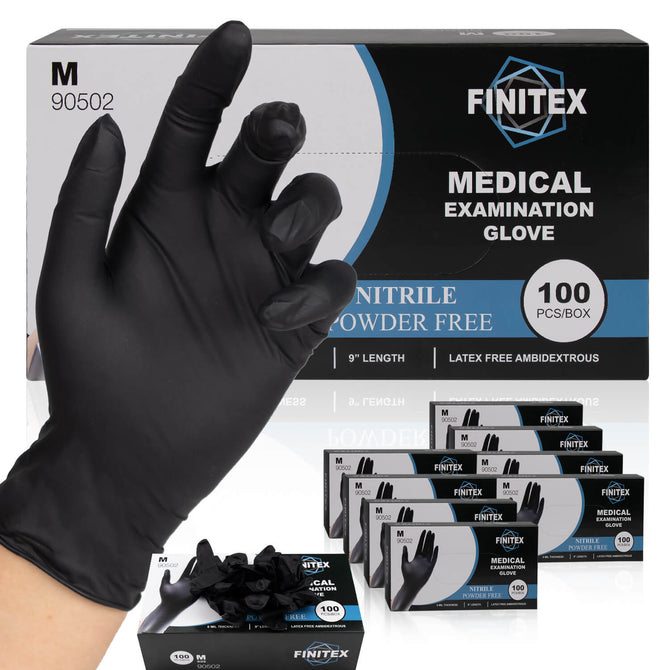
TITANS MEDICARE offers FINITEX nitrile gloves in different package sizes and specifications, allowing businesses to purchase according to their usage needs.
Instead of trying to reuse a pair of disposable gloves, buying the right quantity at a better unit cost is a much safer way to control expenses.
4. Store Gloves Correctly
Proper storage can help preserve unused gloves.
Keep disposable gloves:
- In their original packaging when possible
- Away from direct sunlight
- Away from excessive heat
- In a clean, dry environment
- Away from chemicals that could damage the material
Proper storage helps reduce premature degradation before the gloves are even used.
For more information, see our guide on how to properly store and extend the life of nitrile gloves.
What About Different Work Environments?
The reason for changing gloves can vary depending on the job.
Healthcare and Dental
In healthcare and dental environments, glove changes are an important part of infection-control practices.
Gloves should be changed when moving between patients or when contamination occurs, according to applicable infection-control procedures.
Never rely on a glove simply looking clean.
Food Service
Food workers should change gloves when switching tasks, when gloves become contaminated, and whenever required by applicable food-safety procedures.
For example, gloves used while handling raw meat should not then be used to handle ready-to-eat food.
If you're interested in food-contact gloves, read our guide Are Disposable Gloves Food Safe?.
Cleaning and Janitorial Work
Cleaning professionals may encounter:
- Dirt
- Waste
- Disinfectants
- Cleaning chemicals
- Oils
- Other potentially irritating substances
Change gloves when they become damaged, contaminated, or unsuitable for the next task.
For heavier cleaning jobs, choosing a glove with appropriate thickness and chemical resistance can help reduce premature tearing.
Automotive and Mechanical Work
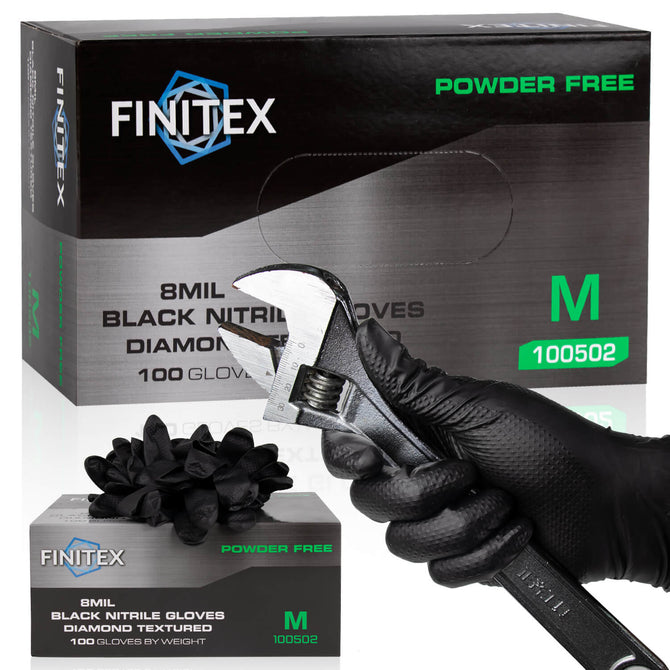
Mechanics often use disposable nitrile gloves to keep oil, grease, and other substances off their hands.
A glove that's too thin for a demanding mechanical task may tear quickly.
In these situations, choosing an appropriately durable glove can reduce the number of gloves wasted due to premature failure.
Why Choose FINITEX Disposable Nitrile Gloves?
At TITANS MEDICARE, we offer FINITEX nitrile gloves in a range of thicknesses, sizes, colors, and intended applications.
Our gloves are designed for single-use applications, while offering the durability and comfort needed for everyday work.
Depending on the product, FINITEX gloves offer features such as:
- Powder-free construction
- Latex-free nitrile material
- Textured surfaces for improved grip
- Different thickness options
- Multiple colors and sizes
- Options for food service, healthcare, cleaning, automotive, and other applications
Explore the full FINITEX nitrile glove collection to find the right option for your work.
Disposable Doesn't Mean "Wasteful"
It's understandable to want to make a box of gloves last longer.
But reusing a disposable glove isn't the best way to reduce waste or operating costs.
A better approach is to:
- Choose the right glove for the task
- Select the correct size
- Use an appropriate thickness
- Change gloves when contamination occurs
- Replace damaged gloves immediately
- Buy in quantities that match your actual usage
- Store unused gloves properly
The goal isn't to wear the same glove for as long as possible.
The goal is to use the right glove at the right time and change it when necessary.
Frequently Asked Questions
Can disposable nitrile gloves be reused?
Disposable nitrile gloves are designed for single use and generally should not be washed, sanitized, or reused. Replace them when the task is complete, contamination occurs, or the glove becomes damaged.
Can I wash disposable gloves and use them again?
No. Washing a disposable glove does not make it a reusable glove. Cleaning or disinfecting products may also affect the glove material.
How long can I wear disposable nitrile gloves?
There is no single wear time that applies to every task. How long a glove can be worn depends on the application, contamination, chemicals, heat, moisture, friction, and glove condition. Replace gloves when they become contaminated, damaged, or unsuitable for the next task. See our guide to how long you can safely wear disposable nitrile gloves.
Are thicker nitrile gloves reusable?
No. Thickness can affect durability and resistance to certain hazards, but a thicker disposable glove is still designed for its intended single-use application.
Should I change gloves between different tasks?
In many situations, yes. Gloves should be changed when moving from a contaminated task to a clean task or whenever contamination or damage occurs. Always follow the specific hygiene and safety requirements for your industry.
Are nitrile gloves better than vinyl for reuse?
Neither should be treated as a reusable disposable glove. Nitrile and vinyl have different performance characteristics, but disposable versions of both materials are intended for single-use applications.
Final Thoughts: When in Doubt, Change Them
So, can you reuse disposable gloves?
The safest answer is generally no.
A disposable glove can look clean and intact while carrying contamination or experiencing material stress that isn't immediately visible.
Instead of trying to get one more use out of a disposable glove, choose the right glove for the task, change it when necessary, and keep enough fresh gloves on hand to work safely.
For businesses, the smarter way to control glove costs isn't to reuse disposable gloves—it's to choose the right specification, buy efficiently, and reduce unnecessary glove changes without compromising hygiene or safety.
When you need reliable disposable nitrile gloves for everyday work, explore the FINITEX Nitrile Gloves collection from TITANS MEDICARE.
Use them once. Use them correctly. Then replace them when the job requires it.