
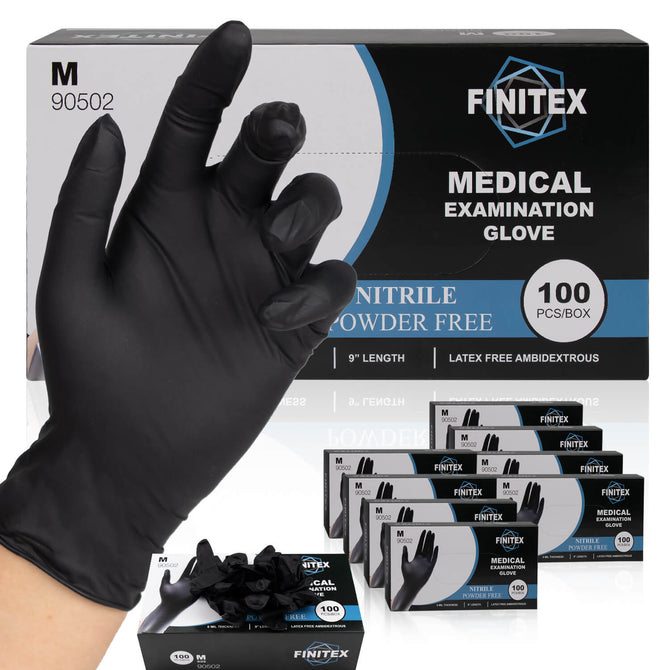
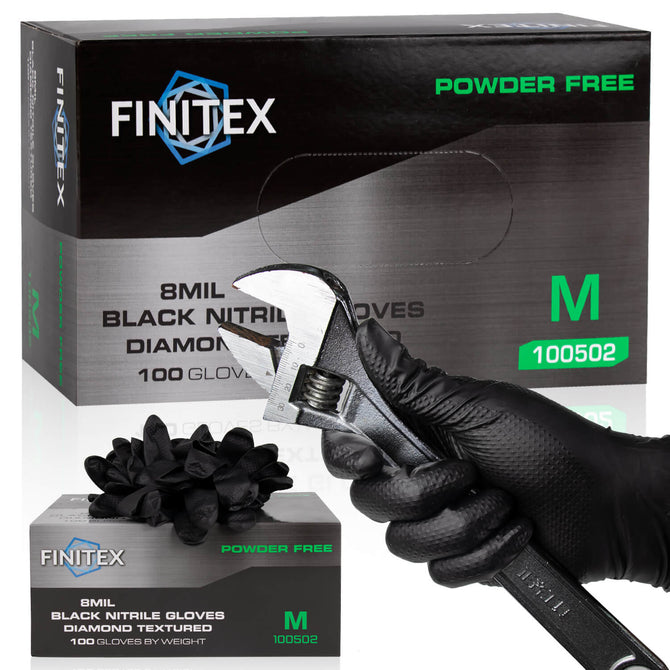

In the world of personal protective equipment (PPE), Nitrile gloves have evolved from a "latex alternative" to the undisputed gold standard. Whether you are in a high-risk surgical environment, a precision automotive shop, or a food processing plant, understanding the nuances of nitrile is key to ensuring both safety and cost-efficiency.
What Exactly is Nitrile? (And Why It Matters)
Unlike natural rubber latex, nitrile is a synthetic copolymer known as Nitrile Butadiene Rubber (NBR). For years, the industry struggled with the "stiffness" of synthetic rubber. However, modern manufacturing—specifically Low-Modulus technology—has allowed nitrile to mimic the stretch and feel of latex while maintaining its superior chemical resistance.
Pro Tip: If you notice your gloves feel "snug" but don't cause hand fatigue after two hours of wear, you’re likely using high-quality, low-modulus nitrile.
Why Professionals Choose Nitrile Over Latex and Vinyl
When we consult with procurement managers, the decision usually comes down to three non-negotiable factors:
1. Superior Chemical & Puncture Resistance
Nitrile is roughly 3 to 5 times more puncture-resistant than latex. It acts as a formidable barrier against:
-
Petroleum-based products: Oils, greases, and gasoline.
-
Acids and Bases: Essential for laboratory and cleaning environments.
-
Solvents: Where vinyl would simply dissolve.
2. The 100% Latex-Free Advantage
Latex allergies are a significant liability in medical and workplace settings. Nitrile eliminates the risk of Type I hypersensitivity reactions, making it the "safe bet" for diverse workforces and patient care.
3. Tactile Sensitivity and "Break-through" Detection
Modern nitrile gloves are designed with micro-textured fingertips. This provides a secure grip even when handling wet or oily components. Furthermore, nitrile has a unique failure mode: it tears clearly when punctured, whereas latex might hide a small pinhole. This "clear failure" is actually a safety feature.
Technical Comparison: Nitrile vs. Competitors
| Property | Nitrile Gloves | Latex Gloves | Vinyl Gloves |
| Material | Synthetic Rubber (NBR) | Natural Rubber | PVC |
| Durability | High (Heavy Duty) | Moderate | Low (Short term) |
| Chemical Resistance | Excellent | Moderate | Poor |
| Fit & Comfort | High (Forms to hand) | Best (High elasticity) | Loose |
| Cost | Mid-Range | Moderate | Budget-Friendly |
Choosing the Right Glove for Your Industry
Not all nitrile gloves are created equal. The "best" glove depends entirely on your specific application:
-
Medical & Dental: Look for Exam Grade (powder-free) with FDA 510(k) clearance. These must meet rigorous AQL (Acceptable Quality Level) standards for pinhole leaks.
-
Automotive & Industrial: Opt for High-Visibility (Orange/Black) and a higher mil-thickness (5mil to 8mil) to withstand mechanical friction.
-
Food Service: Ensure the gloves are FDA CFR 21 177.2600 compliant. Blue is the industry standard here to ensure any fragment is easily detectable if a glove is damaged.
Maintenance and Storage: How to Prevent Degradation
Even the toughest nitrile can fail if stored incorrectly. To maximize shelf life:
-
Avoid UV Exposure: Keep boxes out of direct sunlight.
-
Temperature Control: Store in a cool, dry place (ideally below 30°C/86°F).
-
Check Expiry: While nitrile is stable, we recommend usage within 3 to 5 years of the manufacture date for optimal elasticity.
Frequently Asked Questions (FAQ)
Q: Are nitrile gloves biodegradable?
A: Standard nitrile is not biodegradable. However, new Eco-Friendly Nitrile options are entering the market that break down in landfill conditions within a few years rather than decades.
Q: Can I use nitrile gloves with acetone?
A: Nitrile has limited resistance to acetone. For prolonged exposure to ketones or highly aggressive thinners, specialized chemical-resistant gloves (like Butyl) are recommended.
Final Thoughts
While Nitrile gloves have set a new benchmark for workplace safety, the key to maximizing their value lies in selecting the right specifications. From AQL ratings to mil-thickness, the "best" glove is the one that balances tactile precision with the specific chemical risks of your environment.
At Titans Medicare, we don’t just supply gloves; we provide peace of mind. Our manufacturing process ensures that every batch meets rigorous international standards, protecting both your team’s hands and your bottom line. If you are unsure which grade suits your facility, our technical specialists are ready to guide you.