


Cleaning and disinfecting are part of everyday life, from wiping down kitchen counters at home to sanitizing bathrooms, workspaces, equipment, and high-touch surfaces in commercial facilities.
But cleaning can be hard on your hands. Repeated contact with water, detergents, disinfectants, dirt, grease, and other substances may leave your skin dry or irritated. Some cleaning chemicals can also cause more serious skin irritation when they come into direct contact with the skin.
That is why choosing the right disposable cleaning gloves matters.
Nitrile gloves are a popular option for cleaning because they offer a practical balance of durability, flexibility, grip, and resistance to many common chemicals. They are also latex-free, making them a useful choice for workplaces where natural rubber latex is a concern.
In this guide, we'll look at how nitrile gloves for cleaning and disinfecting can help protect your hands and what to consider when choosing the right pair for the job.
1. Nitrile Gloves Create a Barrier Between Your Hands and Cleaning Products
One of the main reasons people wear gloves while cleaning is to reduce direct skin contact with cleaning products.
Depending on the task, you may be working with detergents, disinfectants, degreasers, bathroom cleaners, or other chemical solutions. Repeated exposure can cause dryness and irritation, especially when combined with frequent hand washing.
Nitrile gloves provide a physical barrier between your hands and these substances.
Nitrile also has good resistance to many common chemicals, which is one reason it is widely used in cleaning and maintenance applications. However, no disposable glove protects against every chemical.
Chemical resistance depends on factors such as the chemical itself, concentration, temperature, exposure time, and glove formulation. For concentrated or industrial chemicals, always check the glove manufacturer's chemical-resistance information before use.
For everyday cleaning tasks, a properly selected pair of nitrile cleaning gloves can help reduce unnecessary skin exposure while keeping the job more comfortable.
2. Nitrile Gloves Help Keep Dirt and Contaminants Off Your Hands
Cleaning often means dealing with more than just dust.
Bathrooms, kitchens, garbage areas, floors, work surfaces, and other high-touch areas can contain dirt, grease, bacteria, and other contaminants. Wearing disposable gloves creates a physical barrier between your hands and the material you are cleaning.
This is especially useful when cleaning areas that require frequent sanitation.
For example, household users may wear nitrile gloves when cleaning bathrooms or handling dirty trash, while professional cleaning crews may use disposable gloves throughout a work shift.
Keep in mind that gloves are only one part of good hygiene practices. Proper cleaning procedures, hand hygiene, surface disinfection, and appropriate disposal of used gloves are still important.
3. Nitrile Is a Latex-Free Option
Nitrile gloves are made from synthetic rubber rather than natural rubber latex.
This makes them a practical option for people and workplaces looking to avoid natural rubber latex. For cleaning companies, salons, healthcare facilities, offices, and households, choosing powder-free nitrile gloves can also help reduce unwanted powder residue.
Nitrile gloves are available in different thicknesses, sizes, and colors, making it easier to select a glove based on the type of work being performed.
If you are interested in the differences between glove materials, understanding the properties of nitrile, latex, and vinyl can help you choose the right disposable glove for a specific application.
4. Nitrile Gloves Offer Good Tear and Puncture Resistance
Cleaning isn't always a gentle job.
Scrubbing stubborn stains, moving equipment, handling rough surfaces, or working around sharp edges can put additional stress on disposable gloves. A glove that tears easily can interrupt your work and leave your hands exposed.
Nitrile generally provides good resistance to punctures and tears, although performance varies between products.
Glove thickness is one factor to consider. A lightweight glove can provide excellent flexibility for routine cleaning, while a thicker industrial nitrile glove may be more appropriate for demanding tasks.
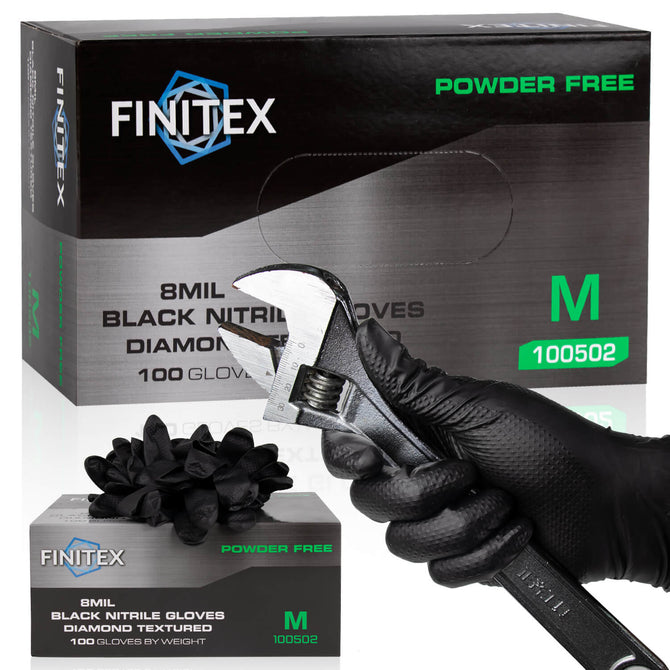
For example, FINITEX offers thicker options designed for more demanding applications, such as the FINITEX 8 Mil Diamond Textured Black Industrial Nitrile Gloves.
5. Textured Nitrile Gloves Can Improve Grip
Wet cleaning tools and surfaces can be difficult to handle.
When you're working with water, soap, cleaning solutions, or greasy surfaces, maintaining a secure grip can make the job easier and safer.
Many nitrile gloves feature textured fingertips, textured palms, or more aggressive surface patterns to improve grip.
This can be particularly useful when handling:
-
Spray bottles
-
Cleaning brushes
-
Sponges
-
Scrubbing tools
-
Maintenance equipment
-
Wet or slippery surfaces
For heavier cleaning work, diamond-textured nitrile gloves can provide additional grip while also offering greater material thickness.
If you regularly work with equipment or tools, choosing the right glove texture can be just as important as choosing the right thickness.
6. Glove Thickness Should Match the Cleaning Task
There is no single glove thickness that works for every cleaning job.
A thin nitrile glove may be more comfortable when you need flexibility and tactile sensitivity. A thicker glove may be better when the work involves more physical contact, rough surfaces, or a greater risk of tearing.
As a general guide:
-
3–4 mil: Light cleaning and tasks requiring flexibility
-
5–6 mil: General-purpose cleaning and more demanding everyday work
-
6–8 mil: Heavy-duty cleaning, maintenance, and tasks where greater durability is needed
These are general guidelines rather than strict rules. Glove performance depends on the specific product, formulation, and application.
For example, a 3.2 mil exam-grade nitrile glove may work well for light household cleaning, while a thicker industrial glove can be a better fit for heavy-duty janitorial or maintenance work.
If you are comparing different glove thicknesses, choosing based on the actual cleaning environment is more useful than simply selecting the thickest glove available.
7. Powder-Free Gloves Help Keep Surfaces Clean
Powder-free nitrile gloves are widely used in cleaning and sanitation because they don't leave powder residue behind.
This can be especially useful when cleaning:
-
Kitchen counters
-
Tables
-
Equipment
-
Tools
-
Bathrooms
-
Workstations
-
High-touch surfaces
Powder-free gloves are also commonly used in other applications where cleanliness and low residue are important.
FINITEX offers powder-free nitrile gloves in several colors, thicknesses, and sizes, allowing users to choose a glove based on their specific application.
8. Nitrile Gloves Can Help Reduce Exposure to Water and Detergents
Frequent contact with water and cleaning products can be tough on your hands.
If you clean several times a day, repeated exposure to water, soap, and detergents may leave your skin feeling dry or uncomfortable. Wearing disposable gloves during appropriate cleaning tasks can reduce direct contact with these substances.
However, gloves should not be worn continuously without considering moisture buildup.
If your hands become sweaty inside the gloves, take appropriate breaks when possible and replace gloves when necessary. Make sure your hands are clean and dry before putting on a fresh pair.
Good glove habits are an important part of comfortable glove use.
How to Choose Nitrile Gloves for Cleaning
Choosing the right nitrile gloves for cleaning involves more than simply picking a box of disposable gloves.
Consider the following factors before purchasing.
Consider the Cleaning Chemicals
Different chemicals have different effects on glove materials.
If you are working with concentrated disinfectants, solvents, acids, bases, or industrial cleaners, check the manufacturer's chemical-resistance information before using the gloves.
Do not assume that every nitrile glove provides the same level of chemical protection.
Consider the Amount of Physical Work
For simple wiping and light household cleaning, a thinner glove may provide the flexibility you need.
For scrubbing, maintenance, janitorial work, or rough surfaces, consider a thicker nitrile glove designed for greater durability.
Choose the Correct Size
Fit matters.
A glove that is too large may reduce your grip and dexterity. A glove that is too small can stretch excessively and may be more likely to tear.
Always check the manufacturer's size chart when ordering, especially when buying gloves in bulk for employees or a cleaning team.
Look for the Right Texture
If you're regularly working with wet tools or slippery surfaces, textured fingertips or a textured palm can provide a more secure grip.
For heavy-duty cleaning, diamond-textured gloves can be particularly useful when you need both grip and additional material thickness.
Match the Glove to the Application
Not all nitrile gloves are designed for the same type of work.
A thin exam-grade nitrile glove may be suitable for many light-duty cleaning tasks, while a thicker industrial nitrile glove may be better for demanding maintenance or heavy cleaning.
Similarly, food-contact applications require gloves specifically intended for food use. Do not assume that every nitrile glove is food safe simply because it is made from nitrile.
Nitrile Gloves for Household and Commercial Cleaning
One reason nitrile gloves are so widely used is their versatility.
For household cleaning, disposable nitrile gloves can be useful for:
-
Bathroom cleaning
-
Kitchen cleaning
-
Trash handling
-
Pet cleanup
-
Garage work
-
General household maintenance
Professional cleaning companies often have more demanding requirements.
Janitorial workers may clean bathrooms, floors, kitchens, offices, commercial buildings, and other facilities for several hours a day. In these situations, glove thickness, fit, grip, durability, and replacement frequency all become important.
If cleaning is one of your main applications, you can explore the FINITEX cleaning and sanitation nitrile gloves collection to compare available options.
For other household applications, the FINITEX home and garden nitrile gloves collection includes gloves suitable for a range of everyday tasks.
Can You Use Exam-Grade Nitrile Gloves for Cleaning?
Yes, exam-grade nitrile gloves can be suitable for many light-duty cleaning tasks, depending on the cleaning products and conditions involved.
For example, a thin powder-free nitrile glove can provide the flexibility needed for wiping surfaces, handling light household messes, or completing routine sanitation tasks.
However, exam-grade does not automatically mean heavy-duty.
If the cleaning job involves aggressive scrubbing, rough surfaces, sharp edges, heavy grease, or a greater risk of puncture, consider a thicker industrial nitrile glove instead.
The right glove depends on the task rather than the label alone.
Nitrile vs. Latex vs. Vinyl Gloves for Cleaning
Nitrile isn't the only disposable glove material available.
Here's a simple comparison:
| Glove Type | Common Advantages | Considerations |
|---|---|---|
| Nitrile | Good durability, latex-free, good puncture resistance, flexible | Chemical resistance varies by product and chemical |
| Latex | Good elasticity and tactile sensitivity | Contains natural rubber latex |
| Vinyl | Economical and suitable for some light-duty applications | Generally less durable and less form-fitting |
For many cleaning applications, nitrile provides a useful balance between durability, flexibility, and comfort.
The best choice still depends on the cleaning product, level of physical work, required protection, and how long the gloves will be worn.
Proper Glove Use Matters
Even a high-quality pair of nitrile gloves cannot replace good cleaning practices.
Before starting work:
-
Choose gloves appropriate for the task.
-
Check the gloves for visible damage.
-
Make sure your hands are clean and dry.
-
Replace gloves if they become torn or damaged.
-
Change gloves when they become heavily contaminated or when moving between tasks where cross-contamination is a concern.
-
Remove disposable gloves carefully.
-
Wash or sanitize your hands as appropriate after removing gloves.
-
Dispose of used gloves according to workplace procedures and local requirements.
If a glove tears during cleaning, replace it rather than continuing to work with a damaged glove.
Frequently Asked Questions
Are nitrile gloves good for cleaning?
Nitrile gloves can be a good choice for many household and commercial cleaning tasks. They offer a combination of durability, flexibility, grip, and resistance to many common chemicals. The appropriate glove depends on the specific cleaning product and working conditions.
Are nitrile gloves chemical resistant?
Nitrile has resistance to many common chemicals, but resistance varies by chemical, concentration, temperature, exposure time, and glove formulation. Always check chemical-resistance information before using nitrile gloves with concentrated or hazardous chemicals.
What thickness of nitrile gloves is best for cleaning?
It depends on the task. Thin 3–4 mil gloves can work well for light cleaning, while 5–6 mil gloves provide a balance of flexibility and durability. For heavier cleaning and maintenance work, 6–8 mil gloves may provide greater resistance to tearing and punctures.
Are nitrile gloves better than latex gloves for cleaning?
Nitrile and latex have different properties. Nitrile is latex-free and generally offers good puncture resistance, while latex provides excellent elasticity and tactile sensitivity. The appropriate material depends on the application and the user's requirements.
Can nitrile gloves protect against disinfectants?
Nitrile gloves can provide a barrier against many disinfectants, but protection depends on the specific disinfectant and glove. Always check the glove manufacturer's chemical compatibility information before using a particular disinfectant.
Can you reuse disposable nitrile gloves?
Disposable nitrile gloves are generally intended for single use. If a glove becomes torn, heavily contaminated, or otherwise unsuitable for continued use, replace it according to the applicable workplace procedures.
Final Thoughts
For everyday cleaning and disinfecting, nitrile gloves provide a practical combination of hand protection, durability, flexibility, and grip.
They can help reduce direct contact with cleaning products, dirt, and contaminants while making routine cleaning tasks more comfortable. Choosing the right thickness, size, texture, and glove type can make a noticeable difference in how well the gloves perform.
Whether you're cleaning your home, running a janitorial service, maintaining a commercial facility, or handling routine sanitation tasks, selecting gloves based on the actual working conditions is the best place to start.
Explore the FINITEX nitrile gloves for cleaning to find options in different thicknesses and styles for everyday and professional cleaning applications.