
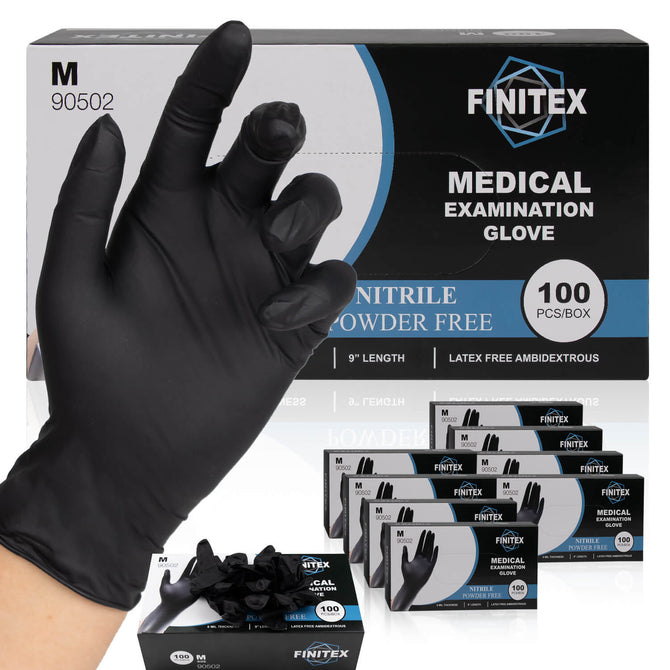

When choosing disposable nitrile gloves, thickness is one of the first specifications to consider. But thicker does not automatically mean better.
A thinner glove can provide better dexterity and tactile sensitivity, while a thicker glove can offer greater durability for demanding work. The right choice depends on what you are doing, how much flexibility you need, and the type of wear or hazards the glove may encounter.
As a general guideline, 3–4 mil nitrile gloves are well suited for light-duty tasks where flexibility and touch sensitivity matter. 5 mil gloves offer a practical balance between comfort and durability, while 6–8 mil gloves are better suited for automotive, maintenance, janitorial, and other demanding applications.
In this guide, TITANS MEDICARE explains what glove thickness means, how 3 mil, 4 mil, 5 mil, 6 mil, and 8 mil nitrile gloves compare, and how to choose the right thickness for your work.
Quick Nitrile Glove Thickness Chart
| Nitrile Glove Thickness | Common Applications | Dexterity | Durability |
|---|---|---|---|
| 3 Mil | Food preparation, light cleaning, beauty, general household tasks | Excellent | Light-duty |
| 4 Mil | Medical exams, dental, tattooing, food service, laboratory work | Very Good | Moderate |
| 5 Mil | Cleaning, maintenance, general-purpose work, light automotive tasks | Very Good | Good |
| 6 Mil | Automotive, mechanics, janitorial, maintenance, industrial work | Good | High |
| 8 Mil | Heavy-duty automotive, industrial cleaning, demanding maintenance | Moderate | Very High |
This chart is a general guide. Actual glove performance depends on the glove's formulation, construction, texture, fit, intended use, and applicable product specifications.
What Does "Mil" Mean in Nitrile Gloves?
When you see a nitrile glove described as 3 mil, 5 mil, or 8 mil, mil refers to the thickness of the glove material.
One mil equals one-thousandth of an inch:
1 mil = 0.001 inch = 0.0254 mm
That means:
| Thickness | Inches | Approximate Millimeters |
|---|---|---|
| 3 mil | 0.003" | 0.076 mm |
| 4 mil | 0.004" | 0.102 mm |
| 5 mil | 0.005" | 0.127 mm |
| 6 mil | 0.006" | 0.152 mm |
| 8 mil | 0.008" | 0.203 mm |
Although these differences look very small on paper, they can noticeably change how a glove feels and performs.
A 3 mil glove generally feels lighter and more flexible. An 8 mil glove uses substantially more material and typically feels sturdier, making it better suited to more demanding tasks.
Is a nitrile glove the same thickness everywhere?
Not necessarily.
Glove thickness can vary across different areas of the glove, including the fingers, palm, and cuff. Manufacturers may also use different specifications or measurement points when describing thickness.
For that reason, the mil rating should be treated as a useful thickness category rather than assuming that every part of the glove has exactly the same thickness.
When comparing products, it is best to check the manufacturer's product specifications for the specific glove.
3 Mil Nitrile Gloves: Lightweight and Flexible
Best for:
-
Food preparation
-
Food service
-
Light cleaning
-
Beauty and salon work
-
Hair coloring
-
Household tasks
-
Other light-duty applications
If you need flexibility and tactile sensitivity, 3 mil nitrile gloves are a practical choice.
Because they are thinner than heavier-duty nitrile gloves, 3 mil gloves generally provide a lightweight feel and make it easier to handle small objects or perform tasks requiring frequent finger movement.
For example, food preparation, salon work, and light cleaning often involve repetitive hand movements where a bulky glove can become uncomfortable.
Advantages of 3 Mil Gloves
Excellent dexterity
Thinner nitrile gloves allow your fingers to move naturally and make it easier to handle small objects.
Lightweight feel
For short or repetitive tasks, a lightweight glove can feel more comfortable than a heavier industrial glove.
Efficient for high-volume use
When gloves need to be changed frequently, a thinner glove can be a practical option for suitable low-risk applications.
Limitations of 3 Mil Gloves
The trade-off is durability.
A 3 mil glove is generally not the best choice for tasks involving significant abrasion, sharp edges, rough materials, or demanding mechanical work.
If your work frequently causes gloves to tear or puncture, moving up to 4, 5, or 6 mil may be more appropriate.
For shoppers specifically looking for lightweight options, see our 3 mil nitrile gloves collection.
4 Mil Nitrile Gloves: A Balance of Sensitivity and Durability
Best for:
-
Medical examinations
-
Dental offices
-
Tattoo studios
-
Food preparation
-
Laboratory work
-
General cleaning
-
Everyday professional use
Four-mil nitrile gloves sit between lightweight 3 mil gloves and heavier 5–8 mil options.
They are often a practical choice when you want good finger sensitivity without moving into a heavier industrial glove.
For professional applications, remember that thickness alone does not determine whether a glove is appropriate for medical, food-contact, laboratory, or other regulated use. Always check the product's intended use, classification, certifications, and manufacturer specifications.
Advantages of 4 Mil Gloves
-
Good tactile sensitivity
-
More durability than many lightweight gloves
-
Comfortable for extended routine tasks
-
Suitable for many general-purpose applications
Limitations of 4 Mil Gloves
While 4 mil gloves offer a useful balance, they may not provide the durability needed for repeated contact with rough surfaces, sharp components, or demanding automotive work.
For those applications, a 5–8 mil glove may be a better fit.
5 Mil Nitrile Gloves: The Everyday Balance
Best for:
-
General cleaning
-
Janitorial work
-
Maintenance
-
Dental and healthcare applications where the specific glove is appropriately rated
-
Tattooing
-
Painting
-
Light automotive work
-
General-purpose handling
For many users, 5 mil is a practical middle ground.
It provides more material and durability than a lightweight 3 mil glove while retaining a reasonable level of flexibility and tactile sensitivity.
That makes 5 mil nitrile gloves useful when one glove needs to handle a variety of everyday tasks.
Why Choose 5 Mil?
The main advantage is balance.
You get:
-
Good dexterity
-
Improved durability compared with thinner gloves
-
Comfortable finger movement
-
A versatile option for many professional and household tasks
For example, a 5 mil glove can be a practical choice for cleaning, maintenance, painting, or light mechanical work where a 3 mil glove may not hold up as well.
If you are looking for a general-purpose option, explore TITANS MEDICARE's 5 mil black nitrile gloves.
6 Mil Nitrile Gloves: More Durability for Demanding Work
Best for:
-
Automotive repair
-
Mechanics
-
Janitorial work
-
Maintenance
-
Industrial cleaning
-
Parts handling
-
Landscaping
-
More demanding general-purpose work
When a 5 mil glove is not quite durable enough, 6 mil is a logical step up.
The additional material can provide a sturdier feel and better resistance to many mechanical stresses encountered during automotive, maintenance, and industrial tasks.
For mechanics, for example, gloves may come into contact with grease, oils, rough components, tools, and metal edges. A thicker nitrile glove can be more suitable for this type of environment than a lightweight glove.
Advantages of 6 Mil Gloves
-
Greater durability than thinner disposable gloves
-
Good balance between protection and mobility
-
Suitable for many automotive and maintenance tasks
-
Available with textured surfaces for improved grip
Limitations of 6 Mil Gloves
The thicker material can reduce tactile sensitivity compared with 3–4 mil gloves.
If your work requires extremely precise finger movements, a thinner glove may be preferable.
If durability is the higher priority, however, 6 mil is often a practical choice.
Explore our 6 mil nitrile gloves for heavier-duty applications.
8 Mil Nitrile Gloves: Heavy-Duty Protection for Demanding Jobs
Best for:
-
Heavy-duty automotive work
-
Industrial maintenance
-
Heavy cleaning
-
Grease and oil handling
-
Rough or abrasive work
-
Tasks where glove durability is a major concern
At 8 mil, disposable nitrile gloves are significantly thicker than lightweight examination or food-service gloves.
They are designed for situations where durability is more important than maximum tactile sensitivity.
An 8 mil glove can be especially useful in automotive and industrial environments where gloves may experience repeated contact with rough surfaces, tools, grease, or components.
Advantages of 8 Mil Gloves
-
High material thickness
-
Excellent durability for demanding disposable-glove applications
-
Greater resistance to many mechanical stresses
-
Suitable for heavy-duty automotive and industrial work
Limitations of 8 Mil Gloves
The main trade-off is flexibility.
An 8 mil glove generally feels more substantial than a 3 or 4 mil glove, and fine finger movements may feel less natural.
They can also cost more per glove because they require more material.
For everyday food preparation, light cleaning, or simple household tasks, an 8 mil glove may provide more durability than you actually need.
For demanding work, however, that additional durability can make the higher thickness worthwhile.
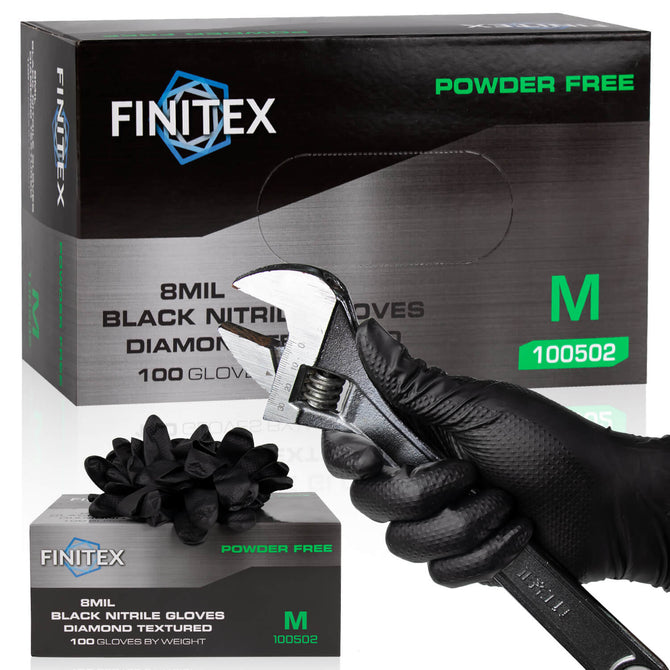
You can explore TITANS MEDICARE's 8 mil diamond-textured black industrial nitrile gloves for heavy-duty applications.
3 Mil vs 4 Mil vs 5 Mil vs 6 Mil vs 8 Mil: What's the Difference?
The easiest way to understand glove thickness is to think about the trade-off between dexterity and durability.
| Thickness | Dexterity | Durability | Typical Use |
|---|---|---|---|
| 3 Mil | Excellent | Light | Food prep, beauty, light cleaning |
| 4 Mil | Very Good | Moderate | Medical, dental, tattooing, food service |
| 5 Mil | Very Good | Good | Cleaning, maintenance, general work |
| 6 Mil | Good | High | Automotive, mechanics, janitorial |
| 8 Mil | Moderate | Very High | Heavy-duty automotive and industrial work |
The right thickness is not necessarily the thickest option.
Instead, choose the thickness that provides enough durability for your task while maintaining the level of dexterity and comfort you actually need.
3 Mil vs 5 Mil Nitrile Gloves
The difference between 3 mil and 5 mil gloves can be noticeable during everyday work.
Choose 3 mil when:
-
Dexterity is your top priority
-
You perform light-duty tasks
-
Gloves are changed frequently
-
You want a lightweight feel
-
You are handling food or performing beauty-related tasks
Choose 5 mil when:
-
You need more durability
-
You work with cleaning products or maintenance tasks
-
You perform general-purpose work
-
Your gloves need to withstand more handling and friction
In simple terms:
3 mil = lighter and more flexible
5 mil = more balanced and durable
5 Mil vs 6 Mil Nitrile Gloves
The difference between 5 mil and 6 mil is smaller, but it can still matter depending on the job.
5 mil
Best when you need:
-
Good dexterity
-
General-purpose protection
-
Comfortable handling
-
Versatility
6 mil
Best when you need:
-
Additional durability
-
More resistance to mechanical wear
-
A sturdier glove for automotive or maintenance work
-
More protection during demanding tasks
If you spend most of your day working with small components, 5 mil may provide a better balance.
If your work involves grease, tools, rough components, or repeated mechanical handling, 6 mil may be worth the extra thickness.
6 Mil vs 8 Mil Nitrile Gloves
The choice between 6 mil and 8 mil usually comes down to how demanding the job is.
6 mil
A good choice for:
-
Automotive maintenance
-
Mechanics
-
Janitorial work
-
Maintenance
-
General industrial applications
8 mil
A better choice when:
-
Durability is a major priority
-
Work involves rough surfaces
-
Gloves experience significant mechanical stress
-
You need a heavier disposable glove
The trade-off is that 8 mil gloves generally provide less tactile sensitivity than 6 mil gloves.
For many users, 6 mil is enough. For especially demanding disposable-glove applications, moving up to 8 mil may make sense.
Does a Thicker Nitrile Glove Always Provide Better Protection?
No.
Thickness is important, but it is only one factor that determines glove performance.
A thicker glove generally contains more nitrile material, which can contribute to greater durability. However, factors such as glove formulation, manufacturing quality, fit, texture, and intended use also matter.
This is especially important when dealing with chemicals.
An 8 mil nitrile glove should not automatically be assumed to be suitable for every chemical simply because it is thicker.
Chemical resistance depends on factors including:
-
The specific chemical
-
Chemical concentration
-
Exposure time
-
Temperature
-
Glove formulation
-
Glove thickness
-
Breakthrough characteristics
Always consult the manufacturer's chemical compatibility information and product documentation before selecting gloves for hazardous chemical exposure.
Thickness should be one part of your glove-selection process, not the only factor.
Does Glove Thickness Affect Dexterity?
Yes.
In general, thinner gloves provide more tactile sensitivity and easier finger movement, while thicker gloves provide a more substantial feel.
For tasks that require precision—such as handling small components, food preparation, detailed beauty work, or certain clinical procedures—3–5 mil gloves may feel more comfortable.
For automotive, industrial, maintenance, and other demanding work, the additional durability of 6–8 mil gloves may be more important than maximum tactile sensitivity.
The goal is to find the right balance.
Choose the thinnest glove that is appropriate for the task and its identified hazards.
Nitrile Glove Thickness by Industry
Different industries have different priorities, so there is no single thickness that works for everyone.
Food Preparation and Food Service
Typical range: 3–5 mil
Food preparation often requires frequent hand movement and glove changes.
A lightweight 3 or 4 mil glove can be a practical choice for many food-preparation tasks, while 5 mil may be preferable when additional durability is useful.
Always verify that the specific glove is approved or intended for the applicable food-contact use.
Medical and Dental
Typical range: 4–5 mil
Healthcare and dental environments often require a combination of tactile sensitivity, fit, durability, and appropriate regulatory classification.
However, glove thickness alone does not determine whether a product is appropriate for medical use.
Always check the product's intended use and applicable certifications.
For medical examination applications, explore TITANS MEDICARE's nitrile exam gloves.
Tattooing
Typical range: 4–6 mil
Tattoo artists need dexterity, a secure fit, and an appropriate barrier glove.
A 4–5 mil glove can offer a useful balance between tactile sensitivity and durability, while some artists may prefer a thicker glove for additional durability during demanding sessions.
Cleaning and Janitorial Work
Typical range: 4–6 mil
Cleaning work can involve repeated contact with water, cleaning products, rough surfaces, and contaminated materials.
A 5 or 6 mil glove may offer a better balance of durability and flexibility than a very thin glove.
When working with specific chemicals, always verify compatibility rather than relying on thickness alone.
Automotive and Mechanical Work
Typical range: 5–8 mil
Automotive work often involves grease, oil, tools, metal components, and rough surfaces.
For light maintenance, 5 mil can be sufficient.
For more demanding mechanical work, 6–8 mil gloves may provide greater durability.
TITANS MEDICARE also offers a dedicated selection of mechanic nitrile gloves.
Industrial and Maintenance Work
Typical range: 6–8 mil
Industrial work can place greater mechanical demands on disposable gloves.
When abrasion, puncture hazards, rough surfaces, or extended handling are concerns, a thicker industrial nitrile glove may be more appropriate.
How to Choose the Right Nitrile Glove Thickness
If you're still unsure which mil rating to choose, start with these five questions.
1. How much dexterity do you need?
If you need maximum finger sensitivity, start with a thinner glove.
Consider 3–4 mil.
2. How rough is the work?
If you regularly handle tools, rough materials, or mechanical components, consider moving up in thickness.
Consider 5–6 mil.
3. Are punctures or tears a recurring problem?
If thin gloves frequently fail during your work, a thicker glove may provide greater durability.
Consider 6–8 mil.
4. Are chemicals involved?
Don't choose thickness based on the chemical alone.
Instead, check the glove manufacturer's chemical compatibility data for the specific substance, concentration, temperature, and exposure conditions.
5. Do you need one versatile glove?
For many general-purpose applications, 5 mil nitrile gloves can be a practical middle ground between flexibility and durability.
Why Glove Fit Matters as Much as Thickness
Thickness is important, but fit should not be overlooked.
A glove that is too small can stretch excessively and become uncomfortable. A glove that is too large may reduce dexterity and make it harder to handle tools or small objects.
For the best performance:
-
Choose the correct glove size
-
Make sure the fingertips are not cramped
-
Avoid excessive looseness around the palm
-
Consider the glove's cuff length for your application
-
Choose textured surfaces when additional grip is important
A properly fitted glove can make a thinner or thicker glove feel very different during actual use.
Are Thicker Nitrile Gloves More Expensive?
Generally, thicker gloves use more material, so they may have a higher cost per glove.
However, the cheapest glove is not always the most economical option.
If a 3 mil glove tears repeatedly during your work, you may use more gloves per task. A 5 or 6 mil glove that lasts longer may provide better value even if the cost per glove is higher.
On the other hand, using an 8 mil glove for every light-duty task can unnecessarily increase material usage and reduce dexterity.
The better approach is to choose the appropriate thickness for the application.
The best value comes from matching glove performance to the job—not simply choosing the thinnest or thickest option.
Frequently Asked Questions About Nitrile Glove Thickness
What does mil mean on nitrile gloves?
Mil is a unit used to describe glove thickness. One mil equals 0.001 inch, or approximately 0.0254 mm.
For example, a 5 mil glove is approximately 0.005 inches or 0.127 mm thick at the specified measurement point.
Is a 3 mil or 5 mil nitrile glove better?
Neither is universally better.
3 mil gloves generally provide greater flexibility and tactile sensitivity, making them suitable for light-duty tasks.
5 mil gloves provide additional durability while maintaining good flexibility, making them a practical choice for many general-purpose applications.
Are 5 mil nitrile gloves good for mechanics?
They can be suitable for light automotive and maintenance work.
For more demanding mechanical work involving rough components, grease, tools, or repeated wear, a 6–8 mil glove may provide greater durability.
What are 6 mil nitrile gloves used for?
6 mil nitrile gloves are commonly selected for automotive maintenance, janitorial work, industrial cleaning, maintenance, and other tasks where additional durability is useful.
Are 8 mil nitrile gloves better than 5 mil gloves?
Not necessarily.
8 mil gloves are thicker and generally more durable, but they can provide less tactile sensitivity and flexibility.
5 mil gloves may be more comfortable for general-purpose work, while 8 mil gloves are better suited to demanding applications where durability is the priority.
What thickness of nitrile gloves is best for food preparation?
For many food-preparation applications, 3–5 mil nitrile gloves can be suitable.
The specific glove must also meet the applicable requirements for food contact. Thickness alone does not determine whether a glove is appropriate for food handling.
What thickness of nitrile gloves is best for medical examinations?
Many disposable exam gloves fall within the 3–5 mil range, depending on the product and application.
However, a glove's thickness does not determine whether it is a medical examination glove. Always verify the product's intended use, classification, and applicable certifications.
Does thicker nitrile mean better chemical resistance?
Not automatically.
Thickness can affect chemical permeation and breakthrough performance, but chemical resistance depends on the specific chemical, concentration, exposure time, temperature, glove formulation, and other factors.
Always check the manufacturer's chemical compatibility data.
Does glove thickness affect comfort?
Yes.
Thinner gloves generally feel lighter and allow greater finger movement, while thicker gloves may feel more substantial and provide greater durability.
The right choice depends on the demands of the task.
What is the best all-purpose nitrile glove thickness?
For many general-purpose applications, 5 mil is a practical middle ground.
However, the best thickness depends on the actual task, workplace hazards, required dexterity, and glove specifications.
Final Thoughts: Choose the Right Thickness, Not Simply the Thickest Glove
There is no single “best” nitrile glove thickness for every job.
The right choice depends on what you need the glove to do.
Choose 3 mil when lightweight comfort and dexterity are your priorities.
Choose 4 mil when you need a balance of tactile sensitivity and everyday durability.
Choose 5 mil when you want a versatile glove for general-purpose work.
Choose 6 mil when your work involves more demanding automotive, maintenance, janitorial, or industrial tasks.
Choose 8 mil when durability is the priority for heavy-duty disposable-glove applications.
The key is to match the glove to the job. A thicker glove isn't automatically safer or better, just as a thinner glove isn't automatically cheaper or less useful.
At TITANS MEDICARE, we offer FINITEX disposable nitrile gloves in multiple thicknesses, colors, and application-specific options to help businesses and individual users find the right balance of comfort, durability, and performance.
Whether you're stocking gloves for a medical office, restaurant, salon, tattoo studio, cleaning company, automotive shop, or industrial workplace, choosing the right thickness can help you get more from every box.