
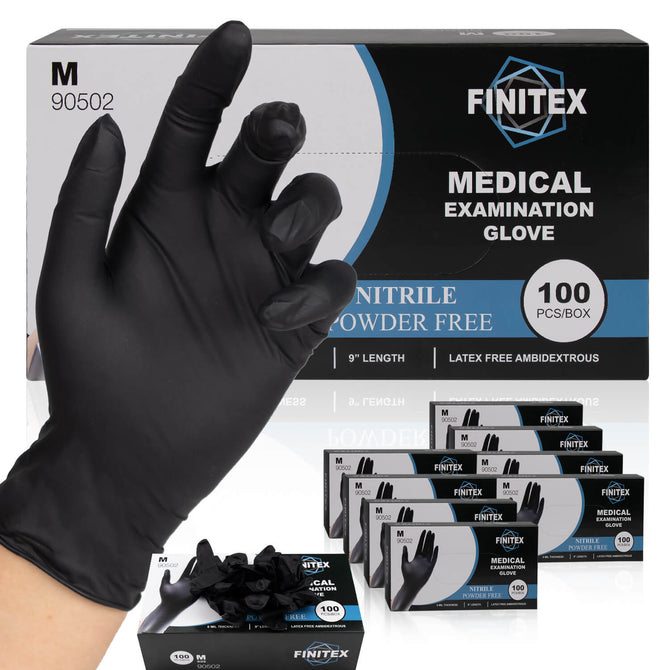
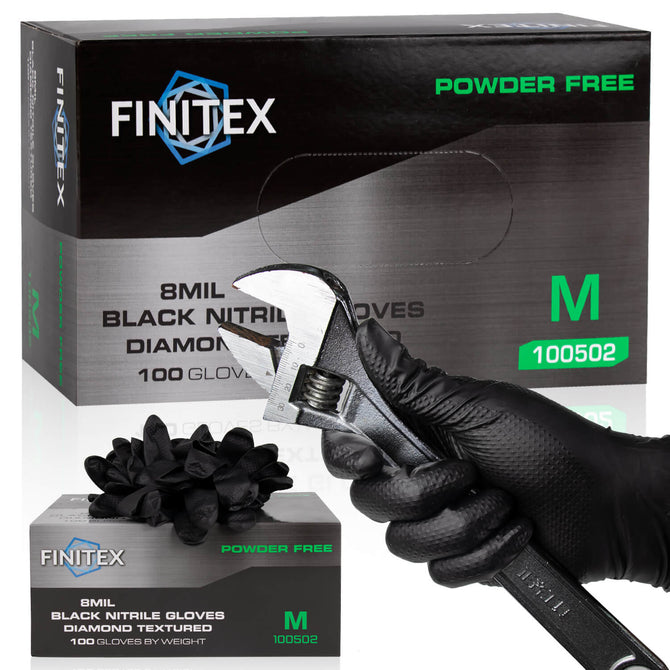

Nitrile gloves are used every day in healthcare, food service, cleaning, automotive repair, laboratories, tattoo studios, manufacturing, and countless other workplaces. Their combination of durability, flexibility, and resistance to many common chemicals makes them a practical choice for disposable hand protection.
But if your job requires gloves for several hours at a time, you may have an important question:
Can you safely wear nitrile gloves all day?
The short answer is: nitrile gloves can be suitable for extended periods of work, but wearing the same pair continuously all day is generally not a good practice. Gloves should be changed when they become contaminated, damaged, wet inside, or when the task changes. Taking care of your hands between glove changes is just as important as choosing the right glove.
Let's look at what you need to know about wearing nitrile gloves for long periods.
Can You Wear Nitrile Gloves All Day?
Nitrile gloves themselves are not inherently unsafe to wear for extended periods. The bigger issue is how they are used.
Wearing a properly fitted pair for a short or extended task may be perfectly reasonable. However, keeping the same pair on for an entire shift without changing them can create several problems, including moisture buildup, contamination, skin irritation, and reduced comfort.
For people who wear disposable gloves for hours at a time, a better approach is to:
-
Choose the correct glove size
-
Change gloves when they become contaminated or damaged
-
Replace gloves between tasks when cross-contamination is a concern
-
Remove gloves periodically when the task allows
-
Keep hands clean and completely dry before putting on a new pair
-
Give your skin time without gloves when continuous protection is not required
The goal is not simply to wear gloves for as long as possible. The goal is to use them correctly for the hazard and task at hand.
Why Can Wearing Gloves for Long Periods Cause Skin Problems?
One of the most common concerns with extended glove use is skin irritation.
Even though nitrile is latex-free and is generally a good option for people who want to avoid natural rubber latex, wearing any glove for a prolonged period can create a warm, moist environment against the skin.
Sweat, friction, repeated hand washing, and exposure to cleaning products or other irritants can all contribute to discomfort.
Some people may experience:
-
Dry or irritated skin
-
Redness
-
Itching
-
Chafing
-
Softened or wrinkled skin from prolonged moisture
-
Irritant contact dermatitis
If you regularly experience skin problems while wearing gloves, consider whether the glove size, material, powder, moisture, or length of wear could be contributing to the problem. Persistent or severe skin symptoms should be discussed with an appropriate healthcare professional.
Do Nitrile Gloves Make Your Hands Sweat?
They can.
Nitrile gloves form a barrier around the hands, so moisture from perspiration cannot evaporate as easily as it would from uncovered skin. This can become especially noticeable in hot workplaces or during physically demanding tasks.
The effect can be more noticeable when:
-
The work environment is hot
-
You are wearing gloves continuously
-
The gloves are too tight
-
You are performing repetitive or physically demanding work
-
You are wearing thicker gloves for heavy-duty applications
If sweaty hands are a regular problem, choosing the correct size and taking appropriate glove breaks can help improve comfort.
For applications where dexterity and comfort matter, a properly fitted disposable nitrile glove can provide a good balance between protection and flexibility.
How Glove Size Affects All-Day Comfort
Glove fit matters more than many people realize.
A glove that is too small can create unnecessary pressure on the fingers and hands. Over time, this may contribute to hand fatigue, restricted movement, and discomfort.
A glove that is too large can also cause problems. Excess material around the fingertips may interfere with dexterity and make it harder to grip tools or small objects.
For extended wear, look for a glove that:
-
Fits securely without excessive pressure
-
Allows your fingers to move naturally
-
Does not restrict your range of motion
-
Does not bunch excessively at the fingertips
-
Stays securely on your hands during normal movements
If you are unsure which size to choose, check the manufacturer's sizing guide rather than simply choosing your usual glove size.
How Often Should You Change Nitrile Gloves?
There is no universal rule that says a disposable nitrile glove must be changed after a specific number of minutes or hours.
Instead, change gloves based on contamination, damage, the task being performed, and workplace requirements.
You should replace nitrile gloves when they are:
Visibly Dirty or Contaminated
If the outside of the glove becomes contaminated, continuing to wear it can spread that contamination to other surfaces.
Torn, Punctured, or Damaged
A damaged glove can no longer provide the same barrier as an intact glove. Replace it as soon as you notice a tear, hole, or significant loss of integrity.
Wet or Sweaty Inside
If sweat accumulates inside the glove and your hands become uncomfortable, remove the gloves when the task allows. Dry your hands before putting on a fresh pair.
After Handling Different Materials
Changing gloves between tasks can help reduce cross-contamination, particularly in healthcare, food preparation, laboratories, and other environments where cleanliness is critical.
When the Job Requires a Different Type of Protection
Not every glove is designed for every task. A thin examination glove may be appropriate for one job, while a thicker industrial nitrile glove may be better suited to another.
Does Wearing Nitrile Gloves Protect You From Everything?
No.
Nitrile gloves provide a useful barrier against many contaminants, chemicals, oils, and other substances, but they are not a universal protective solution.
The level of protection depends on factors such as:
-
Glove material and formulation
-
Glove thickness
-
Chemical being handled
-
Exposure time
-
Temperature
-
Glove integrity
-
Whether the glove is appropriate for the specific task
For chemical handling in particular, do not assume that because a glove is made from nitrile, it is resistant to every chemical. Always check the manufacturer's chemical compatibility information and the requirements of your workplace.
Don't Forget About Hand Hygiene
One of the biggest mistakes people make with disposable gloves is treating gloves as a replacement for hand hygiene.
Gloves do not eliminate the need to clean your hands.
Before putting on a fresh pair:
-
Remove the old gloves properly.
-
Clean your hands according to the requirements of your workplace.
-
Dry your hands thoroughly.
-
Put on a new pair of gloves.
In environments where hand hygiene is especially important, follow the relevant workplace or industry procedures.
Avoid putting a new pair of gloves over visibly dirty or wet hands. The glove creates a barrier, but moisture and contaminants trapped against the skin can still contribute to irritation.
Should You Take Breaks From Wearing Nitrile Gloves?
If your job allows it, giving your hands regular breaks from gloves can improve comfort.
During an appropriate break:
-
Remove the gloves.
-
Allow your hands to dry.
-
Wash your hands when necessary.
-
Dry them thoroughly.
-
Apply a suitable hand moisturizer if appropriate for your workplace.
-
Put on a fresh pair of gloves when the task requires them again.
Of course, some workplaces require continuous glove use because of contamination or exposure risks. In those situations, follow your employer's PPE procedures rather than removing gloves simply for comfort.
Powder-Free Nitrile Gloves for Extended Wear
If you frequently wear disposable gloves, powder-free nitrile gloves can be a practical choice.
Powder-free gloves eliminate the need for glove powder, which can create additional mess and may cause irritation in some applications.
However, powder-free does not automatically mean that a glove will be comfortable for everyone. Fit, thickness, formulation, work environment, and individual skin sensitivity all matter.
If your hands tend to sweat during long shifts, you may also want to consider glove thickness carefully. A very thick glove may provide greater physical durability, while a thinner glove may offer greater flexibility and tactile sensitivity.
The best option depends on the job.
Choosing the Right Nitrile Glove for Long Workdays
If you regularly wear gloves for several hours, don't choose based on price alone.
Consider these factors:
1. Thickness
Thinner gloves can provide greater flexibility and tactile sensitivity, while thicker gloves can provide additional durability for demanding applications.
2. Fit
A properly fitted glove can reduce unnecessary hand fatigue and improve dexterity.
3. Texture
Textured fingertips or palms can provide better grip when handling tools, equipment, or wet objects.
4. Chemical Resistance
If your work involves chemicals, check the manufacturer's compatibility information instead of assuming all nitrile gloves provide the same protection.
5. Cuff Length
Longer cuffs can provide additional coverage for applications where liquids, chemicals, or contaminants may reach the wrist.
6. Color
Color can also be useful in professional environments. Some workplaces use different glove colors to help distinguish tasks or departments and make contamination easier to spot.
When Are Nitrile Gloves Especially Useful?
Nitrile gloves are widely used across many industries because they provide a convenient disposable barrier for everyday work.
Healthcare and Dental
Disposable nitrile gloves are commonly used when hand protection and contamination control are important.
Food Preparation
Nitrile gloves can help create a barrier between hands and food during appropriate food-handling tasks. Always follow applicable food-safety requirements for your workplace.
Automotive Repair
Mechanics often use nitrile gloves to help protect their hands from oil, grease, dirt, and other substances encountered during vehicle maintenance.
Cleaning and Janitorial Work
Nitrile gloves can be useful when handling cleaning products and contaminated surfaces. For heavier-duty cleaning jobs, consider a glove designed for the chemicals and exposure conditions involved.
Tattooing and Beauty Services
Nitrile gloves are popular in tattoo studios and beauty environments where hygiene, dexterity, and contamination control are important.
For professional applications, choosing the right nitrile gloves for cleaning, tattooing, automotive work, and other demanding tasks can make a noticeable difference in comfort and performance.
5 Signs You Should Change Your Nitrile Gloves
If you're wearing gloves for an extended shift, don't wait until the end of the day automatically.
Change them when:
-
You see a tear or puncture.
-
The outside becomes visibly contaminated.
-
Sweat or moisture builds up inside.
-
You move from one task to another where cross-contamination is a concern.
-
The gloves no longer fit or perform properly.
A fresh pair is usually a better choice than trying to get extra time out of a glove that is already compromised.
FAQs About Wearing Nitrile Gloves All Day
Can you wear nitrile gloves for 8 hours?
Nitrile gloves can be used during long work shifts, but that does not mean the same pair should be worn continuously for eight hours. Gloves should be changed when they become contaminated, damaged, wet inside, or when the task changes.
Is it bad to wear nitrile gloves all day?
Continuous glove use can contribute to moisture buildup, skin irritation, discomfort, and hand fatigue. If your work requires prolonged glove use, choose the correct size, change gloves when necessary, and give your hands appropriate breaks when workplace procedures allow.
Do nitrile gloves make your hands sweat?
They can. Because disposable nitrile gloves create a barrier around the hands, sweat may accumulate inside the glove, particularly in hot environments or during physically demanding work.
Are nitrile gloves better for sensitive skin?
Nitrile gloves are latex-free, which makes them a useful alternative for people who need to avoid natural rubber latex. However, being latex-free does not mean that everyone will tolerate prolonged glove use without irritation.
How often should I change nitrile gloves?
There is no single time-based rule for every job. Change gloves when they become contaminated, damaged, wet inside, or when moving between tasks requires a fresh pair. Follow your industry's specific glove-changing procedures when applicable.
Are powder-free nitrile gloves better for long-term use?
Powder-free nitrile gloves can be a practical choice for people who wear disposable gloves frequently. However, comfort also depends on glove fit, thickness, formulation, and individual skin sensitivity.
The Bottom Line
Can you wear nitrile gloves all day?
You can use nitrile gloves throughout a long workday, but wearing the same pair continuously from morning to evening is not a good general practice.
For safer and more comfortable glove use:
-
Choose the correct size.
-
Select the right thickness for the job.
-
Change gloves when they become contaminated or damaged.
-
Replace gloves between tasks when necessary.
-
Remove gloves when protection is no longer required.
-
Keep your hands clean and dry.
-
Give your hands appropriate breaks when your work allows.
-
Follow your workplace's PPE and hygiene procedures.
Nitrile gloves are designed to provide a practical barrier for many everyday tasks. The key to using them effectively is not simply wearing them longer—it is choosing the right glove and changing it at the right time.
Looking for disposable gloves for everyday work? Explore FINITEX disposable nitrile gloves in different thicknesses, colors, and styles to find an option suited to your application.