

If you work in a tattoo studio or medical aesthetics clinic, you already know the small frustrations that slow everything down: gloves snapping mid-procedure, cuffs tearing while pulling them on, or worse—having to stop, change gloves, and restart a delicate step.
It’s not just annoying. It’s expensive, disruptive, and avoidable.
Most people assume a glove is “good” if it feels comfortable or looks thick enough. But in reality, the real performance difference comes down to two material properties: tensile strength in gloves and elongation at break. These two factors decide whether a nitrile glove holds up under stress—or fails right at the cuff when you need it most.
Why cuff tears happen more often than you think
Cuff tearing is especially common in fast-paced environments like:
- Tattoo studios with constant glove changes
- Medical aesthetic procedures requiring precision and grip
- Waxing, facials, and deep cleaning services
The problem usually doesn’t start in the palm or fingers. It starts at the cuff.
When a glove is pulled quickly over damp hands or stretched aggressively during donning, low-quality nitrile material can’t distribute the stress evenly. The result is a sudden rip—often right at the wrist opening.
That’s where disposable glove durability becomes critical, not optional.
Tensile strength vs elongation: what actually matters
To understand glove performance, you need to look beyond thickness (mil rating) and focus on material science.
1. Tensile Strength in Gloves
Tensile strength measures how much force a material can withstand before breaking when stretched.
In simple terms:
It tells you how much pulling a glove can handle before it snaps.
Higher tensile strength means:
- Less tearing during donning
- Better resistance under pressure
- More reliability during long procedures
For tattoo artists stretching skin or doctors working in tight, controlled movements, this matters more than most people realize.
2. Elongation at Break
Elongation measures how far the glove can stretch before it breaks.
A high elongation rate means:
- Better flexibility
- Easier movement without resistance
- Lower risk of sudden tearing during stretching
When tensile strength and elongation work together, the glove doesn’t just resist breaking—it adapts to movement without failing.
The hidden cost of “cheap glove failures”
A torn glove isn’t just a replacement issue. It creates hidden costs:
- Interrupted workflow during procedures
- Contamination risk in sterile environments
- Loss of focus during detailed tattoo work
- Increased glove consumption per session
- Client perception of unprofessionalism
In tattoo and aesthetic work, even a 30-second interruption breaks rhythm—and rhythm is everything.
Over time, low-quality gloves cost more than premium ones simply because they fail more often.
Why professionals are switching to higher-performance nitrile gloves
Modern studios are shifting toward gloves designed specifically for durability under stress, not just basic protection.
A good professional-grade nitrile glove should offer:
- High tensile strength for resistance against tearing
- Strong elongation for flexibility and comfort
- Consistent cuff integrity during repeated donning
- Puncture resistance for sharp tools and needles
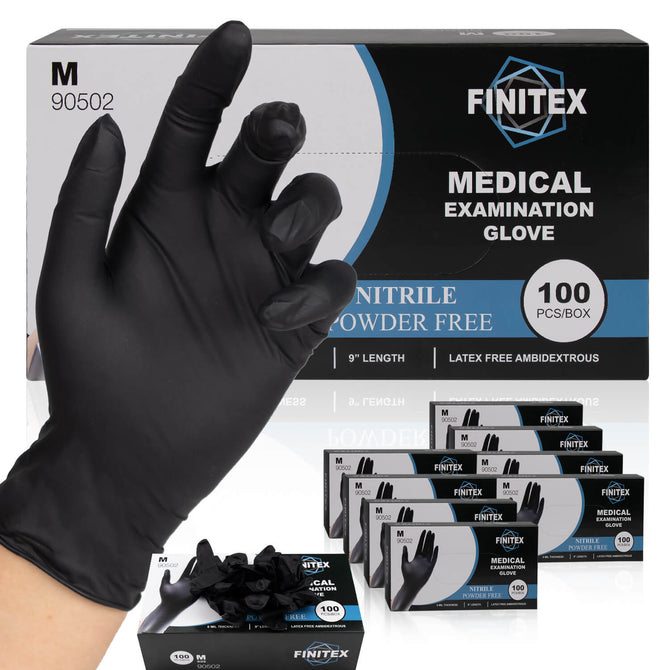
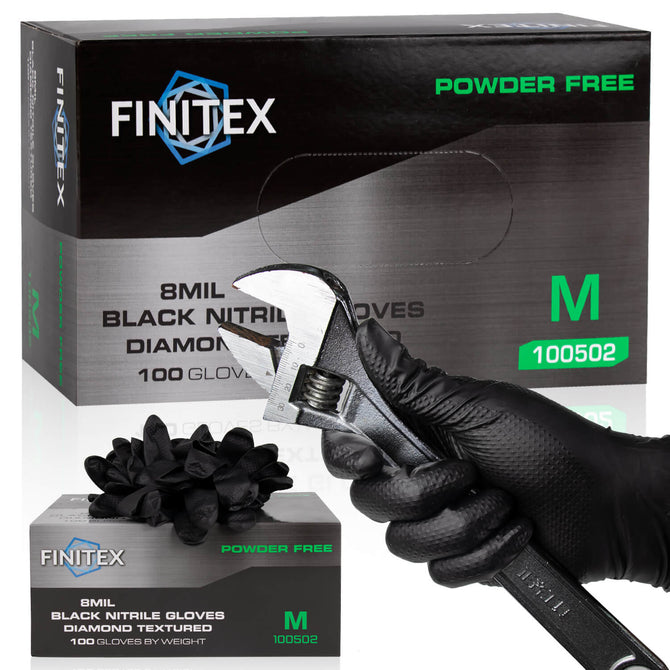
This is where quality-grade products like FINITEX 5 Mil Exam-Grade Black Nitrile Gloves stand out. Designed for demanding professional environments, they balance thickness with elasticity so the glove stretches without sacrificing structural integrity—especially at the cuff, where most failures happen.
For tattoo studios and medical aesthetic settings, this balance directly translates into fewer interruptions and smoother workflow.
Choosing the right tattoo studio supplies isn’t just about price
When sourcing tattoo studio supplies, gloves are often treated as a commodity. But they shouldn’t be.
Instead of focusing only on cost per box, consider:
- How often gloves tear during use
- Whether cuff integrity holds during fast changes
- How much downtime glove failure creates
- Whether material consistency is stable across batches
A slightly higher upfront cost can significantly reduce waste and downtime.
Shop all FINITEX tatoo gloves>>
Final thoughts
Cuff tears may seem like a minor inconvenience, but in professional environments, they’re a symptom of a bigger issue: low tensile performance.
Understanding tensile strength in gloves and elongation helps you choose better products, reduce interruptions, and improve workflow consistency.
For tattoo artists and medical professionals alike, durable nitrile gloves aren’t a luxury—they’re part of operational efficiency.
And in high-precision work, efficiency is everything.