

If your hands get sweaty while wearing disposable gloves, you're not alone.
Whether you work in healthcare, food service, tattooing, automotive repair, cleaning, beauty, or another glove-dependent job, trapped heat and moisture can make gloves uncomfortable. Damp hands can also make gloves harder to put on, affect your grip, and leave your hands feeling irritated after long periods of use.
So, what are the best gloves for sweaty hands?
The answer isn't simply "the thickest glove" or "the most expensive glove." The right choice depends on the glove material, fit, thickness, surface texture, and how long you need to wear and change gloves during your work.
In this guide, we'll look at why hands sweat inside gloves, what features to look for, and how to choose disposable nitrile gloves that balance comfort, grip, and durability.
Why Do Hands Sweat Inside Gloves?
Sweating is a normal way for your body to regulate temperature.
When you put on disposable gloves, however, the normal evaporation of moisture from your skin is restricted. Heat and moisture can build up inside the glove, especially when you're working in a warm environment or wearing gloves for extended periods.
Several factors can make sweaty hands worse:
- Hot kitchens or outdoor work
- Physical activity
- Long periods of glove use
- Gloves that fit too tightly
- Naturally sweaty hands
- Stress or nervousness
- Warm or humid working environments
For example, a mechanic working in a hot garage may experience much more moisture inside their gloves than someone performing a short task in an air-conditioned room.
This is why glove comfort isn't just about the material. Your work environment and glove-changing habits matter too.
Are Nitrile Gloves Good for Sweaty Hands?
Nitrile gloves can be a good option for people who experience sweaty hands, especially when comfort, stretch, grip, and latex-free construction are important.
However, it's important to clarify what that means.
Nitrile is a synthetic rubber material. Like other disposable glove materials, it doesn't allow your hands to freely "breathe" through the glove.
Instead, a well-fitting nitrile glove can provide a comfortable balance of:
- Flexibility
- Stretch
- Tactile sensitivity
- Tear resistance
- Grip
- Fit
For people who dislike the feel of sweaty hands inside gloves, choosing the right size, thickness, texture, and glove-changing schedule can make a noticeable difference.
What Makes a Good Glove for Sweaty Hands?
If your hands tend to sweat while wearing gloves, don't choose based on material alone.
Here are the most important features to consider.
1. A Comfortable Fit
Fit is one of the easiest things to overlook.
A glove that's too tight can feel hot and restrictive. It may also stretch excessively around the fingers and palms.
A glove that's too loose can bunch up, slide around, and interfere with grip.
The goal is a snug but comfortable fit that allows your fingers to move naturally.
If you're between sizes, check the manufacturer's sizing chart rather than automatically choosing the smaller size.
2. Appropriate Thickness
Glove thickness affects both comfort and durability.
A very thin glove can feel lightweight and flexible, which may be useful for short-duration tasks. A thicker glove can provide greater durability but may feel warmer and less flexible.
As a general guide:
| Glove Thickness | Typical Benefit | Common Applications |
|---|---|---|
| 3 mil | Lightweight and flexible | Food prep, light cleaning, general tasks |
| 4–5 mil | Balance of comfort and durability | Healthcare, beauty, tattooing, general-purpose work |
| 6 mil | Increased durability | Cleaning, automotive, maintenance |
| 8 mil | Heavy-duty protection | Industrial and demanding applications |
There isn't one thickness that's best for everyone.
If sweaty hands are your main concern, a moderate-thickness glove such as 4–5 mil may provide a useful balance between durability and comfort for many everyday applications.
For a more detailed comparison, see our nitrile glove thickness guide.
3. A Textured Surface for Better Grip
Sweaty hands can make it harder to maintain a secure grip.
This becomes especially noticeable when you're handling:
- Small tools
- Food-service equipment
- Tattoo equipment
- Automotive parts
- Cleaning tools
- Medical instruments
A glove with textured fingertips or a textured palm can help improve grip compared with a completely smooth surface.
If grip is important for your job, look for a glove with a texture designed for the type of handling you do.
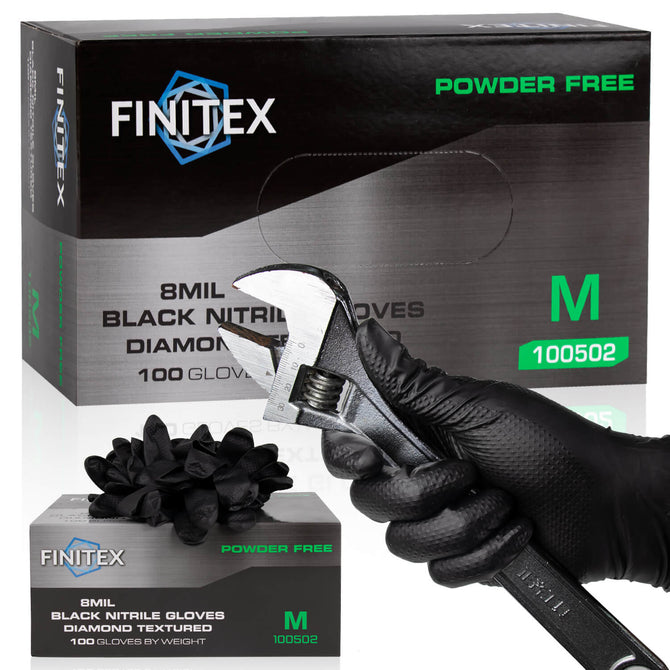
For mechanics and other applications where oils and moisture may be present, a diamond-textured nitrile glove can provide additional grip.
4. Easy Donning
Sweaty hands can make putting on disposable gloves frustrating.
The glove may stick to your skin, fold over, or tear while you're trying to pull it into place.
Some gloves feature a treated or specially finished interior that makes donning easier.
This can be particularly useful for people who:
- Change gloves frequently
- Work in warm environments
- Wear gloves for long shifts
- Have naturally moist hands
- Need to change gloves quickly between tasks
Always follow the manufacturer's instructions when putting on gloves.
5. Latex-Free Material
If latex sensitivity or latex allergy is a concern, nitrile gloves provide a latex-free alternative.
FINITEX offers a range of latex-free nitrile gloves for different applications.
Keep in mind that "latex-free" doesn't automatically mean a glove will prevent sweating. It simply means the glove isn't made with natural rubber latex.
Best Disposable Gloves for Sweaty Hands
There isn't one glove that is perfect for every job.
But if you're looking for a disposable glove that combines comfort, durability, and grip, a 5 mil nitrile glove can be a practical starting point.
FINITEX 5 Mil Black Nitrile Gloves
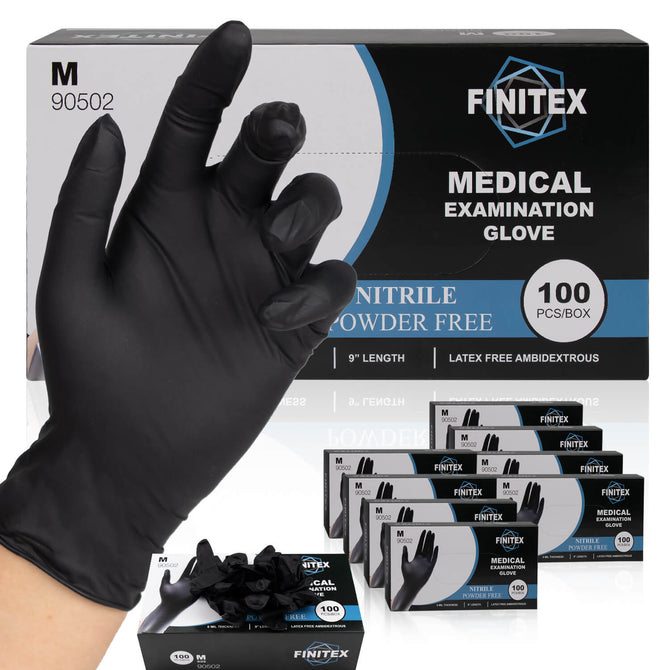
For general-purpose work, our FINITEX 5 Mil Black Nitrile Gloves offer a balance between flexibility and durability.
Why choose 5 mil nitrile?
A 5 mil glove is thick enough for many everyday applications without feeling as bulky as heavier industrial gloves.
Depending on the specific product configuration, useful features can include:
- 5 mil thickness
- Powder-free construction
- Latex-free nitrile material
- Comfortable stretch
- Textured surface for improved grip
- Black color that can help hide certain stains
- Options suitable for a variety of professional and general-purpose applications
They're particularly suitable for jobs where you need a combination of comfort, tactile control, and durability, including automotive work, tattooing, cleaning, beauty services, and general maintenance.
Important: No disposable glove is designed to eliminate sweating. If your hands become heavily sweaty during work, changing gloves when needed and allowing your hands to dry between glove changes can be just as important as the glove you choose.
Nitrile vs. Latex vs. Vinyl for Sweaty Hands
If you're comparing disposable glove materials, here's a simple overview.
| Feature | Nitrile | Latex | Vinyl |
|---|---|---|---|
| Synthetic material | Yes | No | Yes |
| Latex-free | Yes | No | Yes |
| Stretch | Excellent | Excellent | Lower |
| Tactile sensitivity | Very good | Excellent | Moderate |
| Puncture resistance | Generally high | Moderate | Lower |
| Common use | Healthcare, cleaning, automotive, beauty | Medical and general use where latex is appropriate | Food service, light-duty tasks |
The best material depends on the task, workplace requirements, user preferences, and potential allergy considerations.
For many users, nitrile is a practical all-around choice because it combines flexibility, durability, and latex-free construction.
How to Keep Your Hands More Comfortable Inside Gloves
Choosing the right glove is only part of the solution.
Your daily glove habits can also make a difference.
1. Start With Clean, Dry Hands
Before putting on gloves, wash your hands according to the requirements of your workplace and dry them thoroughly.
Putting gloves over damp hands can make the inside feel uncomfortable from the beginning.
2. Choose the Correct Size
Don't intentionally size down to get a tighter fit.
A glove should fit securely without excessive pressure around your fingers, palm, or wrist.
If your fingertips feel cramped or the material is constantly stretched, try a different size.
3. Change Gloves When Appropriate
If your hands become noticeably sweaty during a long task, consider changing gloves when appropriate for your work.
A fresh pair can be much more comfortable than continuing to work in a glove that's already wet inside.
More importantly, gloves should be changed whenever they become contaminated, damaged, or unsuitable for the next task.
You can also read our guide on how long you can safely wear disposable nitrile gloves.
4. Give Your Hands a Chance to Dry
When your work allows it, remove gloves between tasks and allow your hands to dry before putting on a fresh pair.
Follow the hand-hygiene procedures required for your workplace, particularly in healthcare, food service, and other regulated environments.
5. Don't Use Powdered Gloves Just to Deal With Sweat
Powdered gloves may seem like an easy solution for moisture, but powder isn't necessary for most disposable glove applications.
Powder can also create problems in certain workplaces.
For healthcare, food handling, and other sensitive applications, always follow the applicable workplace requirements and choose an appropriate powder-free glove when required.
What About Glove Liners?
Some people consider wearing fabric glove liners underneath disposable gloves to manage moisture.
They may be useful in certain non-clinical applications, particularly when a person needs additional comfort during extended glove use.
However, they aren't appropriate for every workplace or every task.
In healthcare, food service, laboratories, and other hygiene-sensitive environments, additional layers can affect fit, dexterity, hygiene, and proper glove use.
If you use liners, make sure they're compatible with your specific application and workplace requirements.
For many users, choosing the correct glove size and changing gloves when necessary is the simpler solution.
Choosing the Right Glove for Your Job
The "best glove for sweaty hands" isn't necessarily the same for every industry.
Healthcare
Prioritize:
- Proper fit
- Tactile sensitivity
- Powder-free construction
- Appropriate medical/exam glove specifications
- Correct glove-changing procedures
Food Service
Look for:
- Food-contact suitability
- Comfortable fit
- Good dexterity
- Appropriate texture
- Powder-free construction when required
You can explore our food-service nitrile gloves for food-preparation applications.
Tattooing and Beauty
Look for:
- Comfortable fit
- Good tactile sensitivity
- Secure grip
- Latex-free construction
- Appropriate thickness
A 4–5 mil nitrile glove is often a practical starting point for tasks requiring precision and frequent hand movement.
Automotive Work
Mechanics often need more than comfort.
Look for:
- Greater puncture resistance
- Oil and grease resistance
- Strong grip
- Appropriate thickness
- Durable construction
For demanding garage work, consider a heavy-duty nitrile glove rather than an ultra-thin glove.
Sweaty Hands and Glove Irritation
Moisture isn't the only factor that can make gloves uncomfortable.
Prolonged exposure to sweat, friction, and occlusion can contribute to skin discomfort for some people.
If your hands frequently become irritated while wearing gloves, consider:
- Taking appropriate glove breaks when your work allows
- Keeping hands clean and dry
- Choosing the correct glove size
- Avoiding unnecessary glove changes that increase friction
- Using powder-free gloves
- Following your workplace's hand-hygiene procedures
If irritation continues or becomes severe, consider speaking with a qualified healthcare professional to determine the cause.
Frequently Asked Questions
What are the best gloves for sweaty hands?
For many users, powder-free nitrile gloves in a comfortable 4–5 mil thickness can be a good starting point. The best option depends on your work environment, glove size, required durability, and grip needs.
Do nitrile gloves make your hands sweat?
Any disposable glove can trap heat and moisture because it creates a barrier around your hand. Nitrile itself does not prevent sweating. Proper sizing, suitable thickness, regular glove changes, and allowing hands to dry between uses can improve comfort.
Are nitrile gloves more breathable than latex?
It's better not to think of disposable nitrile gloves as "breathable." Nitrile gloves form a barrier and can trap moisture. Their advantages are more related to flexibility, durability, chemical resistance for specific substances, and latex-free construction.
Are thinner gloves better for sweaty hands?
Not necessarily. Thinner gloves may feel lighter and less bulky, but thickness should be selected based on the task. A 4–5 mil glove can offer a practical balance of comfort and durability for many applications.
Do textured nitrile gloves help with sweaty hands?
Texture doesn't reduce sweating, but it can help maintain grip when moisture is present on the glove surface. This can be especially useful for mechanics, cleaners, tattoo artists, and other workers who need reliable handling.
Should I wear glove liners for sweaty hands?
Glove liners may be useful in some applications, but they aren't suitable for every environment. In healthcare and food service, follow applicable hygiene and workplace requirements before using liners.
How often should I change gloves?
Change disposable gloves when they become contaminated, damaged, or unsuitable for the next task, and follow the glove-changing procedures applicable to your industry. Sweaty or uncomfortable gloves may also need to be replaced when appropriate.
Final Thoughts: Comfort Starts With the Right Glove
Sweaty hands can make disposable gloves uncomfortable, but the solution isn't necessarily to find a glove that "stops" sweating.
Instead, focus on finding a glove that works well with your hands and your job.
Look for:
- A comfortable fit
- Appropriate thickness
- Good flexibility
- A textured surface when grip matters
- Powder-free construction
- Latex-free nitrile when appropriate
- A glove specification suited to your application
For many everyday applications, 5 mil nitrile gloves offer a useful balance between comfort, dexterity, and durability.
If you're looking for disposable nitrile gloves for healthcare, food service, cleaning, automotive work, tattooing, beauty, or general-purpose applications, explore the FINITEX Nitrile Gloves collection from TITANS MEDICARE.
Choose the right fit. Choose the right thickness. And when the gloves become wet, contaminated, or damaged, change them.