

When shopping for disposable gloves, you'll quickly notice that they come in almost every color imaginable—blue, black, white, purple, green, pink, orange, and more.
But does glove color actually mean something?
Sometimes it does. More often, glove color is chosen for identification, organization, visibility, branding, or personal preference rather than a specific performance standard.
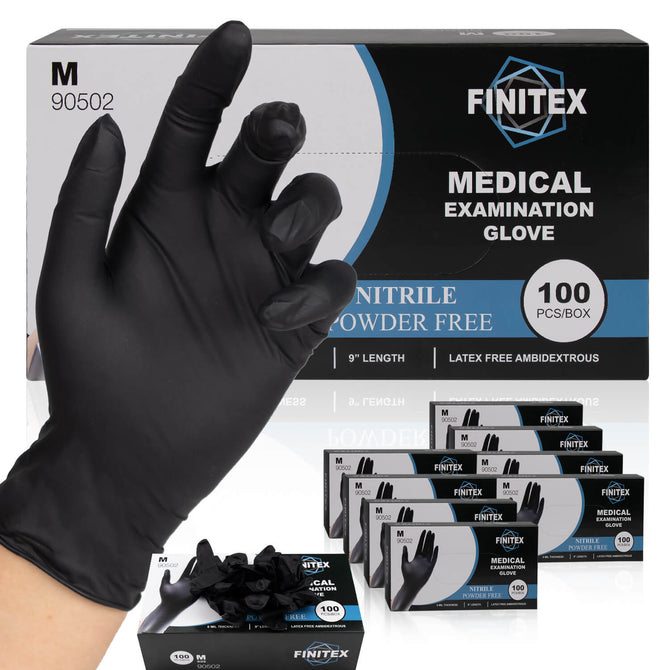
For example, blue nitrile gloves are common in healthcare and food-handling environments, while black nitrile gloves are popular in automotive repair, tattoo studios, and other messy applications. Bright colors such as orange can also make gloves easier to see.
However, one important rule should always come first:
Color alone does not determine a glove's material, chemical resistance, thickness, or protective performance.
To choose the right disposable glove, you should consider the material, thickness, certifications, texture, and intended application—not just the color.
Let's take a closer look at what different glove colors can mean and how to choose the right one for your workplace.
Do Disposable Glove Colors Have a Standard Meaning?
No. There is no universal rule that says a particular disposable glove color must represent a specific material, hazard level, or industry.
A manufacturer may offer the same nitrile glove in several colors without changing its basic protective properties. Likewise, two purple gloves from different manufacturers may have completely different formulations, thicknesses, and chemical-resistance characteristics.
Color can still be useful, though.
Many businesses use glove colors as part of their own color-coding systems. Different colors can help employees quickly identify tasks, departments, or work areas and may help reduce cross-contamination when the system is consistently followed.
Think of color as an identification tool, not a safety rating.
1. Blue Nitrile Gloves: Healthcare, Food Service, and General Use
Blue is one of the most recognizable colors for disposable nitrile gloves.
Why are blue gloves so popular?
Blue provides a clean, professional appearance and is easy to recognize in busy work environments. Blue nitrile gloves are commonly seen in healthcare, dental offices, laboratories, food service, cleaning, and general-purpose applications.
Many facilities also use blue as part of their own color-coding systems.
Common applications
-
Healthcare and medical examinations
-
Dental offices
-
Food preparation
-
Laboratories
-
Cleaning and sanitation
-
General-purpose tasks
For workplaces looking for a versatile everyday glove, blue nitrile gloves are a practical option.
It's important to remember that blue does not automatically mean medical grade or food safe. Always check the product's specific certifications and intended use.
2. White Disposable Gloves: Clean Appearance and Food Handling
White disposable gloves are often chosen when maintaining a clean, professional appearance is important.
Because white provides strong visual contrast, dirt and visible contamination can be easier to notice. This can be useful in food preparation, hospitality, light-duty cleaning, and certain manufacturing environments.
Common applications
-
Food preparation
-
Food service
-
Hospitality
-
Light-duty cleaning
-
Certain laboratory and manufacturing applications
White gloves can be made from different materials, including nitrile, vinyl, and latex.
Again, white does not automatically mean cleaner or safer. The glove's actual material, certification, and intended application are what determine its suitability.
3. Black Nitrile Gloves: Automotive, Tattooing, and Messy Jobs
Black is one of the most popular colors for professional nitrile gloves.
The main advantage is practical: black helps hide stains from ink, grease, oil, dirt, and other dark substances.
That's one reason black nitrile gloves are especially popular among tattoo artists, automotive technicians, mechanics, barbers, salon professionals, and workers who regularly deal with messy materials.
Common applications
-
Tattoo studios
-
Automotive repair
-
Mechanics and maintenance
-
Hair and beauty salons
-
Cleaning
-
Industrial work
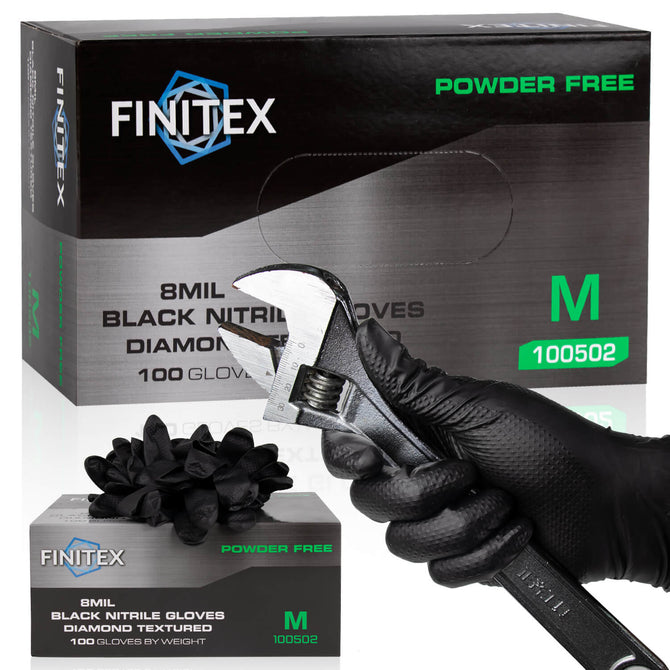
For demanding applications, glove thickness matters just as much as color. A thicker black nitrile glove may provide greater resistance to tearing and punctures than a lightweight disposable glove.
If you're working with heavy grease, tools, or rough surfaces, consider the glove's thickness and texture rather than choosing based on color alone.
4. Green Nitrile Gloves: A Practical Alternative for Color Coding
Green nitrile gloves are increasingly used by workplaces that want an alternative to traditional blue or black gloves.
Green can be particularly useful as part of a workplace color-coding system. For example, a business might assign different glove colors to different departments or tasks.
Common uses
-
Laboratories
-
Cleaning
-
Manufacturing
-
Gardening
-
General maintenance
-
Color-coded workplace systems
Some manufacturers also offer specialty green nitrile gloves with specific environmental or performance claims.
However, green does not automatically mean biodegradable, eco-friendly, or more chemical-resistant.
If those characteristics matter to your application, look for specific product claims, certifications, and technical information rather than relying on color.
5. Purple Nitrile Gloves: Easy Identification and Professional Use
Purple is another popular color for disposable nitrile gloves, particularly in healthcare, laboratory, beauty, and other professional environments.
Purple provides strong visual differentiation from common blue and black gloves, which can be useful for workplace color coding.
Common applications
-
Healthcare
-
Dental offices
-
Laboratories
-
Cleaning
-
Beauty and personal care
-
General-purpose applications
Some specialty purple gloves may be formulated for specific chemical or hazardous-material applications, but the color itself does not guarantee chemical resistance.
If you're handling chemicals, always check the manufacturer's chemical compatibility data and select a glove based on the actual chemical, concentration, exposure time, and glove construction.
6. Pink and Rose Red Nitrile Gloves: Healthcare, Beauty, and Personal Preference
Pink and rose red gloves offer something different: a softer, more distinctive appearance.
They are often chosen by healthcare workers, caregivers, beauty professionals, salons, and businesses that want their disposable gloves to look less clinical.
Pink or rose red gloves can also be incorporated into workplace branding, seasonal campaigns, or awareness initiatives.
Common applications
-
Healthcare and caregiving
-
Dental offices
-
Beauty and nail salons
-
Hair salons
-
Tattoo studios
-
General-purpose tasks
For example, rose red nitrile gloves can add a distinctive look while still providing the practical benefits of a disposable nitrile glove.
As with other colors, the protective properties come from the glove's construction and specifications—not its color.
7. Orange Nitrile Gloves: Visibility and Industrial Applications
Bright orange gloves are easy to spot, which can be useful in busy workplaces.
Orange can help workers and supervisors quickly see whether gloves are being worn and can make hand movements more noticeable in certain environments.
This makes bright orange a popular choice for:
-
Automotive repair
-
Industrial maintenance
-
Construction-related tasks
-
Manufacturing
-
General mechanical work
-
Outdoor work
For heavy-duty applications, however, color should not be confused with high-visibility PPE certification.
An orange disposable nitrile glove may be easier to see, but that does not automatically make it ANSI-compliant high-visibility protective equipment.
If durability is your priority, look for features such as greater thickness, textured surfaces, and stronger puncture and tear resistance.
Does Glove Color Affect Glove Performance?
Usually, not by itself.
Two nitrile gloves in different colors may have similar basic performance characteristics, while two gloves in the same color may perform very differently.
When comparing disposable gloves, pay attention to:
Material
Nitrile, vinyl, and latex have different properties and are suitable for different applications.
Thickness
Glove thickness is commonly measured in mils. Thicker gloves generally provide greater physical durability, while thinner gloves can provide more flexibility and tactile sensitivity.
Texture
Textured fingertips or palms can improve grip when handling tools, liquids, or small objects.
Chemical Resistance
If you work with chemicals, review the manufacturer's chemical-resistance information. Do not assume a glove is chemical-resistant simply because it is nitrile or a particular color.
Certifications and Intended Use
For medical, food-handling, or other regulated applications, check the specific product documentation and applicable requirements.
Why Do Businesses Use Different Glove Colors?
Color can be surprisingly useful in a professional environment.
1. Color Coding
Businesses can assign specific colors to different tasks or departments.
For example:
-
Blue = general tasks
-
Black = automotive work
-
Green = cleaning
-
Purple = laboratory work
There is no universal rule for these assignments. The important thing is consistency within your workplace.
2. Cross-Contamination Control
Using different glove colors for different tasks can make it easier for employees to recognize when the wrong glove is being used.
For example, a food-service operation could establish separate glove colors for different preparation areas.
Color coding should always be used alongside proper glove-changing and hand-hygiene procedures.
3. Workplace Organization
Different colors can help employees quickly identify which gloves belong in a particular department or workstation.
4. Professional Appearance
Color can also influence how customers perceive a business.
Black gloves may create a sleek, professional appearance in a tattoo studio or automotive shop, while blue or white gloves may fit better in healthcare and food-service environments.
5. Visibility
Bright colors such as orange can make gloves easier to see, particularly in busy work environments.
How to Choose the Right Glove Color
Choosing a glove color doesn't have to be complicated.
Ask yourself:
Do you need color coding?
If employees perform different tasks, assigning colors to specific jobs may make your workflow easier to manage.
Do you work with messy materials?
Black gloves can be a practical choice when working with ink, grease, oil, or dirt.
Do you want contamination to be easy to spot?
White or lighter-colored gloves can make visible dirt and stains easier to notice.
Do you need greater visibility?
Bright orange or other highly visible colors can make gloves easier to see.
Does appearance matter to your customers?
Tattoo studios, salons, dental offices, and other customer-facing businesses may choose colors that complement their brand or create a particular atmosphere.
But remember:
Choose glove performance first and color second.
Color Is Only One Part of the Decision
When buying disposable gloves, it's easy to focus on color because it's immediately visible.
But the more important questions are:
-
Is the glove made from the right material?
-
Is the thickness appropriate for the job?
-
Does it provide the required chemical resistance?
-
Is the glove the right size?
-
Does it provide enough grip?
-
Is it suitable for the intended application?
-
Does it meet the relevant workplace or regulatory requirements?
A black 6 mil nitrile glove and a blue 3 mil nitrile glove may look similar at first glance, but they can provide very different levels of durability and tactile performance.
That's why color should help you organize and identify your gloves—not be the main factor you use to judge protection.
FAQs About Disposable Glove Colors
What does the color of disposable gloves mean?
There is no universal color standard for disposable gloves. Colors are often selected for identification, color coding, visibility, branding, or appearance.
Are blue gloves always nitrile?
No. Blue disposable gloves can be made from nitrile, vinyl, latex, or other materials. Check the product specifications to confirm the material.
Are purple gloves more chemical resistant?
Not necessarily. Purple is simply a color. Chemical resistance depends on the glove's material, formulation, thickness, and the specific chemical being handled.
Are black gloves better for tattooing?
Black nitrile gloves are popular for tattooing because they help hide ink stains and provide a clean, professional appearance. However, the glove's fit, material, thickness, and suitability for the task are more important than its color.
Are orange gloves safer?
Orange gloves are highly visible, which can be useful in some workplaces. However, orange color alone does not mean that a glove is certified as high-visibility PPE or provides greater protection.
Does green mean a glove is biodegradable?
No. Green color does not automatically mean a glove is biodegradable or environmentally friendly. Look for specific manufacturer claims and certifications.
What color nitrile gloves are best?
There is no single best color. Choose based on your workplace requirements. Blue is versatile, black is popular for messy work, lighter colors can make visible contamination easier to spot, and bright colors such as orange can improve visual identification.
Final Thoughts
Disposable glove color is about more than aesthetics, but it doesn't tell you everything about a glove.
Blue, black, white, purple, green, pink, rose red, and orange gloves can all serve useful purposes in different workplaces. Color can help with organization, task identification, visibility, branding, and professional appearance.
But when it comes to actual hand protection, material, thickness, fit, texture, chemical resistance, certifications, and intended use matter far more than color.
Whether you're stocking a dental office, tattoo studio, automotive shop, salon, cleaning company, laboratory, or home workspace, choose the glove based on the job first—and use color to make your glove system easier to manage.
Looking for different colors of disposable nitrile gloves? Explore FINITEX nitrile gloves in blue, black, rose red, orange, and other options to find the right combination of performance, comfort, and style for your application.