


If you live in the United States, you've probably seen the term FDA on food packaging, medications, medical products, cosmetics, and other consumer products. But what does FDA actually mean, and what does the agency do?
The U.S. Food and Drug Administration (FDA) is a federal agency within the U.S. Department of Health and Human Services (HHS). Its responsibilities cover a wide range of products that affect public health, including foods, human and animal drugs, biological products, medical devices, cosmetics, tobacco products, and more.
For businesses and consumers, understanding the FDA can also help explain why certain products—such as medical gloves and food-contact gloves—are subject to specific requirements.
In this guide, TITANS MEDICARE explains what the FDA is, what it regulates, how FDA oversight works, and what the FDA means when you see claims related to food-contact or medical products.

What Does FDA Stand For?
FDA stands for the Food and Drug Administration.
The FDA is a federal agency responsible for protecting public health by regulating a broad range of products under the laws administered and enforced by the agency.
Its responsibilities include areas such as:
-
Food safety
-
Human drugs
-
Biological products
-
Medical devices
-
Cosmetics
-
Tobacco products
-
Certain radiation-emitting products
-
Animal drugs
-
Animal food
-
Certain other products that fall under the agency's legal authority
The FDA's mission is broader than simply "approving products." Depending on the product category, the agency may establish standards, review submissions, inspect facilities, monitor products after they enter the market, enforce regulations, and communicate safety information to the public.
What Is the FDA?
The FDA is part of the U.S. Department of Health and Human Services (HHS).
Its work affects products used by consumers, healthcare professionals, food businesses, manufacturers, and other organizations across the United States.
The agency's responsibilities vary considerably depending on the type of product.
For example:
-
A new prescription drug generally goes through a formal FDA review process before marketing.
-
Certain medical devices may require FDA clearance, approval, or authorization depending on their classification and intended use.
-
Cosmetics generally do not require FDA premarket approval, with certain exceptions such as color additives.
-
Dietary supplements are regulated differently from drugs and generally do not require FDA approval before being marketed.
-
Food manufacturers and food-contact materials are subject to applicable federal requirements, although the regulatory pathway depends on the specific substance and intended use.
This distinction is important because "FDA regulated," "FDA cleared," "FDA approved," and "FDA accepted" do not necessarily mean the same thing.
A Brief History of the FDA
The history of federal food and drug regulation in the United States dates back more than a century.
In 1906, Congress passed the Pure Food and Drugs Act, which prohibited interstate commerce in adulterated and misbranded food and drugs.
At the time, federal enforcement responsibilities were associated with the U.S. Department of Agriculture's Bureau of Chemistry.
In 1927, the regulatory organization was renamed the Food, Drug, and Insecticide Administration.
In 1930, the name was shortened to the Food and Drug Administration, or FDA.
A major milestone followed in 1938, when Congress passed the Federal Food, Drug, and Cosmetic Act (FD&C Act). The law significantly expanded federal authority over foods, drugs, cosmetics, and medical devices.
Since then, additional legislation has expanded or modified the FDA's responsibilities as science, technology, manufacturing, and public-health needs have changed.
Today, the FDA is one of the most important federal regulatory agencies involved in products that affect public health.
What Does the FDA Regulate?
The FDA oversees several major categories of products.
1. Food
Food safety is one of the FDA's best-known areas of responsibility.
The FDA oversees many aspects of the U.S. food supply, including requirements related to:
-
Food safety
-
Food labeling
-
Food additives
-
Food manufacturing
-
Food handling
-
Contamination prevention
-
Certain imported foods
However, it is important to note that not all food products in the United States are regulated by the FDA. For example, the U.S. Department of Agriculture (USDA) has primary responsibility for certain meat, poultry, and processed egg products.
The FDA also has an important role in food-contact materials
2. Human Drugs
The FDA regulates prescription and over-the-counter drugs.
For many new drugs, manufacturers must submit extensive evidence to the FDA before marketing. The review process can involve information about:
-
Safety
-
Effectiveness
-
Manufacturing
-
Labeling
-
Quality
-
Risk-benefit considerations
After a drug enters the market, FDA oversight continues through safety monitoring and other regulatory activities.
3. Medical Devices
The FDA regulates medical devices ranging from relatively simple products to highly complex technologies.
Examples include:
-
Diagnostic equipment
-
Surgical instruments
-
Patient monitoring equipment
-
Certain wound-care products
-
Dental devices
-
Implantable devices
Importantly, medical devices are not all subject to the same regulatory pathway.
Disposable medical examination gloves are another example of products used in healthcare environments that may be subject to FDA requirements depending on their intended use and classification.
Depending on the device and its classification, a product may be subject to requirements involving:
-
Registration and listing
-
Premarket notification
-
Premarket approval
-
De Novo classification
-
Quality system requirements
-
Labeling requirements
-
Post-market surveillance
This is why it is more accurate to say that a medical device is FDA regulated rather than automatically calling every medical device "FDA approved."
4. Vaccines and Other Biological Products
The FDA also regulates many biological products, including vaccines, blood products, certain cellular and gene therapies, and other biologics.
The agency evaluates products according to applicable legal and scientific requirements and continues monitoring safety after products reach the market.
5. Cosmetics
The FDA regulates cosmetics under federal law, but the regulatory framework is different from that for drugs.
For example, most cosmetics do not require FDA premarket approval before they are marketed.
However, cosmetics must comply with applicable federal requirements, and the FDA can take regulatory action against products that are adulterated or misbranded.
Certain ingredients, including color additives, are subject to specific requirements.
6. Tobacco Products
The FDA regulates tobacco products under the Family Smoking Prevention and Tobacco Control Act and subsequent legislation.
The agency's responsibilities include regulatory oversight of tobacco products and certain products containing nicotine that fall within its legal authority.
7. Dietary Supplements
Dietary supplements are regulated by the FDA, but they are not regulated in exactly the same way as prescription drugs.
In general, dietary supplements do not require FDA approval before being marketed.
Manufacturers and distributors are responsible for ensuring that their products comply with applicable requirements, while the FDA monitors the market and can take action when products violate federal law.
This is another example of why the phrase "FDA regulated" does not automatically mean "FDA approved."
8. Animal Food and Veterinary Products
The FDA also regulates products used for animals, including:
-
Animal drugs
-
Certain veterinary products
-
Animal food
-
Pet food
-
Certain animal medical devices
These products are subject to requirements designed to protect animal health and, in some cases, human health as well.
How Does the FDA Regulate Products?
FDA oversight can involve several different activities depending on the product category and applicable law.
Premarket Review
Some products must undergo FDA review before they can be legally marketed.
For example, many new drugs require FDA approval before marketing.
Certain medical devices may require FDA clearance, approval, or authorization depending on their classification and intended use.
However, not every product regulated by the FDA requires premarket approval.
Understanding this distinction is essential when evaluating an FDA-related product claim.
Manufacturing and Facility Inspections
The FDA may inspect facilities and manufacturing operations to evaluate compliance with applicable requirements.
Inspections can help the agency identify problems involving:
-
Manufacturing practices
-
Sanitation
-
Quality systems
-
Recordkeeping
-
Product safety
-
Labeling
-
Other regulatory requirements
Depending on the situation, the FDA can take enforcement action when violations are identified.
Post-Market Monitoring
FDA oversight does not necessarily stop after a product reaches the market.
Depending on the product category, the agency may monitor:
-
Adverse events
-
Safety concerns
-
Product complaints
-
Manufacturing problems
-
Recalls
-
New scientific information
This ongoing oversight helps identify potential problems that may not have been apparent before a product entered the market.
What Does "FDA Approved" Actually Mean?
This is one of the most important FDA terms for consumers and businesses to understand.
FDA approved generally means that the FDA has formally approved a particular product through a regulatory pathway that requires approval.
However, not every FDA-regulated product is "FDA approved."
For example:
-
Some drugs are FDA approved.
-
Some medical devices are FDA cleared rather than approved.
-
Some products are subject to registration or listing requirements.
-
Cosmetics generally are not FDA approved before marketing.
-
Dietary supplements generally do not require FDA premarket approval.
Therefore, businesses should avoid using "FDA approved" as a generic marketing phrase for products simply because they are subject to FDA regulation.
FDA and Food-Contact Materials
For businesses in the food-service industry, another important part of FDA regulation involves materials that come into contact with food.
Food-contact substances can include materials used in:
-
Food processing equipment
-
Packaging
-
Containers
-
Utensils
-
Food preparation products
-
Disposable food-service products
Under U.S. food regulations, certain substances that are expected to become components of food or otherwise contact food may be subject to specific requirements.
This is where disposable gloves can become relevant.
Are Disposable Gloves Regulated by the FDA?
The answer depends on how the gloves are intended to be used and how the product is classified.
Disposable gloves can be marketed for different applications, including:
-
- Food-service gloves
- Medical examination
- Dental procedures
- Tattooing
- Industrial work
- Cleaning
- Automotive work
- General-purpose applications
A glove intended for food contact and a glove intended for medical examination are not necessarily regulated in the same way.
For medical gloves, FDA requirements can apply based on the glove's intended use and classification.
For gloves used in food preparation, the key consideration is whether the glove and its materials are suitable for the intended food-contact application under applicable requirements.
This is why businesses should always look at the specific product documentation and intended use, rather than assuming that every nitrile glove is automatically suitable for food contact or medical use.
What Does "FDA Accepted for Food Contact" Mean?
You may see food-service glove packaging or product descriptions using language such as:
"All components are FDA accepted for food contact."
For a glove marketed for food preparation, this type of statement is intended to communicate that the materials used in the glove are suitable for the applicable food-contact use under the relevant requirements.
However, businesses should still follow the manufacturer's instructions and verify that the product is appropriate for their specific application.
If you're comparing different options, see our guide to whether nitrile gloves are food safe for a closer look at food-contact considerations.
Food-contact suitability can depend on factors such as:
-
The type of food
-
Food composition
-
Contact conditions
-
Temperature
-
Duration of contact
-
Intended use
-
Applicable regulatory requirements
In other words, FDA food-contact compliance is about the suitability of the material for its intended food-contact conditions—not simply whether the glove is made from nitrile.
Why Does FDA Compliance Matter When Choosing Food-Service Gloves?
For restaurants, catering companies, commercial kitchens, food manufacturers, and other food-service businesses, disposable gloves are part of a larger food-safety system.
The right glove can help support hygienic food-handling practices by creating a barrier between hands and food.
However, gloves should not be considered a replacement for proper handwashing or food-safety procedures.
Food-service employees should:
-
Wash hands before putting on gloves
-
Use clean gloves for food handling
-
Change gloves when they become contaminated
-
Change gloves when switching tasks
-
Avoid touching unnecessary surfaces while handling food
-
Never wash or reuse disposable gloves unless the specific product is explicitly designed and approved for such use
Choosing a glove that is appropriate for food contact is only one part of good food-safety practice.
For restaurants, catering companies, commercial kitchens, and food processors, choosing the right food-service nitrile gloves can be an important part of a broader food-handling program.
FDA and Nitrile Gloves: What Should Businesses Look For?
If you are purchasing disposable nitrile gloves for your business, don't rely on the word "FDA" alone.
Instead, look at the complete product information.
1. Intended Use
Is the glove designed for:
-
Food service?
-
Medical examination?
-
Dental use?
-
Tattooing?
-
Cleaning?
-
Automotive work?
-
Industrial applications?
The intended use should match your actual application.
2. Material
Nitrile is a synthetic rubber material commonly used in disposable gloves.
It is latex-free, making nitrile gloves a popular alternative to natural rubber latex gloves for many applications.
3. Thickness
Glove thickness affects the balance between:
-
Dexterity
-
Comfort
-
Durability
-
Tear resistance
-
Tactile sensitivity
For food preparation, lightweight gloves may be preferred for dexterity, while heavier applications may call for thicker gloves.
4. Product Specifications
Review the manufacturer's information for:
-
Thickness
-
Size
-
Length
-
Texture
-
Color
-
Intended use
-
Applicable standards or certifications
-
Packaging information
5. Food-Contact Information
If gloves are being used for food preparation, confirm that the specific product is intended and suitable for food-contact applications.
FDA vs. USDA: What's the Difference?
Consumers sometimes confuse the FDA and USDA because both agencies play important roles in food safety.
A simple way to understand the distinction is:
FDA: Regulates a broad range of foods, drugs, medical devices, cosmetics, and other products within its jurisdiction.
USDA: Has primary federal responsibility for certain meat, poultry, and processed egg products.
The two agencies can work together during certain food-safety situations, but they have different legal responsibilities.
Why Is the FDA Important?
The FDA plays a major role in protecting public health in the United States.
Its responsibilities help establish and enforce standards covering a wide range of products that consumers and businesses rely on every day.
For consumers, FDA oversight can provide important information about:
-
Product safety
-
Product quality
-
Labeling
-
Manufacturing
-
Food-contact materials
-
Medical products
-
Potential health risks
For businesses, understanding FDA requirements can help with product selection, purchasing, labeling, and regulatory compliance.
Frequently Asked Questions About the FDA
What does FDA stand for?
FDA stands for the Food and Drug Administration, a federal agency within the U.S. Department of Health and Human Services.
What is the main purpose of the FDA?
The FDA's mission is to protect public health by helping ensure the safety, effectiveness, and security of products within its regulatory authority, while also providing consumers with important information about those products.
Does the FDA approve all products it regulates?
No.
Different products are subject to different regulatory requirements. Some require premarket approval, while others may be subject to clearance, authorization, registration, notification, post-market monitoring, or other requirements.
Are cosmetics FDA approved?
Most cosmetics do not require FDA premarket approval, although they must comply with applicable federal requirements. Certain color additives are subject to specific FDA approval requirements.
Are dietary supplements FDA approved?
Generally, dietary supplements do not require FDA premarket approval. However, they are regulated by the FDA and must comply with applicable federal requirements.
Are nitrile gloves FDA approved?
It depends on the glove's intended use and regulatory classification.
Medical examination gloves may be subject to FDA medical-device requirements, while gloves intended for food contact are evaluated under applicable food-contact requirements.
It is more accurate to look at the specific glove's intended use, regulatory status, product documentation, and applicable requirements rather than describing all nitrile gloves as "FDA approved."
Are nitrile gloves safe for food preparation?
Nitrile gloves can be used for food preparation when the specific glove is designed and suitable for the intended food-contact application.
Businesses should check the manufacturer's food-contact information and applicable requirements before selecting gloves.
What does "FDA accepted for food contact" mean on glove packaging?
It generally indicates that the materials used in the glove are intended to meet applicable requirements for the specified food-contact use.
Businesses should still review the manufacturer's documentation and use the gloves according to the stated conditions and instructions.
Choosing Food-Service Nitrile Gloves
For restaurants, commercial kitchens, caterers, food processors, and other food-service businesses, choosing the right disposable glove involves more than simply selecting a color or thickness.
Look for gloves that combine:
-
Appropriate food-contact suitability
-
Comfortable fit
-
Good dexterity
-
Suitable thickness
-
Reliable durability
-
Easy donning and removal
-
Appropriate sizing
-
Clear product documentation
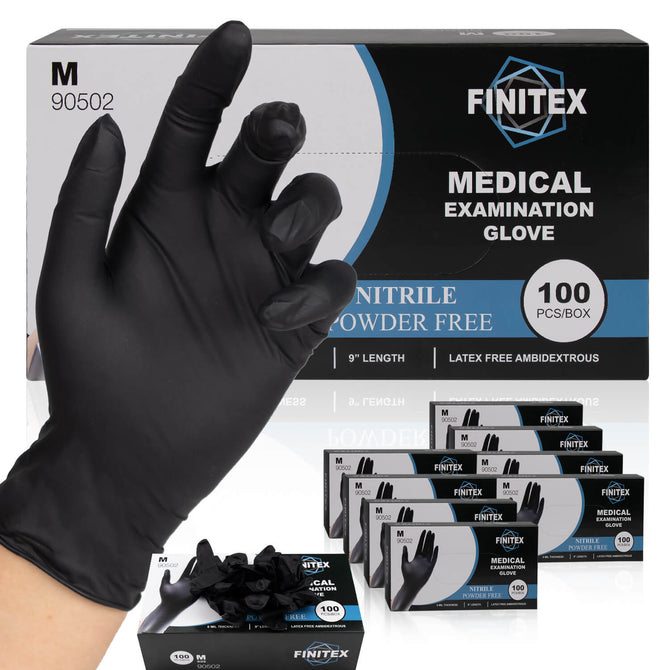
TITANS MEDICARE offers FINITEX food-service nitrile gloves designed for businesses looking for disposable nitrile gloves for food-related applications.
Our product packaging states that "all components are FDA accepted for food contact."
Always follow the product's labeling, instructions, and applicable food-safety requirements for your specific operation.
Final Thoughts
The FDA is much more than an organization that "approves products."
It is a federal regulatory agency with responsibilities covering food, drugs, medical devices, biological products, cosmetics, tobacco products, animal products, and other areas that affect public health.
For businesses, understanding the difference between FDA regulated, FDA cleared, FDA approved, and suitable for food contact is especially important.
The same principle applies when purchasing disposable nitrile gloves.
Rather than choosing a product based on an "FDA" claim alone, businesses should consider the glove's intended use, material, specifications, regulatory requirements, and manufacturer documentation.
For food-service operations, choosing a glove specifically intended for food-contact applications can be an important part of a broader food-safety program.
Looking for disposable nitrile gloves for your restaurant, catering business, commercial kitchen, or food-service operation?
Explore TITANS MEDICARE's FINITEX Food-Service Nitrile Gloves