


As temperatures drop across the United States, auto repair shops enter one of their busiest periods of the year. Drivers bring their vehicles in for winter tire changes, snow chain installation, brake inspections, and underbody rustproofing before icy roads and winter storms arrive.
For mechanics, the seasonal rush means more than a packed service schedule. It also means handling dirty wheels, greasy suspension components, road grime, and thick undercoating compounds throughout the workday. The right disposable gloves can help mechanics maintain a secure grip on tools and parts while keeping grease, grime, and other contaminants off their hands.
For shops preparing for the winter rush, heavy-duty automotive nitrile gloves deserve a place on the winter tire service supplies checklist.
Why Winter Tire Season Puts Extra Pressure on Auto Shops
The transition to colder weather brings a predictable wave of maintenance jobs. In regions that experience snow and freezing temperatures, customers often schedule appointments within a relatively short period, leaving service bays busy from morning to closing time.
Three common services put particular demands on mechanics' hands.
1. Winter Tire Changes and Wheel Service
Removing summer tires and installing winter tires involves repeated contact with wheel surfaces, lug nuts, brake dust, road dirt, and oily components. Mechanics need gloves that fit well enough to handle sockets, torque wrenches, and smaller fasteners without sacrificing grip.
A glove that feels slippery or tears during a wheel change can interrupt the job and force a technician to stop and replace it. During a busy service day, those interruptions add up.
2. Snow Chain Installation
Snow chains can be awkward to position, especially around cold tires and wheel wells. Metal links, tensioners, and adjustment mechanisms require careful handling, often in wet or dirty conditions.
Textured nitrile gloves can help improve contact with chain links and tools. A close fit also helps preserve finger control when mechanics tighten tensioners or check chain placement.
Gloves are only one part of winter service safety, however. Technicians should follow the chain manufacturer's installation instructions and use appropriate protection against sharp edges and pinch points.
3. Undercoating and Rustproofing
Underbody rustproofing is another seasonal service, particularly in areas where road salt accelerates corrosion. Depending on the product, technicians may apply rubberized coatings, wax-based rustproofing compounds, oil-based treatments, or other protective formulations.
These materials can be thick, sticky, and difficult to remove from skin, tools, and work surfaces. Some formulations also contain solvents that may damage unsuitable glove materials.
Choosing the right disposable gloves for undercoating chemical safety requires more than looking at thickness alone. Mechanics should check the coating manufacturer's safety data sheet (SDS) and select gloves with documented compatibility for the specific product.
Why Textured, Heavy-Duty Nitrile Gloves Matter
Not every disposable glove is designed for the demands of automotive service. Thin gloves intended for light-duty tasks may be less suitable for repeated contact with rough surfaces, greasy components, and tools.
Heavy-duty automotive nitrile gloves can offer several practical advantages when the thickness, fit, and material are appropriate for the job.
Textured Grip for Greasy Parts and Tools
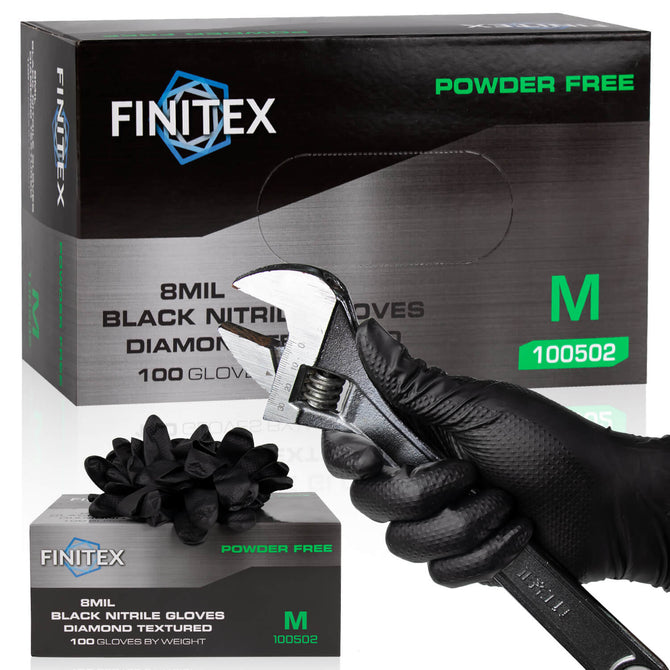
Oil, grease, and road grime can make it harder to maintain control of small parts and hand tools. Gloves with a pronounced textured surface, including diamond-textured designs, provide additional surface features that may improve grip during handling.
This can be particularly useful when removing lug nuts, working around suspension components, or positioning snow chains.
Grip performance still depends on the glove's texture, fit, the type of contamination, and the tool being used. Textured gloves should not be treated as a guarantee against slipping, especially when surfaces are heavily coated with oil.
Greater Material Thickness for Demanding Tasks
Glove thickness is commonly measured in mils, with one mil equal to 0.001 inch. Automotive technicians may choose thicker disposable nitrile gloves for tasks involving frequent contact with rough parts or sticky compounds.
For example, 6–8 mil gloves may be worth considering for selected maintenance and cleanup tasks where a more substantial disposable glove is preferred. Some shops may also use heavier gloves for particular applications.
However, thickness alone does not establish puncture resistance, tear resistance, or chemical protection. Glove construction, fit, formulation, and test results all matter. Disposable nitrile gloves are also not a substitute for suitable reusable mechanical gloves when handling sharp components or performing tasks that require specialized cut or impact protection.
A Barrier Against Dirt, Grease, and Routine Contamination
Nitrile is a synthetic rubber that does not contain natural rubber latex. Disposable nitrile gloves are widely used in automotive maintenance because they provide a convenient barrier against many common workshop contaminants.
They can help keep grease, brake dust, and dirt off the skin during routine service work. They are also easy to change between tasks, which helps prevent grime from spreading from wheels and underbody components to clean tools or vehicle interiors.
The important distinction is between general contamination control and chemical protection. Nitrile is compatible with many substances, but it is not universally resistant to automotive fluids, degreasers, or undercoating solvents. Check the specific glove's chemical-resistance information before use.
Choosing the Right Gloves for Undercoating Chemical Safety
Undercoating products deserve special attention because their formulations vary considerably. A glove that performs well during a tire change may not provide adequate protection when handling a solvent-containing rustproofing compound.
Before choosing gloves for undercoating work, shop managers should consider the following factors.
-
Chemical compatibility: Review the undercoating product's SDS and confirm that the selected glove material is suitable for the chemicals involved.
-
Breakthrough time: Check whether the glove manufacturer provides data on how long the chemical takes to permeate the material under specified test conditions.
-
Thickness and construction: A thicker glove may provide more material, but it does not automatically offer longer chemical resistance.
-
Fit and dexterity: Gloves should allow technicians to handle spray equipment, fittings, and tools without excessive looseness or loss of control.
-
Replacement procedures: Replace gloves promptly if they tear, become damaged, or reach the manufacturer's recommended exposure limit.
Undercoating work may also involve spray mist, ventilation concerns, and contact with vehicle surfaces above or below the work area. Follow the product SDS, workplace risk assessment, and applicable respiratory and skin-protection requirements. Disposable gloves alone do not make an otherwise unsafe application process safe.
How to Stock Winter Tire Service Supplies Before the Rush
When appointment volume increases, running out of essential consumables can slow down an entire service department. Planning glove inventory ahead of the first major cold snap helps shops avoid last-minute purchasing and inconsistent product selection.
A practical stocking plan starts with three questions.
Estimate Daily Glove Consumption
Review how many vehicles the shop services on a typical busy day and how many glove changes each job requires. Include tire changes, chain installation, underbody inspections, rustproofing, and cleanup.
Build in additional stock for unexpected demand, damaged gloves, and changes between dirty and clean tasks. A shop performing rustproofing may use more gloves than one focused mainly on tire mounting.
Match Glove Types to Specific Tasks
Not every technician needs the same glove for every job. A shop may use one suitable disposable nitrile glove for routine handling and a separately selected glove for chemical-intensive work.
For tasks involving sharp metal edges, heavy mechanical force, or specific chemical hazards, use protection appropriate to the actual risk rather than relying on a single disposable glove for every application.
Consider Bulk Purchasing
For multi-bay garages, tire centers, fleet maintenance facilities, and automotive service chains, purchasing mechanic gloves in bulk can simplify inventory planning and reduce the frequency of emergency reorders.
When comparing bulk options, evaluate more than the case price. Consider the glove's thickness, texture, sizing consistency, documented performance, packaging quantity, and suitability for the intended tasks.
For shops that need a more substantial disposable glove with pronounced texture, the FINITEX 6–3 Mil Orange Diamond Textured Industrial Nitrile Gloves are one option to review for suitable automotive maintenance applications. Confirm the exact thickness and product specifications before ordering, and verify chemical compatibility separately for any undercoating products used in the shop.
A Simple Winter-Prep Checklist for Shop Managers
Before seasonal demand peaks, review the following items with the service team:
- Check stock levels for disposable nitrile gloves in the sizes technicians use most.
- Confirm that glove thickness and texture are appropriate for routine tire and wheel work.
- Review the SDS for undercoating compounds, degreasers, and other chemicals handled in the shop.
- Verify glove chemical compatibility for each relevant product.
- Set clear procedures for changing damaged or contaminated gloves.
- Stock suitable mechanical hand protection for tasks that exceed the capabilities of disposable gloves.
- Establish reorder points based on actual daily consumption and supplier lead times.
A few minutes of preparation can help keep service bays supplied as appointment volume increases.
Keep Your Shop Ready for the Cold-Weather Rush
Winter tire changes and rustproofing services bring extra pressure to automotive repair shops every fall. Mechanics need hand protection that fits the work, supports reliable tool handling, and provides an appropriate barrier against everyday workshop grime.
Textured, heavy-duty nitrile gloves can be a useful part of a winter service supply plan, particularly for routine handling of wheels, chains, and greasy components. For chemical-intensive work, always match the glove to the specific product rather than assuming that a thicker disposable glove will resist every solvent.
By reviewing glove specifications, checking chemical compatibility, and planning bulk inventory before temperatures fall, shop managers can prepare their teams for a busy winter season with fewer avoidable supply interruptions.
Explore FINITEX industrial nitrile gloves from TITANS MEDICARE to find options for your automotive maintenance supply needs.
FAQ
1. What are the best disposable gloves for winter tire service?
Textured nitrile gloves are a practical option for routine tire changes, wheel handling, and snow chain installation. Choose a thickness and fit suited to the task, and use specialized mechanical protection when cut, impact, or puncture hazards require it.
2. Are heavy-duty nitrile gloves resistant to undercoating chemicals?
Not all nitrile gloves are suitable for every undercoating product. Chemical resistance depends on the formulation, exposure conditions, glove construction, and contact time. Check the glove manufacturer's chemical compatibility data and the undercoating product's SDS before use.
3. Why are textured nitrile gloves useful for automotive work?
Textured surfaces can improve contact with tools and parts, helping mechanics maintain grip during routine maintenance. Actual grip depends on the texture design, glove fit, and whether the surfaces are contaminated with oil or grease.
4. Should auto repair shops buy mechanic gloves in bulk before winter?
Bulk purchasing can help busy repair shops, tire centers, and fleet maintenance facilities maintain consistent inventory during seasonal demand. Estimate daily consumption, select appropriate sizes, and establish reorder points before the winter tire rush begins.