

For nail technicians, gloves aren't just another salon supply. A good pair can make everyday work more comfortable while helping reduce direct contact with nail products, dust, dyes, and cleaning chemicals.
From gel manicures and acrylic applications to cuticle care and salon cleanup, nail professionals use their hands constantly. That means the wrong gloves can become a distraction—too loose, too tight, too thick, or prone to tearing.
So, what are the best gloves for nail technicians?
For many nail professionals, disposable nitrile gloves are a practical choice because they offer a combination of durability, dexterity, comfort, and latex-free protection.
But not every nitrile glove is the same. Thickness, size, texture, fit, and the products you're working with all matter.
In this guide, we'll look at what to consider when choosing gloves for nail technicians and why nitrile has become a popular option for professional nail salons.
What Should Nail Technicians Look for in Gloves?
Before choosing a glove, think about what you actually do throughout a typical appointment.
A nail technician may need to:
-
Prepare and clean nails
-
Remove old polish or gel
-
File and shape nails
-
Work with acrylic or gel products
-
Apply polish and nail art
-
Handle cuticle products
-
Clean tools and workstations
-
Handle disinfectants and salon chemicals
-
Move quickly between clients
That means the best nail technician gloves should provide a good balance of:
Dexterity + Fit + Durability + Chemical Compatibility + Comfort
No single glove is perfect for every salon task, so choosing based on the actual application is important.
Nitrile vs. Latex vs. Vinyl Gloves for Nail Technicians
One of the first decisions is choosing the right glove material.
Nitrile Gloves
Nitrile gloves are made from synthetic rubber and are widely used in healthcare, beauty, cleaning, food handling, automotive work, and other professional applications.
For nail technicians, nitrile offers several useful characteristics:
-
Latex-free
-
Good puncture resistance
-
Good tactile sensitivity
-
Flexible fit
-
Good resistance to many common chemicals
-
Available in multiple thicknesses
-
Available in a wide range of colors
Nitrile is particularly useful for nail technicians who want a glove that feels flexible enough for detailed work while offering more durability than many lightweight vinyl gloves.
However, chemical resistance varies by glove and chemical. If you're working with acetone, solvents, disinfectants, primers, monomers, or other salon chemicals, always check the glove manufacturer's compatibility information rather than assuming that all nitrile gloves provide the same protection.
Latex Gloves
Latex gloves are known for their elasticity, flexibility, and comfortable fit.
However, natural rubber latex can cause allergic reactions in some people. For salons that want a latex-free option for employees or clients with latex sensitivities, nitrile can be a practical alternative.
Vinyl Gloves
Vinyl gloves are typically more affordable and can work well for lower-risk, short-duration tasks.
However, they generally don't provide the same combination of elasticity, fit, durability, and chemical resistance associated with many nitrile gloves.
For nail technicians who need good finger control and frequently work with salon products, nitrile is often the more practical option.
Why Are Nitrile Gloves Popular With Nail Technicians?
Nail work requires precision.
A technician may spend an hour or more working on tiny areas of a client's hands. Gloves that interfere with finger movement can make detailed work frustrating.
That's one reason many nail professionals prefer nitrile.
1. Better Dexterity for Detailed Nail Work
Applying gel polish, shaping nails, cleaning around the cuticle, and creating nail art all require controlled finger movements.
A properly fitted nitrile glove can provide a close fit around the fingers and palm, helping maintain tactile sensitivity while working.
For precision-focused work, thinner nitrile gloves such as 3–4 mil can be a good option when the task does not require additional durability.
For more demanding applications, thicker gloves may provide better tear resistance at the expense of some tactile sensitivity.
The goal is to find the right balance for your work.
2. Latex-Free Protection
Many nail salons prefer latex-free gloves because they want to minimize exposure to natural rubber latex.
Nitrile gloves are made from synthetic rubber rather than natural rubber latex, making them a practical latex-free option for nail technicians.
That doesn't mean nitrile gloves are guaranteed to prevent every type of skin reaction. People can still react to glove materials, additives, or chemicals used in salon products.
If you or your clients experience persistent irritation, consult an appropriate healthcare professional and review the products being used.
3. Protection From Everyday Salon Messes
Nail technicians regularly work with products that can stain skin and create a messy workstation.
Depending on the service, this can include:
-
Nail polish
-
Gel polish
-
Acrylic products
-
Pigments
-
Cuticle products
-
Nail dust
-
Adhesives
-
Cleaning products
Disposable gloves create a convenient barrier between your hands and these materials.
They also make it easier to switch to a fresh pair between clients or tasks.
4. Puncture and Tear Resistance
Nail technicians work around sharp or pointed objects every day.
Files, cuticle tools, nail tips, scissors, and other salon equipment can put stress on disposable gloves.
A thicker nitrile glove can provide additional durability compared with very thin disposable gloves.
For technicians who frequently experience torn fingertips or thumb areas, moving from a lightweight glove to a 5 mil nitrile glove may provide a useful balance between dexterity and durability.
For heavier cleaning or more demanding salon tasks, 6 mil or thicker nitrile gloves may be worth considering.
What Thickness Is Best for Nail Technicians?
Glove thickness is an important consideration, but thicker isn't automatically better.
3–4 Mil Nitrile Gloves
Best suited for:
-
Manicures
-
Nail art
-
Polish application
-
Routine client services
-
Tasks where dexterity is the priority
Their lightweight construction can make detailed finger work more comfortable.
5 Mil Nitrile Gloves
A good middle ground for technicians who want a combination of:
-
Dexterity
-
Comfort
-
Durability
-
Everyday protection
They're a practical option for salons that want one versatile glove for a range of routine services.
6–8 Mil Nitrile Gloves
Better suited to more demanding tasks where durability is more important, such as:
-
Deep salon cleaning
-
Equipment cleaning
-
Handling certain cleaning chemicals
-
Tasks with greater tear risk
For detailed nail art, however, a very thick glove may feel less flexible.
Choose glove thickness according to the task rather than simply choosing the thickest glove available.
Why Glove Fit Matters for Nail Technicians
A glove can have excellent material properties and still be uncomfortable if the size is wrong.
For nail technicians, fit is especially important because your fingers need to move precisely.
Gloves That Are Too Tight
An overly tight glove may:
-
Restrict finger movement
-
Stretch excessively
-
Cause discomfort
-
Increase stress around the fingertips
Gloves That Are Too Loose
An oversized glove may:
-
Reduce tactile sensitivity
-
Make detailed work harder
-
Create folds around the fingertips
-
Reduce grip on small tools
The ideal glove should fit closely without squeezing your fingers.
If you work long shifts, comfort matters just as much as durability.
Powder-Free Gloves Are a Better Choice for Nail Salons
For professional nail services, powder-free gloves are generally the preferred choice.
Powder can create unnecessary mess and may interfere with certain salon procedures.
Powder-free nitrile gloves provide the clean, simple feel that many nail technicians prefer when working directly around a client's hands.
When shopping for disposable gloves, look for:
Powder-Free + Latex-Free + Proper Fit
as a starting point.
Should Nail Technicians Choose Textured Gloves?
Texture can be useful when grip is important.
A lightly textured fingertip or textured surface can make it easier to handle:
-
Nail files
-
Small tools
-
Polish bottles
-
Cotton pads
-
Cleaning supplies
-
Wet or slippery items
However, heavily textured gloves may not be necessary for every nail service.
For detailed nail art, a smooth or lightly textured glove may provide the tactile feel you prefer.
For salon cleaning and other tasks where grip matters more than precision, a more aggressively textured glove can be useful.
Black Nitrile Gloves for Nail Technicians
Black nitrile gloves have become a popular choice in beauty and nail salons for both practical and aesthetic reasons.
The dark color can help hide stains from:
-
Nail polish
-
Pigments
-
Hair color
-
Makeup
-
Salon products
That can help technicians maintain a cleaner-looking appearance throughout a busy workday.
Black gloves also create a professional, modern look that fits naturally with many salon environments.
For nail technicians who regularly work with colorful products, black nitrile gloves can be both functional and visually appealing.
Disposable Gloves and Salon Hygiene
One of the biggest advantages of disposable gloves is convenience.
Instead of cleaning and storing reusable gloves between clients, technicians can put on a fresh pair when appropriate and dispose of used gloves after the task.
This can help simplify everyday salon hygiene.
However, wearing gloves does not eliminate the need for proper hand hygiene.
Technicians should follow appropriate salon sanitation procedures, including hand hygiene, cleaning and disinfecting reusable tools, and changing gloves whenever contamination or task changes require it.
Gloves are part of a hygiene routine—not a replacement for one.
Can Nail Technicians Use Nitrile Gloves With Acetone?
This is a question that deserves some caution.
Acetone is a strong solvent, and not all nitrile gloves provide the same level of resistance to acetone or other salon chemicals.
Glove performance can vary based on:
-
Glove thickness
-
Nitrile formulation
-
Chemical concentration
-
Contact time
-
Temperature
-
Whether the chemical is used alone or as part of a formulation
If a nail product or chemical requires specific chemical-resistant PPE, follow the manufacturer's safety instructions and select gloves based on documented chemical-resistance data.
Don't assume that a glove labeled "nitrile" automatically protects against every salon chemical.
Best Gloves for Different Nail Salon Tasks
There isn't necessarily one perfect glove for every task.
| Nail Salon Task | Recommended Glove Characteristics |
|---|---|
| Manicure | Lightweight nitrile + good dexterity |
| Nail art | Thin, well-fitting nitrile |
| Gel polish | Powder-free nitrile + good finger control |
| Acrylic nail services | Nitrile + appropriate chemical compatibility |
| Cuticle care | Close fit + good tactile sensitivity |
| Polish removal | Check chemical compatibility |
| Salon cleaning | Thicker nitrile + durability |
| Equipment cleaning | Durable glove + appropriate chemical resistance |
| General salon work | Powder-free, latex-free nitrile |
The best choice depends on the products you use and the requirements of the specific task.
How to Choose the Best Nitrile Gloves for Your Nail Salon
Before ordering a case of gloves, consider these five questions:
1. What Thickness Do You Need?
Choose lighter gloves for precision work and thicker gloves when durability is more important.
2. Do You Need a Specific Color?
Black is popular for professional salon aesthetics and hiding stains, while other colors can help with personal preference or task differentiation.
3. Is Grip Important?
If you frequently handle wet tools, bottles, or cleaning equipment, consider textured nitrile gloves.
4. Are You Working With Chemicals?
Check the manufacturer's chemical-resistance information and the product's safety instructions before choosing gloves.
5. Are You Wearing Gloves for Long Periods?
If you're working through a full day of appointments, prioritize proper sizing, flexibility, and comfort.
A glove that feels good after ten minutes may not feel as good after eight hours.
Best Overall Choice: Nitrile Gloves for Nail Technicians
For many professional nail technicians, powder-free disposable nitrile gloves offer a practical combination of comfort, dexterity, durability, and latex-free protection.
A lightweight 3–4 mil glove may be ideal when precision and tactile sensitivity are the priority.
A 5 mil glove can provide a versatile balance for everyday salon work.
For cleaning and more demanding tasks, thicker 6–8 mil nitrile gloves can provide additional durability.
The key isn't to find the thickest or most expensive glove.
It's to find the glove that matches your hands, your products, and your work.
Frequently Asked Questions
What gloves are best for nail technicians?
For many nail technicians, powder-free disposable nitrile gloves are a practical choice because they offer a combination of dexterity, flexibility, durability, and latex-free protection.
Are nitrile gloves good for doing nails?
Yes. Nitrile gloves can be suitable for manicures, nail art, gel polish application, acrylic services, and other salon tasks. Choose the glove thickness and formulation according to the specific application and chemical exposure.
Should nail technicians wear black nitrile gloves?
Black nitrile gloves are a popular option in nail salons because they can help hide stains and provide a professional appearance. The color itself does not determine the glove's protective performance, so material, thickness, fit, and specifications still matter.
What thickness nitrile gloves are best for nail technicians?
For detailed nail work, 3–4 mil nitrile gloves can offer good dexterity. A 5 mil glove provides a balance between flexibility and durability, while 6–8 mil gloves are better suited to heavier-duty salon tasks.
Are nitrile gloves better than latex gloves for nail technicians?
Nitrile can be a practical alternative to latex because it is made from synthetic rubber and does not contain natural rubber latex. Nitrile also offers good durability and chemical resistance for many applications. However, the best material depends on the specific task and the user's needs.
Can nail technicians reuse disposable nitrile gloves?
Disposable nitrile gloves are intended for single use. Replace them when they become contaminated, damaged, or when a fresh pair is needed for the next client or task.
Where can nail technicians buy nitrile gloves?
Professional nail technicians can purchase [disposable nitrile gloves] in different thicknesses, colors, and sizes to match their salon needs.
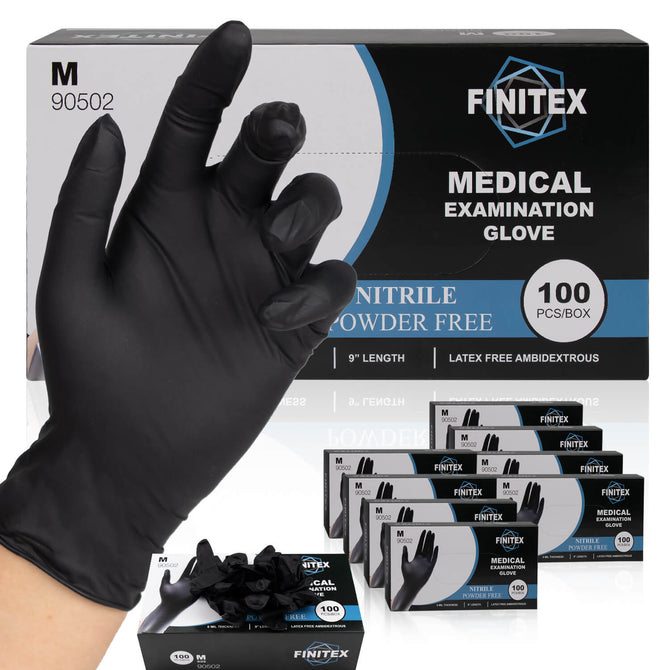
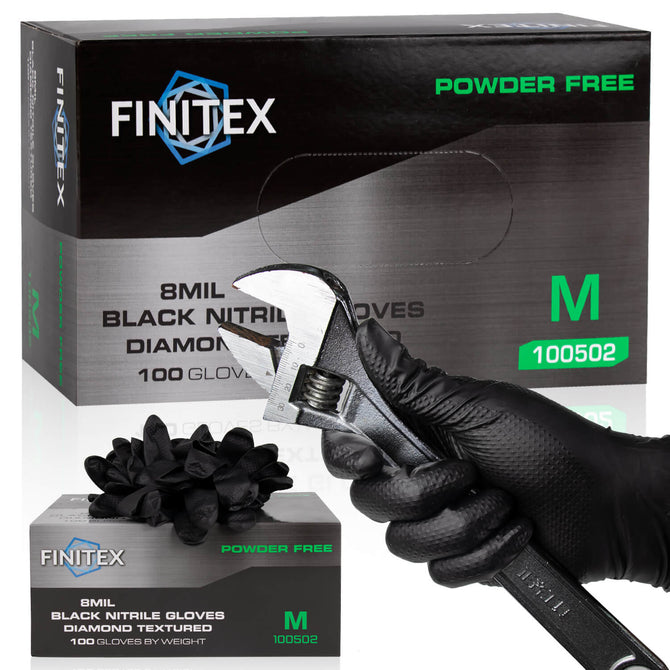
At TITANS MEDICARE, we offer [FINITEX nitrile gloves] for beauty, salon, healthcare, cleaning, automotive, and other professional applications.
For nail technicians who prefer a clean, professional appearance, black nitrile gloves are a popular choice. Lightweight options can provide the dexterity needed for detailed nail services, while thicker gloves can be used for more demanding cleanup and maintenance tasks.
Explore our Beauty, Spa & Salon Gloves collection to find disposable gloves for your professional nail salon.
Final Thoughts
The best gloves for nail technicians should make your work easier—not get in the way.
For most professional nail services, a well-fitting pair of powder-free nitrile gloves can provide the combination of dexterity, comfort, durability, and latex-free protection that technicians need throughout a busy day.
Choose a thinner glove when precision is the priority, move to a thicker option when durability matters more, and always check chemical compatibility when working with solvents, disinfectants, or other salon chemicals.
With the right glove on hand, you can focus less on your gloves and more on creating great nails for your clients.