

When the lights go down and the first guests step into a haunted house, every detail matters. A convincing zombie wound, a blood-stained costume, or a creature emerging from the shadows can make the difference between an ordinary Halloween attraction and an unforgettable experience.
But behind every great scare is a team working under pressure. Special effects makeup artists apply prosthetics, body painters create elaborate designs, and prop crews handle adhesives, paint, artificial blood, and countless other materials. Often, they do all of this backstage, in tight spaces, with limited time between performances.
That is where the right pair of disposable gloves can make a difference.
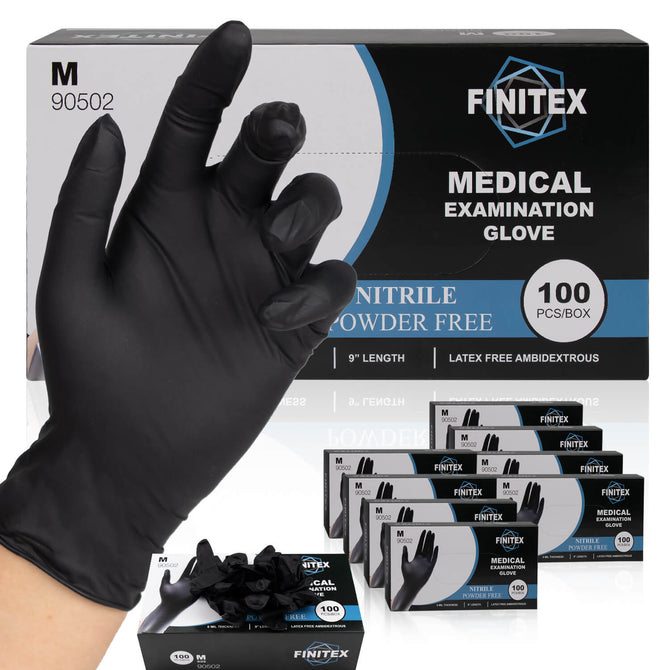
For haunted attractions, immersive theater productions, and Halloween entertainment venues, black nitrile gloves offer a practical combination of a professional appearance, tactile control, and task-dependent protection. They also blend naturally into dark backstage environments, making FINITEX black nitrile gloves a practical option for suitable makeup and backstage tasks.
Here is what makeup artists and attraction crews should consider when choosing gloves for fright night.
Why Black Nitrile Gloves Make Sense for Haunted Attractions
A haunted house is not a typical makeup studio. Workers may move between makeup stations, prop rooms, backstage corridors, and performance areas throughout a busy shift. Supplies need to be practical, easy to manage, and suitable for the tasks at hand.
Black nitrile gloves have several advantages in these environments.
1. A Clean, Professional Look Under Low Lighting
Black gloves fit naturally into the visual environment of haunted houses, escape rooms, horror-themed events, and immersive theater productions.
Unlike brightly colored gloves, black gloves are less visually noticeable against dark costumes, black workstations, and low-light backstage settings. This can help performers and crew members maintain a consistent appearance when working close to guests or making quick costume adjustments between scenes.
For immersive theater, where the audience may be only inches away from a performer, small visual details can affect the overall experience.
Black gloves are also a practical choice for makeup artists who want a coordinated, professional-looking SFX setup.
Keep in mind: Black gloves can conceal some stains and residue, so workers should still inspect gloves regularly and change them whenever they become contaminated, damaged, or unsuitable for the next task.
2. Better Control During Detailed SFX Makeup Work
Special effects makeup involves precision. Artists may need to position small prosthetic pieces, smooth adhesive edges, blend makeup around a wound effect, or apply simulated blood without disturbing the surrounding design.
A poorly fitting glove can interfere with delicate work. Gloves that are too loose may wrinkle at the fingertips, while an overly tight fit can cause discomfort during long makeup sessions.
When selecting disposable gloves for SFX work, look for:
-
A close fit that allows controlled finger movements.
-
Sufficient tactile sensitivity for detailed makeup application.
-
A textured surface that helps with grip when handling tools.
-
A comfortable fit for repeated tasks throughout a long shift.
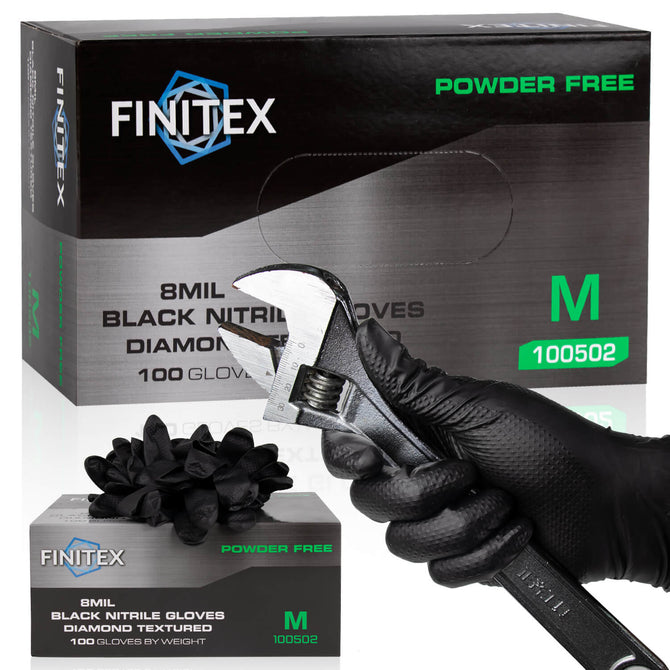
Some black nitrile gloves feature textured fingertips or textured surfaces designed to improve grip. The level of grip varies by product, so artists should test their preferred gloves with their actual brushes, applicators, and tools before a busy event.
For intricate prosthetic work or fine body painting, a thinner glove may offer greater tactile feedback. For heavier prop maintenance, a thicker glove may be more appropriate.
3. Latex-Free Material for Shared Makeup Stations
A haunted attraction may employ dozens of seasonal performers, makeup artists, and backstage crew members. Some venues also bring in guest artists or volunteers during peak Halloween weekends.
Nitrile is a synthetic rubber material and does not contain natural rubber latex. For workplaces seeking to reduce exposure to natural rubber latex proteins, nitrile gloves can be a useful alternative.
However, latex-free does not mean allergy-proof. Some people may react to chemicals used in glove manufacturing, and a glove's suitability depends on the individual and the task.
For shared makeup stations, disposable gloves should be changed between people and between tasks whenever cross-contamination is a concern. Gloves do not replace handwashing, clean applicators, or proper sanitation of reusable makeup tools.
Halloween SFX Makeup Safety: What Your Gloves Can and Cannot Do
Fake blood, spirit gum, prosthetic adhesives, silicone compounds, paints, and cleaning products are common in special effects makeup rooms. Not all of these materials pose the same risks, and not every disposable glove is suitable for every product.
Nitrile gloves offer resistance to many oils and certain chemicals, but their performance depends on the specific formulation, concentration, contact time, glove thickness, and manufacturer testing. Before choosing gloves for adhesives, solvents, or cleaning products, review the manufacturer's guidance on nitrile glove chemical resistance and check the relevant safety data sheet (SDS).
Before using gloves with a particular adhesive, solvent, paint, or cleaning chemical, check the product's safety data sheet (SDS) and the glove manufacturer's chemical compatibility information.
Keep these precautions in mind:
-
Prosthetic adhesives: Check whether the adhesive contains solvents or other ingredients that require specific glove materials.
-
Alcohol-based products: Do not assume every nitrile glove is suitable for prolonged contact with alcohol or solvent-based formulas.
-
Silicone and latex compounds: Follow the material manufacturer's handling instructions and verify glove compatibility.
-
Cleaning and disinfecting products: Use gloves specifically rated for the chemicals and exposure conditions involved.
-
Artificial blood and makeup pigments: Change gloves when contaminated and avoid transferring residue between products, tools, performers, and surfaces.
Disposable nitrile gloves are not a universal chemical barrier. If a product requires specialized chemical protection, choose equipment that meets the relevant manufacturer recommendations rather than relying on glove color or thickness alone.
For teams developing a consistent backstage routine, these precautions should be part of the venue's broader Halloween SFX makeup safety plan.
Choosing Gloves for Body Painting and Prosthetic Application
Body painting and creature makeup can take hours to complete. Artists may work across large areas of skin, switch between colors, and repeatedly handle brushes, sponges, mixing tools, and adhesives.
The best glove depends on the technique and the materials being used.
For Detailed Face and Body Painting
Artists working around the face, neck, and hands often prioritize dexterity. A well-fitting, thinner disposable nitrile glove may make it easier to handle small tools and control product placement. When comparing options, consider the glove's thickness, fit, and intended use to find a suitable balance between dexterity and durability.
Choose gloves that allow natural finger movement without excessive stretching. If a glove tears while being put on or during use, replace it rather than continuing with a damaged barrier.
Before applying products to a performer, confirm that the makeup or body paint is intended for the relevant skin application. A glove's material does not make an unsuitable cosmetic product safe for skin.
For Prosthetics and Creature Effects
Applying prosthetic appliances may involve adhesives, removers, sculpting materials, and simulated blood. Different steps can require different glove specifications.
Use clean gloves for application tasks and change them when switching from adhesives or other potentially contaminating materials to finished makeup. Avoid touching a performer's eyes, mouth, or other sensitive areas with gloves that have contacted chemicals or dirty tools.
For Long Shifts and Repeated Changes
A glove that feels comfortable for five minutes may become less comfortable over several hours. Fit, material quality, and correct sizing all matter when artists need to change gloves repeatedly.
Keep multiple sizes available at shared stations. Store unused gloves in their original packaging, away from excessive heat, moisture, and direct sunlight, following the manufacturer's storage instructions.
Haunted House Prop Supplies: Don't Forget the Crew Behind the Scenes
Makeup artists get much of the attention, but the prop and maintenance teams are just as important to a successful attraction.
Before the doors open, crews may repair props, handle painted surfaces, adjust costume pieces, clean workstations, and prepare equipment for the next performance. These tasks can involve dirt, grease, paint, adhesives, and cleaning products.
The right disposable gloves can help crews manage routine cleanup and reduce direct contact with certain contaminants, provided the gloves are appropriate for the task.
Here are a few practical considerations when organizing haunted house prop supplies:
-
Routine prop handling: Choose gloves that fit securely and provide adequate grip for the objects being handled.
-
Paint and surface touch-ups: Check compatibility with the specific paint, coating, or solvent.
-
Backstage cleanup: Match glove selection to the cleaning products and follow their label instructions.
-
Damaged props and sharp edges: Inspect work areas first. Disposable gloves should not be treated as cut-resistant or puncture-proof protection.
-
Shared equipment: Change gloves when moving from dirty maintenance tasks to clean makeup or costume preparation.
The right glove thickness depends on the task. Detailed makeup work may call for greater tactile sensitivity, while some prop maintenance tasks may require a thicker glove. Our guide to choosing the right nitrile glove thickness can help you understand the factors to consider when comparing disposable gloves.
Black nitrile gloves are particularly useful when a venue wants a consistent, dark-colored disposable glove for suitable backstage tasks. They should not, however, be used as a substitute for specialized protective equipment when a task involves significant chemical, cut, heat, or puncture hazards.
How to Build a Practical SFX Glove Station
During Halloween's busiest weekends, a well-stocked makeup room can save valuable time. A dedicated glove station helps artists and crew members avoid searching for supplies in the middle of a costume change or a last-minute repair.
Consider setting up the station with:
Multiple glove sizes. A range of sizes helps each worker find a secure fit and reduces the temptation to overstretch a glove.
Task-specific supplies. Keep gloves for makeup application separate from supplies intended for maintenance or chemical-handling tasks. Select the appropriate glove for each use.
Waste containers. Place accessible bins near makeup stations so used gloves can be discarded promptly.
Hand hygiene supplies. Gloves are not a replacement for clean hands. Wash and dry hands as appropriate before putting on new gloves and after removing them.
Clear change-out rules. Replace gloves after contamination, tearing, or a change in task that could transfer residue to another person, product, or surface.
For venues with multiple makeup stations, these simple measures can make backstage work more organized without adding unnecessary complexity.
Why Consider FINITEX Black Nitrile Gloves?
For haunted attractions, horror productions, body painting teams, and immersive theater crews, FINITEX black nitrile gloves can be a practical option for suitable disposable-glove tasks.
When choosing a FINITEX glove for your team, consider the specific product's thickness, fit, texture, intended use, and available technical information. A glove selected for detailed makeup work may not be the best option for heavy prop maintenance or contact with a particular solvent.
For a busy Halloween production, the goal is straightforward: choose gloves that support the task, fit comfortably, and work with the venue's safety procedures.
Whether you're preparing a zombie transformation, painting a fantasy creature, or resetting a prop before the next group enters, having the right supplies ready helps the team focus on the performance.
Get Ready for Fright Night
The most memorable haunted attractions are built on hundreds of small details, many of them handled long before the audience arrives. Makeup artists refine every wound, body painters perfect every color, and prop crews make sure the scene is ready for the next scare.
Black nitrile gloves can support these behind-the-scenes routines with a discreet appearance, a secure fit, and task-dependent protection.
As you prepare your Halloween production, review your glove inventory alongside your makeup, prosthetics, and immersive theater gear. The right supplies help your team work more efficiently while keeping hygiene and safety in focus.
Prepare your backstage kit with FINITEX black nitrile gloves and get ready for a season of unforgettable scares. Explore the available options to find a glove that fits your team's tasks, comfort needs, and workplace safety requirements.
Choose the glove that matches your application, and always follow the product's instructions for use and chemical compatibility.