

Chilled Environments, High Precision: How Thermal Inner Liners Pair with Nitrile Gloves in Meat Processing
As temperatures begin to drop in September, meat processors, cold storage facilities, butcher shops, and food distribution centers start preparing for a demanding fall and winter season.
From meat cutting and trimming to packaging, inspection, loading, and refrigerated storage, workers may spend hours handling products in cold, wet, and fast-paced environments. For those working inside refrigerated rooms or cold processing areas, keeping their hands warm can become just as important as maintaining grip and dexterity.
Cold hands can feel stiff, uncomfortable, and less responsive. That can make repetitive tasks more difficult, particularly when workers need to handle products quickly and accurately.
One practical solution for some cold-weather operations is to combine a thin thermal liner underneath a disposable nitrile glove. The liner provides an additional layer of warmth, while the outer nitrile glove can provide a disposable barrier for appropriate tasks.
However, not every nitrile glove is suitable for food contact, and a thermal liner should not automatically be considered food-safe. Glove selection should always match the specific task, food-contact requirements, workplace hazards, and sanitation procedures.
Why Cold Storage Work Gets More Challenging in Fall and Winter
Working in a refrigerated environment is very different from working at room temperature.
Cold exposure can affect comfort, circulation, and hand dexterity. OSHA recommends appropriate protective clothing and insulated gloves for workers exposed to cold environments, along with work practices that help reduce cold stress.
For meat-processing and cold-storage employees, the challenge can become particularly noticeable during repetitive tasks such as:
-
Meat trimming and packaging
-
Product inspection
-
Cold-room inventory handling
-
Loading and unloading refrigerated shipments
-
Moving boxes and containers
-
Equipment cleaning
-
Handling wet or greasy surfaces
-
Repetitive food-processing tasks
These jobs require more than simply keeping hands warm. Workers also need grip, dexterity, hygiene, and appropriate hand protection.
For facilities looking for more durable disposable options for industrial tasks, cold storage work gloves can be evaluated based on the specific work environment and whether the task involves direct food contact.
The Two-Layer Approach: Thermal Liner + Nitrile Glove
A layered glove system separates two different functions:
Thermal liner = additional warmth
Disposable nitrile glove = external disposable barrier
A thin thermal liner worn underneath a properly sized nitrile glove can help reduce the direct effect of cold temperatures while allowing workers to maintain a relatively close-fitting outer glove.
The idea is simple: instead of asking one glove to provide both insulation and a disposable hygienic barrier, each layer serves a different purpose.
1. Thermal Liners Help Keep Hands Warm
A lightweight thermal liner can provide an additional layer between the skin and the cold environment.
For workers who need frequent finger movement, a thin liner may be more practical than an extremely bulky insulated glove.
When selecting a liner for a food-processing environment, facilities should consider:
-
Material composition
-
Thickness
-
Fit
-
Moisture management
-
Cleaning and replacement requirements
-
Whether the liner could come into contact with food
-
Compatibility with the outer glove
-
Facility-specific sanitation procedures
Most importantly, a thermal liner should not be assumed to be suitable for direct food contact simply because it is worn underneath a nitrile glove.
The liner should remain fully covered by the disposable outer glove whenever the application requires the outer glove to serve as the food-contact barrier.
2. Nitrile Gloves Provide the Outer Barrier
Disposable nitrile gloves are widely used in many food-handling and industrial applications because they provide a flexible synthetic-rubber barrier without natural rubber latex.
For direct food-contact tasks, however, the specific glove matters.
Facilities should verify that the selected glove is intended and documented for the applicable food-contact use rather than assuming that every nitrile glove is automatically food-safe.
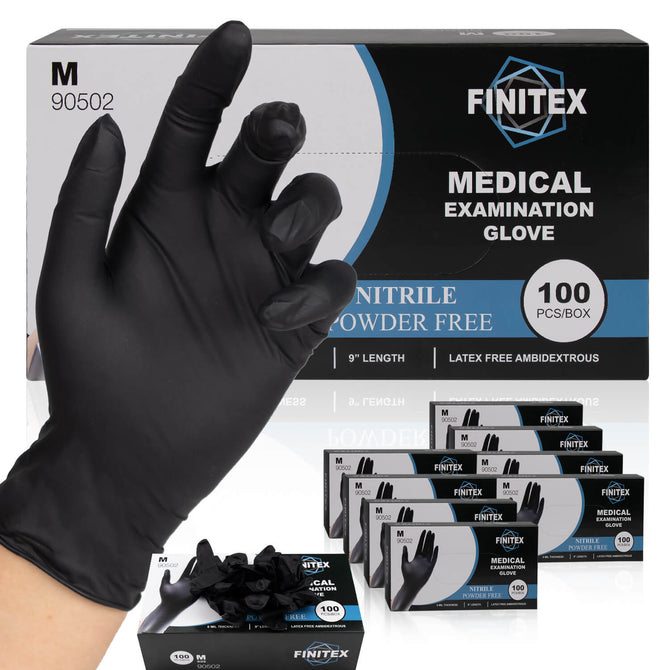
For meat packaging, food preparation, and other applicable food-contact tasks, FINITEX 6 Mil Black Food Safe Nitrile Gloves are the appropriate FINITEX option to consider for this application.
For industrial work that does not involve direct food contact, thicker nitrile gloves may be more appropriate depending on the task.
Why Nitrile Works Well Around Meat, Oil, and Moisture
Meat-processing environments can expose workers to a combination of moisture, grease, oils, meat juices, and repetitive handling.
Nitrile is a synthetic rubber material that is commonly selected for disposable gloves because it provides flexibility and a useful barrier for many workplace applications.
Nitrile gloves can also offer resistance to oils and certain chemicals, although performance varies according to glove formulation, thickness, and the substance involved. For specific chemical exposures, facilities should always consult the manufacturer's chemical-resistance data.
For food-contact applications, the focus should be on selecting a glove with documented suitability for the intended food use.
For industrial or non-food-contact applications, glove thickness, texture, durability, and chemical resistance may become more important selection factors.
This distinction is especially important when comparing different nitrile glove types.
Cold Storage Work Gloves: Why Grip Matters
Cold environments can create another problem: slippery surfaces.
Condensation, water, ice, meat juices, and grease can make products and equipment more difficult to handle. A glove with an appropriately textured surface can help workers maintain better control during many wet or greasy tasks.
Textured nitrile gloves may be useful for applications such as:
-
Industrial cold-room handling
-
Equipment maintenance
-
Warehouse operations
-
Handling containers
-
Cleaning tasks
-
General industrial work around refrigerated facilities
For industrial applications where direct food contact is not part of the task, a thicker textured nitrile glove can provide a more substantial option.
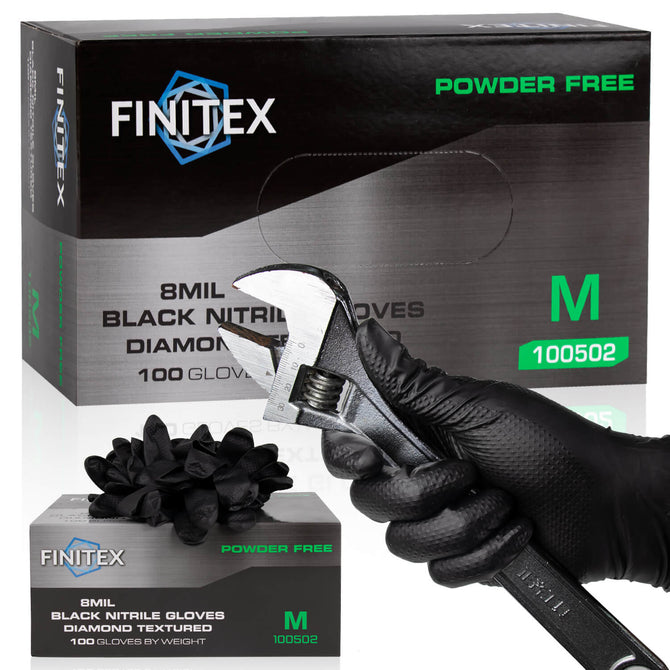
For example, 8 Mil diamond textured nitrile gloves are designed for demanding industrial applications where durability and grip are important considerations.
The important distinction is that this type of industrial nitrile glove should not be presented as a food-safe or FDA food-contact glove unless the specific product has the appropriate documentation for that use.
What About Meat Cutting?
Meat cutting requires additional consideration because workers may be exposed to knives, blades, bones, and other sharp materials.
Disposable nitrile gloves can provide a useful outer barrier for appropriate hygiene and contamination-control applications, but nitrile gloves are not cut-resistant PPE.
Workers who perform knife work may need a separate cut-resistant glove or other task-specific protective equipment based on the workplace risk assessment.
Depending on the operation, a facility may use a combination such as:
Thermal liner → Cut-resistant PPE → Appropriate disposable outer glove
The exact configuration depends on the task and the manufacturer's instructions for the individual products.
For this reason, it is important not to choose a thicker nitrile glove simply because it feels stronger. An 8 Mil nitrile glove may provide greater material thickness and durability than a lighter glove, but that does not make it a substitute for a certified cut-resistant glove.
Food-Contact Gloves vs. Industrial Gloves
One of the easiest mistakes when purchasing gloves for a meat-processing facility is treating every nitrile glove as interchangeable.
They are not.
Different tasks can require different glove characteristics.
Food-Contact Applications
Examples include:
-
Meat packaging
-
Food preparation
-
Product handling
-
Food inspection
-
Other tasks involving direct contact with food
For these applications, the glove should have appropriate documentation for its intended food-contact use.
For FINITEX products, the 6 Mil Black Food Safe Nitrile Glove should be the product considered for applicable food-contact applications.
Industrial and Non-Food-Contact Applications
Other workers in the same facility may perform tasks that do not involve direct contact with food.
Examples include:
-
Equipment maintenance
-
Cleaning machinery
-
Handling waste containers
-
Warehouse maintenance
-
General industrial handling
-
Non-food-contact cold-room work
These tasks may call for different glove characteristics, including greater thickness, durability, texture, or chemical resistance.
For these applications, FINITEX 6.3 Mil and 8 Mil Industrial Nitrile Gloves can be evaluated based on the specific job requirements.
This is why a meat-processing facility may need more than one type of disposable glove.
Choosing Meat Processing Disposable Gloves for Winter
When purchasing meat processing disposable gloves, thickness is only one factor to consider.
A good glove-selection process should begin with the task itself.
Food-Contact Suitability
If the glove will touch food directly, verify that the specific product is intended for the applicable food-contact use.
Do not assume that a glove is food-safe simply because it is made from nitrile.
For applicable food-contact applications, consider FINITEX 6 Mil Black Food Safe Nitrile Gloves.
Thickness
Glove thickness should be selected according to the job rather than simply choosing the thickest available glove.
Thinner gloves can provide more dexterity and tactile sensitivity, while thicker gloves may provide additional durability for demanding industrial applications.
If you're comparing different glove weights, see our guide to nitrile glove thickness to understand how 3 Mil, 4 Mil, 5 Mil, 6 Mil, and heavier options differ.
For industrial applications, facilities can also compare 6–8 Mil industrial nitrile gloves based on the required durability, texture, and fit.
Texture and Grip
If workers regularly handle wet, greasy, or slippery materials, textured fingertips or palms can be useful.
However, texture should be selected based on the task.
A glove designed for maximum grip may not necessarily be the best choice for detailed food preparation or tasks requiring high tactile sensitivity.
Fit
Fit becomes particularly important when wearing a thermal liner underneath a disposable glove.
The liner takes up additional space inside the glove, so workers may need to test whether their normal glove size still provides sufficient room.
A glove that is too tight may stretch excessively and become uncomfortable.
A glove that is too loose may bunch around the fingertips and interfere with dexterity.
Tear and Puncture Resistance
Cold storage and meat-processing environments can be demanding on disposable gloves.
Packaging materials, rough surfaces, bones, equipment, and repetitive movement can all contribute to tearing.
A thicker nitrile glove may provide greater durability for some industrial applications, but glove selection should still be based on actual task requirements.
And again, a disposable nitrile glove should not be treated as a substitute for cut-resistant PPE.
FDA Meat Handling Safety: Gloves Are Only One Part of the System
Choosing an appropriate glove is only one part of food-safety management.
Good glove practices should be combined with proper hand hygiene, sanitation, task separation, and employee training.
For food-processing operations, employees should follow the facility's procedures for:
-
Handwashing
-
Glove changes
-
Cross-contamination prevention
-
Separation of raw and ready-to-eat food
-
Equipment sanitation
-
Cleaning procedures
-
Proper storage
-
Personal hygiene
-
PPE use
The FDA Food Code provides guidance on the use of single-use gloves in food operations, including replacing gloves when they become damaged or soiled and following appropriate hand-hygiene practices.
For direct food-contact applications, the specific glove should also be verified for its intended use.
This is where food-safe nitrile gloves can be useful as part of a broader food-safety program.
For FINITEX, this food-contact positioning applies to the 6 Mil Black Food Safe Nitrile Gloves, not the 6.3 Mil or 8 Mil Industrial products.
A Practical Winter Glove Setup for Cold Storage
There is no single glove combination that works for every cold-storage employee.
The appropriate setup depends on what the worker actually does.
Scenario 1: Meat Packaging
For tasks involving applicable direct food contact:
Thin thermal liner → FINITEX 6 Mil Black Food Safe Nitrile Glove
The liner provides an additional layer of warmth, while the outer glove is selected specifically for the food-contact application.
Scenario 2: Industrial Equipment Maintenance
For non-food-contact maintenance tasks:
Thin thermal liner → FINITEX 6.3 Mil or 8 Mil Industrial Nitrile Glove
Here, durability, grip, and resistance to workplace substances may be more important than food-contact suitability.
Scenario 3: Meat Cutting
For knife-related work:
Thermal liner → Appropriate cut-resistant PPE → Disposable outer glove where applicable
The exact configuration should follow the facility's risk assessment and PPE program.
This task-based approach is more effective than trying to find one disposable glove for every employee and every job.
Which FINITEX Nitrile Glove Is Right for Cold-Weather Work?
Different jobs inside the same meat-processing or cold-storage facility may require different gloves.
| Application | FINITEX Option | Main Consideration |
|---|---|---|
| Meat packaging | 6 Mil Black Food Safe | Applicable food-contact use |
| Food preparation | 6 Mil Black Food Safe | Food-contact suitability |
| Product handling involving food contact | 6 Mil Black Food Safe | Food-contact requirements |
| Industrial cold-room work | 6.3 Mil Industrial | Durability and task requirements |
| Equipment maintenance | 6.3 Mil Industrial | Industrial protection |
| Heavy-duty industrial work | 8 Mil Industrial | Greater thickness and durability |
| Wet/greasy industrial handling | 8 Mil Diamond Textured Industrial | Grip and durability |
| Knife cutting | Cut-resistant PPE + appropriate glove | Nitrile is not cut-resistant |
This distinction helps purchasing teams avoid using an industrial glove for a food-contact application simply because it is thicker.
Thicker does not automatically mean food-safe.
The intended application and product documentation matter more than thickness alone.
Don't Let Cold Hands Slow Down Winter Food Processing
Cold storage work becomes more demanding as temperatures fall.
Workers may spend hours moving between refrigerated areas, processing lines, loading docks, and cold rooms. When hands become cold and uncomfortable, maintaining dexterity and grip can become more difficult.
A thin thermal liner can provide an additional layer of warmth, while a properly selected disposable nitrile glove can provide the outer barrier required for the specific task.
But the best glove depends on what the worker is actually doing.
For food-contact tasks, choose a nitrile glove specifically documented for the intended food application, such as FINITEX 6 Mil Black Food Safe Nitrile Gloves.
For industrial and non-food-contact tasks, FINITEX 6.3 Mil and 8 Mil Industrial Nitrile Gloves may provide the additional thickness, durability, and grip required for demanding work.
For knife-related tasks, use appropriate cut-resistant PPE rather than relying on nitrile thickness for cut protection.
The goal isn't simply to find the thickest glove.
It's to build a hand-protection system that balances warmth, hygiene, grip, dexterity, durability, and task-specific protection.
As fall and winter bring increased activity across meat processing, cold storage, and refrigerated distribution, reviewing your glove program before the busiest months can help workers stay comfortable and prepared—without confusing food-contact gloves with industrial PPE.
FAQ: Cold Storage and Meat Processing Gloves
Can I wear a thermal liner under a nitrile glove?
Yes, a thin thermal liner can be worn underneath a disposable nitrile glove for some cold-storage applications. The liner should remain covered by the outer glove whenever the outer glove is being used as the applicable food-contact barrier.
Are nitrile gloves suitable for meat processing?
Some nitrile gloves are suitable for applicable food-contact meat-processing tasks, while others are designed specifically for industrial use. Always verify the intended application and product documentation.
For FINITEX, the 6 Mil Black Food Safe Nitrile Glove is the appropriate option to consider for applicable food-contact applications.
Are all nitrile gloves FDA food safe?
No. A glove being made from nitrile does not automatically mean that it is suitable for direct food contact.
Facilities should verify the specific product's food-contact suitability and documentation.
Are FINITEX 6.3 Mil and 8 Mil gloves food safe?
The FINITEX 6.3 Mil and 8 Mil products discussed in this article are industrial nitrile gloves, not the FINITEX food-safe glove option. They should not be positioned as food-contact gloves.
For applicable food-contact tasks, use the FINITEX 6 Mil Black Food Safe Nitrile Glove.
Are nitrile gloves waterproof?
Nitrile gloves provide a liquid-resistant barrier, but "100% waterproof" should not be used as a universal claim for every disposable nitrile glove. Performance depends on glove construction, fit, thickness, and whether the glove remains intact.
Are nitrile gloves oil resistant?
Nitrile generally provides useful resistance to many oils and greases, but performance varies by formulation and chemical exposure. For specific substances, check the manufacturer's resistance data.
Are 8 Mil nitrile gloves better for meat cutting?
Not necessarily. An 8 Mil nitrile glove may provide greater thickness and durability than a thinner glove, but it is not a cut-resistant glove. Workers using knives should use appropriate cut-resistant PPE based on the task.
What gloves are best for cold storage work?
The answer depends on the job. For applicable food-contact tasks, a food-contact-suitable disposable nitrile glove can be paired with a thin thermal liner. For industrial, non-food-contact tasks, thicker industrial nitrile gloves may be more appropriate.
How often should disposable gloves be changed in meat processing?
Gloves should be changed according to the facility's food-safety procedures and whenever they become damaged, contaminated, or soiled, or when the worker changes tasks and a new pair is required.