


When temperatures start to drop in September, renovation work across the U.S. begins to move indoors.
Contractors who spent the summer painting exteriors, repairing decks, or working on landscaping projects are now shifting toward interior renovations. Homeowners and DIYers are doing the same—painting bedrooms, finishing drywall, sealing bathrooms, and tackling garage or basement projects before winter arrives.
These jobs may seem relatively low-risk compared with outdoor construction, but your hands can still take a beating. Paint, adhesives, caulk, sealants, epoxy, solvents, and other renovation materials can stick to skin, cause irritation, or become difficult to remove.
That makes the right pair of chemical resistant gloves an important part of your fall renovation PPE.
For many indoor painting, drywall, and home improvement tasks, disposable nitrile gloves offer a practical combination of chemical resistance, dexterity, and convenience.
Why Fall Is a Busy Season for Indoor Renovation
The arrival of cooler weather doesn't necessarily mean construction slows down. In many parts of the country, it simply moves inside.
Fall is also a good time to review your indoor painting supplies and make sure you have the right protective equipment before starting a new project:
- Interior wall and ceiling painting
- Drywall installation and finishing
- Bathroom and kitchen renovations
- Caulking and sealing
- Basement waterproofing
- Garage floor coating
- Epoxy flooring projects
- Cabinet refinishing
- General home maintenance
For professional contractors, this means spending hours handling different materials throughout the day. For DIY homeowners, it often means working with products they may not use regularly.
Either way, protecting your hands should be part of the preparation—not something you think about after paint or epoxy has already dried on your skin.
What Makes Nitrile Gloves Useful for Indoor Painting?
Not every painting job requires heavy-duty hand protection. But even relatively simple projects can involve repeated contact with wet paint, primers, adhesives, cleaning products, and other substances.
Nitrile is a synthetic rubber that provides a useful barrier between your hands and many common workplace substances. Latex-free nitrile gloves are also a popular choice for contractors and DIYers who prefer to avoid natural rubber latex.
More importantly for renovation work, nitrile gloves allow you to maintain a good level of finger control and tactile sensitivity.
That matters when you're:
- Cutting drywall tape
- Applying caulk around a window
- Holding a paintbrush or detail tool
- Smoothing sealant
- Mixing small amounts of coating material
- Handling trim and finishing materials
- Working around corners and tight spaces
A glove that is too bulky can make precise work frustrating. A glove that is too thin or poorly fitted may tear before the job is finished.
The goal is to find the right balance between protection and dexterity.
Chemical Resistant Gloves: What Should Contractors Look For?
The term chemical resistant gloves can sometimes be misleading.
No disposable glove protects against every chemical under every condition. Resistance depends on the chemical itself, its concentration, temperature, exposure time, and the glove's material and thickness.
That's particularly important when working with products such as epoxy, solvents, paint thinners, or specialized coatings.
Before choosing a glove, check the Safety Data Sheet (SDS) for the product you're using and follow the manufacturer's glove recommendations.
For routine renovation work, however, a quality nitrile glove can be a convenient first line of protection against many common materials.
1. Glove Thickness
Thickness is one of the first things to consider.
A lightweight nitrile glove can work well for short painting jobs where dexterity is the priority. For longer renovation projects involving adhesives, sealants, mechanical work, or rough surfaces, a thicker glove generally provides greater durability.
As a general guide:
| Glove Thickness | Suitable Applications |
|---|---|
| 3–4 mil | Light painting, touch-ups, general DIY |
| 5–6 mil | Painting, caulking, drywall finishing, general renovation |
| 6–8 mil | Heavy-duty renovation, epoxy work, maintenance, rough handling |
For demanding renovation, maintenance, and rough-handling tasks, 6–8 mil nitrile gloves can provide a more durable option than lightweight disposable gloves.
These are general recommendations rather than chemical-resistance ratings. Always check the glove's specifications and the chemical manufacturer's instructions for specific chemical exposure.
2. Grip and Texture
Wet paint, sealants, and tools can become surprisingly slippery.
For renovation work involving wet surfaces, tools, or slippery materials, textured nitrile gloves can provide additional grip and control.
A textured nitrile glove can provide additional grip when handling:
- Paint cans
- Caulking guns
- Scrapers
- Rollers
- Brushes
- Power tools
- Containers of adhesives or coatings
For contractors moving between different tasks, a textured surface can make a noticeable difference.
3. Tear and Puncture Resistance
Drywall work isn't always gentle on disposable gloves.
Sharp drywall edges, screws, utility knives, rough wood, and unfinished surfaces can easily damage thin gloves. A stronger nitrile glove is often a better choice when your work involves frequent handling of abrasive or sharp materials.
If a glove tears every time you pick up a piece of drywall, changing gloves repeatedly becomes both inconvenient and expensive.
4. Proper Fit
A glove should fit snugly without restricting movement.
For detailed finishing work, an oversized glove can get in the way. Loose fingertips make it harder to control brushes, scrapers, caulking guns, and other small tools.
On the other hand, a glove that's too tight may become uncomfortable during long renovation sessions and can be more likely to tear when stretched.
For contractors who wear gloves for several hours at a time, proper sizing is just as important as thickness.
Nitrile Gloves for Drywall Contractors
Drywall work creates a different set of challenges from painting.
Joint compound, drywall dust, tape, adhesives, and finishing materials can leave your hands dry and dirty. Once the finishing process begins, you're also constantly handling tools and materials.
For drywall contractors, disposable nitrile gloves can be useful during:
- Joint compound application
- Taping
- Sanding preparation
- Caulking
- Adhesive application
- Cleanup
- Material handling
A medium- to heavy-duty nitrile glove can provide a better combination of durability and grip than an ultra-thin disposable glove.
That said, gloves should complement—not replace—other protective equipment. When sanding drywall or working in dusty environments, appropriate respiratory and eye protection may also be necessary.
Handling Paint, Sealants, and Adhesives
One reason renovation gloves become dirty so quickly is that many products are designed to stick.
Paint and caulk can be wiped away. Epoxy and construction adhesives can be much harder to remove once they cure.
Disposable gloves make cleanup easier because you can remove the contaminated pair and put on a fresh one before moving to the next stage of the project.
This is especially useful when you're switching between:
Preparation → Application → Finishing → Cleanup
Instead of trying to clean the same pair of gloves throughout the entire project, workers can replace gloves when they become contaminated, damaged, or unsuitable for the next task.
For commercial contractors, this can also help maintain cleaner work practices when moving between rooms or job areas.
Why Epoxy Projects Require Extra Attention
Epoxy flooring and coatings are becoming increasingly popular for garages, basements, workshops, and commercial spaces.
They also deserve more careful glove selection.
Liquid epoxy components can come into contact with the skin during mixing and application. Once cured, epoxy is much harder to remove.
When working with epoxy:
- Read the product's SDS before starting.
- Check the manufacturer's recommended glove material.
- Choose an appropriate glove thickness and size.
- Replace gloves if they become contaminated or damaged.
- Avoid touching your face, phone, tools, or clean surfaces with contaminated gloves.
- Dispose of used gloves according to the product's instructions.
A thicker nitrile glove may be preferable for some epoxy applications, but thicker does not automatically mean suitable for every chemical. Chemical compatibility should always take priority over thickness alone. For demanding coating and renovation work, many contractors prefer heavy-duty nitrile gloves for their combination of durability and dexterity.
Fall Renovation PPE: Gloves Are Only One Part of the Job
A good pair of nitrile gloves is useful, but it shouldn't be your only protection.
Depending on the project, fall renovation PPE may include:
- Safety glasses or goggles
- Respiratory protection
- Protective clothing
- Knee protection
- Hearing protection
- Proper footwear
- Disposable nitrile gloves
Ventilation is also important when working with paints, coatings, adhesives, solvents, or other products that release vapors.
Always follow the product label, SDS, and applicable workplace safety requirements.
Disposable Nitrile Gloves vs. Reusable Work Gloves
For renovation projects, there isn't necessarily one glove that does everything.
Reusable work gloves are useful when you're moving heavy materials, handling rough lumber, or performing tasks where abrasion protection is the priority.
Disposable nitrile gloves are particularly convenient when you're dealing with substances that can contaminate the glove surface.
For example, a contractor might wear a disposable nitrile glove for painting or caulking and switch to a heavier reusable glove for material handling.
The right choice depends on the task.
| Task | Glove Consideration |
|---|---|
| Interior painting | Lightweight or mid-weight nitrile |
| Caulking | 5–6 mil nitrile with good grip |
| Drywall finishing | Durable nitrile with textured grip |
| Adhesive application | Chemical-compatible nitrile |
| Epoxy application | Check SDS and chemical compatibility |
| Heavy material handling | Consider reusable work gloves |
| General cleanup | Disposable nitrile |
Choosing the Right Nitrile Gloves for Your Fall Renovation Crew
If you're stocking up on indoor painting supplies or drywall contractor gear, don't simply buy the thickest gloves available.
Think about the actual work your team performs.
For detailed painting and finishing, prioritize dexterity and tactile sensitivity.
For caulking, adhesives, and general maintenance, look for a combination of grip, durability, and chemical compatibility.
For demanding renovation and garage projects, thicker nitrile gloves may provide additional tear and puncture resistance.
And if your crew handles several different chemicals, don't rely on a generic "chemical resistant" label. Check the manufacturer's chemical-resistance information and compare it with the products being used on the job.
Stock Up Before the Weather Turns Cold
Fall renovation season can arrive quickly. Once temperatures drop, contractors may find themselves juggling multiple indoor projects at once—from repainting rental properties to finishing basements and preparing homes for winter.
Having the right disposable gloves on hand means workers don't have to improvise when a glove tears, becomes contaminated, or needs to be replaced.
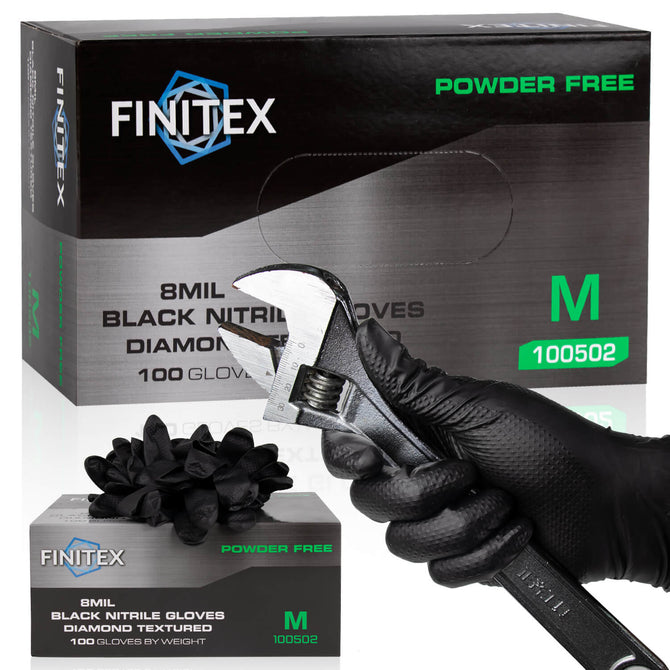
For contractors handling paint, sealants, adhesives, and general renovation materials, FINITEX 6 Mil Black Nitrile Gloves are a practical option when you need a thicker disposable glove with textured grip.
For contractors, keeping several thicknesses and sizes available can be a simple way to match gloves to different tasks.
For DIYers, a box of quality nitrile gloves can cover everything from weekend painting projects to garage cleanup.
Final Thoughts
Indoor renovation may keep you out of the cold, but it doesn't necessarily make your hands safer.
Paints, sealants, adhesives, epoxy, drywall materials, and cleaning products all create different challenges. The best glove depends on what you're handling, how long you're exposed, and how much dexterity the job requires.
For many everyday renovation tasks, disposable nitrile gloves offer a practical combination of protection, grip, flexibility, and easy cleanup. Just remember that no glove is universally chemical-proof—always check the product's SDS and the glove manufacturer's compatibility information when working with aggressive chemicals or coatings.
Whether you're a professional contractor preparing for a busy fall schedule or a homeowner tackling a weekend renovation, choosing the right gloves before the project starts can save your hands—and a lot of unnecessary cleanup—later.
FAQ
Are nitrile gloves good for indoor painting?
Yes. Nitrile gloves are commonly used for painting because they provide a barrier against wet paint and offer good dexterity. Choose the thickness based on the type and duration of the work.
Are nitrile gloves chemical resistant?
Nitrile provides resistance to many chemicals, but resistance varies by chemical, concentration, exposure time, and glove construction. Always check the glove manufacturer's chemical-resistance data and the chemical's SDS.
What thickness nitrile gloves are best for drywall work?
For general drywall and renovation tasks, 5–6 mil gloves offer a useful balance of durability and dexterity. For rougher work, 6–8 mil gloves may be more suitable.
Can I use nitrile gloves with epoxy?
Nitrile gloves are commonly used when handling epoxy products, but suitability depends on the specific epoxy formulation. Check the product's SDS and manufacturer's recommendations before use.
Are nitrile gloves better than latex gloves for painting?
Nitrile is a popular choice because it is latex-free and provides good resistance to many common chemicals. However, the best glove depends on the specific materials and working conditions.
Do thicker nitrile gloves provide better chemical protection?
Not necessarily. Thickness can improve durability and may increase breakthrough time for some chemicals, but chemical compatibility depends on the specific glove and substance. Always use manufacturer test data rather than thickness alone.