

As flu season gets underway, pharmacies, medical offices, community health centers, and mobile vaccination teams begin preparing for a familiar challenge: serving a large number of patients while keeping each station clean, organized, and ready for the next person.
For nurses, pharmacists, and other healthcare workers, a busy flu shot clinic can mean repeated patient contact and frequent glove changes throughout the day. When hundreds of vaccinations are scheduled, even simple tasks such as putting on and removing gloves become part of the overall workflow.
This is where rapid donning exam gloves can be useful.
A glove with a smooth inner surface, appropriate elasticity, and a comfortable fit can make repeated glove changes easier to manage. For mobile flu clinics and retail pharmacies, these small details matter when staff are working through a high-volume vaccination schedule.
Why Glove Selection Matters in a Flu Shot Clinic
Giving a flu shot is a routine procedure, but a busy vaccination clinic involves much more than the injection itself.
Staff may move between patient intake, hand hygiene, vaccination, documentation, cleaning, and supply restocking throughout the day. Depending on the workflow and infection-control procedures, gloves may also need to be changed regularly.
Common tasks can include:
-
Preparing and administering vaccines
-
Handling alcohol prep pads and bandages
-
Managing used supplies
-
Cleaning workstations
-
Handling paperwork and other clinic materials
-
Changing gloves when contamination occurs
-
Maintaining hand hygiene between patients
Gloves are only one component of an infection-control program, but they are an important part of pharmacy safety gear and routine patient-care supplies.
For this reason, healthcare teams should look beyond price when choosing disposable examination gloves. Fit, material, thickness, donning characteristics, and intended use can all affect how practical a glove is during a long vaccination shift.
If you're comparing disposable glove materials, our guide to latex vs. vinyl vs. nitrile gloves explains the differences between these common glove materials and where each type is typically used.
What Are Rapid Donning Exam Gloves?
Rapid donning exam gloves are examination gloves designed with features that make them easier to put on.
One feature worth paying attention to is the inside of the glove.
Some nitrile examination gloves use a polymer-coated inner surface. Instead of a tacky interior that can cling to the skin, the polymer coating creates a smoother surface between the hand and glove.
This can make the glove easier to slide onto the hand, particularly when workers need to change gloves repeatedly.
For a busy vaccination clinic, that convenience can be valuable. Healthcare workers do not need their gloves to be complicated. They need gloves that fit properly, provide the required level of protection, and are practical to put on and remove during normal workflow.
It's also important to distinguish easy donning from simply using a larger glove. A glove that is too loose may interfere with dexterity, while one that is too small can be difficult to put on and may be more vulnerable to tearing during donning.
How a Polymer-Coated Interior Helps With Donning
The outer surface of a disposable glove often gets the most attention because it affects grip. However, the inner surface can also influence the overall user experience.
A polymer-coated interior provides a smoother interface between the glove and the skin.
Easier Glove Changes
When staff members need to change gloves frequently, an easy-to-don design can make the process more convenient.
Instead of fighting against a glove that sticks to the hand, workers can generally slide the glove into position with less friction.
Less Aggressive Pulling
A glove that is difficult to put on may encourage users to pull harder on the cuff or fingertips.
That is not ideal. Excessive stretching during donning can put unnecessary stress on the material.
Proper sizing remains important. A smooth interior can help with donning, but it does not compensate for choosing the wrong glove size.
If you're evaluating different nitrile gloves for a healthcare or pharmacy environment, our guide on how to tell if nitrile gloves are high quality covers factors such as thickness, fit, elasticity, and overall glove construction.
A More Consistent Workflow
During a high-volume vaccination session, small interruptions can become frustrating when they happen repeatedly.
A glove that is easy to access, easy to put on, and available in the correct size can help keep the glove-changing process straightforward.
The goal is not to eliminate every second from the process. It's to avoid unnecessary difficulty when a task has to be repeated many times.
Better Comfort During Long Shifts
Flu clinics can run for several hours, particularly during periods of high vaccination demand.
Comfort becomes more important when gloves are worn and changed repeatedly. A combination of proper fit, suitable thickness, flexibility, and a smooth interior can make a disposable glove more comfortable to work with.
Why Nitrile Is a Practical Choice for Examination Gloves
Nitrile gloves are widely used for disposable hand protection because they offer a useful balance of flexibility, durability, and latex-free construction.
For routine examination and patient-care applications, nitrile can provide the dexterity needed for handling small items while offering more resistance to punctures and tears than some thinner disposable glove materials.
However, no glove is right for every task.
A vaccination clinic typically does not need the same glove thickness used for heavy-duty automotive work or industrial cleaning. Instead, healthcare workers generally need a glove that provides an appropriate balance of protection, tactile sensitivity, flexibility, and comfort.
What to Look for in Flu Shot Clinic Supplies
Gloves are only one part of a vaccination station.
A typical flu shot clinic supplies checklist may include:
-
Examination gloves
-
Alcohol prep pads
-
Syringes and needles
-
Bandages
-
Sharps containers
-
Hand hygiene supplies
-
Disinfecting supplies
-
Waste disposal supplies
-
Patient documentation and forms
When choosing examination gloves, several factors deserve attention.
1. Appropriate Medical or Examination Use
Always choose a glove according to its stated intended use and applicable requirements.
Healthcare buyers should review product specifications, certifications, labeling, and other available documentation rather than relying solely on general marketing claims.
For terminology around examination gloves, our guide to what non-sterile gloves mean can help explain the difference between non-sterile and sterile gloves.
2. Powder-Free Construction
Powder-free nitrile gloves are commonly used in healthcare environments.
For vaccination clinics, a powder-free design can help keep the glove simple and suitable for routine patient-care workflows.
3. Latex-Free Material
Nitrile provides a latex-free alternative for facilities that want to avoid natural rubber latex gloves.
This is one reason nitrile has become a common choice across healthcare, dental, laboratory, beauty, and other professional environments.
4. Appropriate Thickness
Thicker is not automatically better.
A glove that is too thick may reduce tactile sensitivity, while an extremely thin glove may not provide the durability some users need.
For vaccination work, the appropriate thickness should be based on the intended application, required protection, and the user's need for dexterity.
5. Smooth Inner Surface
For clinics where gloves are changed frequently, the inner surface deserves attention.
A polymer-coated interior can provide a smoother surface that helps the glove slide onto the hand more easily.
This is one feature to consider when evaluating rapid donning exam gloves.
6. Proper Fit
Correct sizing is just as important as glove material.
A glove that is too tight can be difficult to put on and may experience excessive stretching. A glove that is too loose can interfere with finger movement and tactile control.
Healthcare facilities may benefit from stocking more than one size, especially when several staff members work at the same vaccination station.
Pharmacy Safety Gear for High-Volume Vaccination
Retail pharmacies are an important setting for seasonal vaccination services.
On a busy day, pharmacists and pharmacy staff may move quickly between patient check-in, vaccine preparation, administration, documentation, cleaning, and restocking.
That makes practical pharmacy safety gear important.
Gloves should be stored where staff can reach them easily. Sizes should be clearly organized, and inventory should be checked before a high-volume clinic begins.
For pharmacy managers, the more useful question is not simply:
"Which gloves cost the least per box?"
Instead, consider the complete picture:
-
Are the gloves suitable for the intended use?
-
Are the available sizes appropriate for staff?
-
Are they easy to don?
-
Do they provide adequate durability?
-
Are they comfortable during extended use?
-
Is the supplier able to provide consistent inventory?
A slightly different glove can feel noticeably different when it is being put on and removed many times during a shift.
Planning Medical-Grade Bulk Ordering for Flu Season
Seasonal vaccination programs can create predictable increases in glove consumption.
For pharmacies, clinics, occupational health providers, and mobile vaccination teams, medical grade bulk ordering can make inventory planning easier.
But ordering by the case should start with actual usage estimates.
Estimate More Than Patient Volume
If a clinic expects 300 vaccinations, that does not necessarily mean it needs exactly 300 pairs of gloves.
Actual usage depends on:
-
Number of healthcare workers
-
Number of vaccination stations
-
Glove-changing procedures
-
Clinic operating hours
-
Additional cleaning tasks
-
Unexpected glove changes
-
Staff sizes
Building some additional inventory into the plan can help prevent supply shortages during peak periods.
Stock Multiple Sizes
Don't assume every staff member will use the same glove size.
Before a large order, confirm the sizes most commonly used by your team.
Review Product Documentation
Before committing to a large purchase, review the manufacturer's specifications and documentation.
Pay particular attention to:
-
Material
-
Thickness
-
Intended use
-
Powder-free status
-
Size range
-
Packaging
-
Applicable standards or certifications
-
Donning characteristics
For facilities comparing different options, you can explore our disposable nitrile gloves to compare available glove types and thicknesses.
Choosing Gloves for a Mobile Flu Clinic
Mobile vaccination clinics have another challenge: everything has to be transported and organized at the temporary vaccination site.
Unlike a permanent pharmacy, a mobile clinic may have limited storage and workspace.
For that reason, supplies should be easy to organize and access.
Gloves should be:
-
Stored securely during transportation
-
Organized by size
-
Easy for staff to reach
-
Available in sufficient quantities
-
Appropriate for the intended application
A simple workstation setup can make a difference.
For example, keeping gloves within easy reach of the vaccination station means staff do not need to leave the area every time a new pair is needed.
The same principle applies to other flu shot clinic supplies. A well-organized workstation can reduce unnecessary movement and help staff focus on patient care.
Don't Overlook Glove Fit
Even a glove designed for easy donning may be frustrating to use if the size is wrong.
A glove that is too small can require excessive pulling during donning. A glove that is too large may create excess material around the fingertips.
Before placing a large order, consider testing samples with the actual staff who will use them.
Ask them to evaluate:
-
How easily the glove goes on
-
Whether the cuff stretches comfortably
-
Finger length
-
Thumb positioning
-
Tactile sensitivity
-
Grip
-
Ease of removal
-
Comfort during extended use
A short trial can identify problems that may not be obvious from a product specification sheet.
FINITEX Nitrile Gloves for High-Frequency Glove Changes
For pharmacies, healthcare facilities, and vaccination providers looking for disposable nitrile gloves, FINITEX offers options for different applications and thickness requirements.
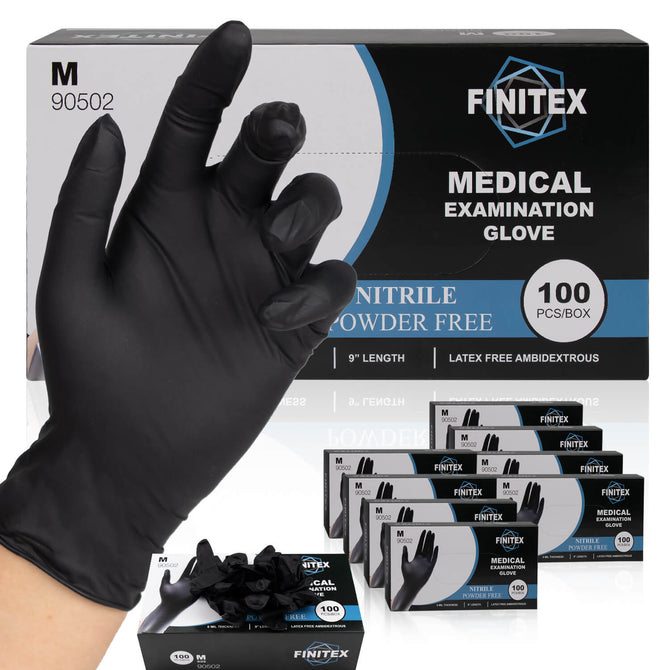
For routine examination applications where lightweight construction, dexterity, and comfortable glove changes are important, consider FINITEX Blue Nitrile Gloves 3.2 Mil Exam Grade Powder-Free.
A 3.2 mil glove can be a practical option for tasks where users want a balance between hand protection and tactile sensitivity.
As with any medical or examination glove, facilities should confirm that the specific product meets the requirements for its intended application before use.
FINITEX also offers other nitrile glove thicknesses and styles for applications that require different levels of durability or protection. The right choice should always be based on the actual task rather than simply choosing the thickest glove available.
A Practical Flu Shot Clinic Glove Checklist
Before a high-volume vaccination session begins, pharmacy and clinic managers can review the following checklist.
Gloves
-
☐ Correct glove sizes available
-
☐ Powder-free nitrile gloves
-
☐ Appropriate examination/medical-use product
-
☐ Easy-donning design
-
☐ Sufficient inventory
-
☐ Backup supply available
Vaccination Supplies
-
☐ Syringes and needles
-
☐ Alcohol prep pads
-
☐ Bandages
-
☐ Sharps containers
-
☐ Hand hygiene supplies
-
☐ Cleaning and disinfecting supplies
-
☐ Waste disposal supplies
Inventory
-
☐ Current glove stock checked
-
☐ Sizes separated and labeled
-
☐ Backup cases available
-
☐ Reorder point established
-
☐ Supplies organized by workstation
Final Thoughts
A high-volume flu vaccination clinic is built around repetition. Staff may perform the same basic steps hundreds of times in a single day, which makes small workflow details surprisingly important.
Disposable gloves are one of those details.
For nurses, pharmacists, and other healthcare workers, a glove with a smooth polymer-coated inner surface, appropriate elasticity, comfortable fit, and easy donning characteristics can make frequent glove changes more convenient.
For pharmacies and mobile vaccination teams preparing their flu shot clinic supplies, the goal should not simply be to find the cheapest glove available. Consider intended use, fit, thickness, comfort, durability, documentation, and supply availability together.
Before committing to medical grade bulk ordering, testing samples with the staff who will actually use the gloves can also help identify the most practical option for your workflow.
The right glove won't replace good infection-control practices or proper clinical procedures. But when hundreds of patient interactions are scheduled, choosing a glove that is comfortable and easy to don can remove one small source of friction from a very busy day.
Frequently Asked Questions
What are rapid donning exam gloves?
Rapid donning exam gloves are examination gloves designed with features that make them easier to put on. A smooth or polymer-coated inner surface can reduce friction between the glove and the hand and make frequent glove changes more convenient.
Are nitrile gloves suitable for flu shot clinics?
Nitrile examination gloves are commonly used for routine patient-care applications. The specific glove should be selected according to its intended use, product documentation, applicable requirements, and the clinic's infection-control procedures.
What does a polymer-coated glove interior do?
A polymer-coated interior creates a smoother surface between the glove and the skin. This can make the glove easier to slide onto the hand compared with a glove with a tackier interior.
How many gloves does a flu shot clinic need?
There is no universal number. Estimate glove usage based on patient volume, number of healthcare workers, glove-changing practices, clinic hours, workstation setup, and additional uses such as cleaning.
What should pharmacies consider when buying gloves in bulk?
Pharmacies should consider intended use, glove size, thickness, fit, donning characteristics, product documentation, packaging, supplier consistency, and expected usage when planning bulk purchases.
Are thicker nitrile gloves better for vaccination clinics?
Not necessarily. Vaccination work generally requires a balance between hand protection, tactile sensitivity, flexibility, and comfort. The appropriate thickness depends on the specific task and the product's intended use.